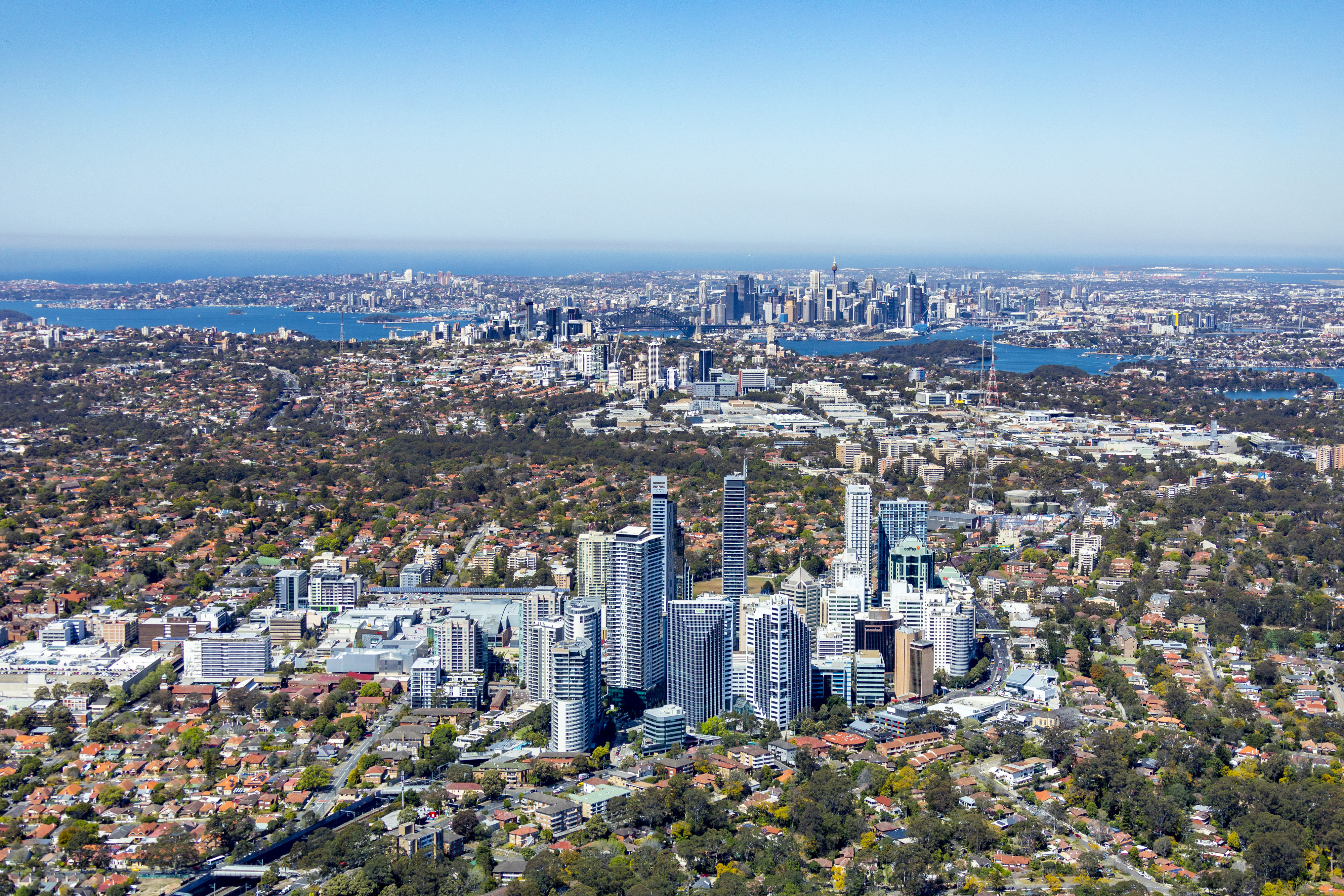
Sydney
Francis De Groot never got his moment. When the Sydney Harbour Bridge was to be officially opened on March 19, 1932, the member of an ultra-right-wing group rode out of the crowd on a borrowed horse and slashed the ceremonial ribbon with his cavalry sword before Premier Jack Lang could cut it. De Groot was arrested, a new ribbon was tied, and the bridge opened anyway. It's a perfectly Sydney story - grand ambitions punctured by irreverent chaos, followed by everyone getting on with it. This city of five million has always been less interested in ceremony than in the business of living well. The harbor that splits Sydney in two is also what makes it whole, 240 kilometers of waterfront where ferries crisscross between surf beaches and sandstone cliffs, where every headland reveals another cove, another beach, another reason to call in sick to work.
The Shells That Changed Architecture
Before Jørn Utzon, Bennelong Point was a tram depot. The Danish architect, only 38 years old and with nothing built to his name, had submitted entry number 218 in an international competition that drew 233 designs from 30 countries. The judges almost missed it - legend has it that Eero Saarinen, arriving late, pulled Utzon's sketches from the rejection pile and declared them visionary. The shells that followed took sixteen years to build, drove Utzon from the project in frustration in 1966, and created one of the twentieth century's most recognizable buildings.
Utzon never saw his completed opera house in person. He died in Copenhagen in 2008 at age 90, having reconciled with Sydney enough to redesign one interior space - now called the Utzon Room - but never returning to stand beneath the shells he spent his life perfecting. The building won UNESCO World Heritage status in 2007, making Utzon only the second architect ever to receive that honor during his lifetime. Today, those shells catch the harbor light exactly as he imagined, white and grey and gold depending on the hour, rising from the water like something that was always meant to be there.
The Coathanger Across the Harbor
The bridge that De Groot tried to claim took eight years to build, employed 1,600 workers through the worst of the Great Depression, and required six million hand-driven rivets. When it opened in 1932, about 11,000 cars crossed daily. Today that number exceeds 160,000. Sydneysiders call it the Coathanger for its distinctive arch, and argue about whether it looks better at dawn or during the New Year's Eve fireworks that have made it famous worldwide.
Sixteen workers died during construction, though remarkably only two from falling. The bridge cost £6.25 million - a debt not paid off until 1988. Before opening, engineers loaded all four rail tracks with 96 steam locomotives positioned end-to-end, testing whether the mathematics of steel and rivets would hold. It did. It still does. At 134 meters from arch top to water, it remains the tallest steel arch bridge in the world, and climbing it has become a Sydney rite of passage - tourists and locals alike strapping into harnesses to walk the curve and survey the harbour city spread beneath them.
The Beach Life
Sydney's beaches are not a feature of the city; they are the city's organizing principle. From Bondi's crescent of sand, where backpackers mix with serious surfers and morning swimmers take their constitutional dips, to the quieter coves of the north shore, the coastline shapes daily life in ways that are difficult to explain to anyone who hasn't lived it. People schedule work around surf conditions. Business meetings happen on beach promenades. The coastal walk from Bondi to Coogee is packed at sunset with runners, dog walkers, and couples who might have been on a date or might just be neighbors.
The famous beaches - Bondi, Manly, Palm Beach - get the postcard treatment, but Sydney has seventy beaches within the metropolitan area. Some are hidden between headlands, accessible only by climbing down sandstone steps worn smooth by decades of bare feet. Others front suburbs where million-dollar homes face the Pacific. All of them share the same Pacific swells, the same reliable summer heat, the same understanding that the ocean is not something you visit but something you live beside.
The Convict Foundation
Sydney began as a prison. The First Fleet arrived in 1788 carrying 751 convicts - men and women transported from Britain for crimes ranging from theft to political dissent. They established a settlement at Sydney Cove, now Circular Quay, and began building a society in a landscape that made no sense to European eyes. The convicts quarried the golden sandstone that still defines the city's oldest buildings. They laid the streets that wind illogically through The Rocks because they followed paths between trees that no longer exist.
The convict stain once embarrassed Australians. Now it's a source of perverse pride - a democratic origin story where the country's founders were the outcasts of European society. The oldest surviving European building in Australia, Cadman's Cottage, sits near the harbour where the First Fleet anchored. It's tiny, plainly built, and utterly ordinary - which somehow makes it remarkable. From that modest sandstone cottage to the sails of the Opera House is only a few hundred meters. From convict settlement to global city took 236 years.
The Living Harbor
Port Jackson is not just scenic; it's the deepest natural harbor in the world. Ferries have connected the north and south shores since long before the bridge existed, and they still carry commuters who prefer twenty minutes on the water to twenty minutes in traffic. The ferry to Manly has been running since 1855, past the harbor islands where convicts were once quarantined, past the yachts and container ships, past fortifications built against invasions that never came.
The harbor defines Sydney more than any landmark could. Real estate prices correlate almost perfectly with water views. Restaurants fight for positions on the wharves. On summer weekends, the water fills with kayaks and sailing boats and the occasional whale that has wandered into the harbor to the delight and alarm of everyone. When Sydney wants to celebrate - New Year's Eve, Australia Day, any excuse really - the celebration happens on and around the harbor, fireworks reflected in water that has seen indigenous ceremonies, convict arrivals, gold rush prosperity, and now one of the world's most confidently casual cities going about its business of looking beautiful without trying too hard.
From the Air
Sydney (33.92°S, 151.17°E) lies on the southeastern Australian coast around Port Jackson, one of the world's deepest natural harbors. The approach reveals the city's distinctive geography: urban sprawl extending west for 70km, sandstone headlands marking beach after beach along the coast, and the harbor cutting deep into the metropolitan area. Sydney Kingsford Smith Airport (YSSY) sits on Botany Bay, 8km south of the CBD - Australia's busiest airport with three runways (the main 34L/16R at 3,962m). From above, the iconic landmarks are unmistakable: the Opera House's white shells on Bennelong Point, the Harbour Bridge's steel arch connecting north and south shores, and the distinctive crescent of Bondi Beach to the east. The harbor itself stretches 20km inland with countless bays and inlets. Weather is generally favorable - Sydney enjoys 236 clear days annually. Sea breezes typically develop by early afternoon. Watch for fog in winter months (June-August) affecting morning operations. General aviation options include Bankstown (YSBK) 20km west of CBD. Helicopter services operate from various harbor locations.