Syracuse: The Salt City That the Highway Ate
Syracuse was the Salt City - the Onondaga salt springs produced the commodity that preserved food before refrigeration, making Syracuse essential when salt was money. The Erie Canal brought the salt to markets; the prosperity built the grand buildings downtown. Then the salt ran out, the interstate arrived, and the story familiar from other upstate cities began: decline, population loss, the search for purpose. Syracuse lost nearly half its population from the 1950 peak; the city of 148,000 persists on Syracuse University's strength and the medical industry. The I-81 viaduct that divided the city is being torn down, the attempt to undo what highway construction did to urban neighborhoods - a reckoning with mid-century mistakes that other cities are watching.
The Salt
The Onondaga salt springs produced salt for centuries before Europeans arrived - the Onondaga Nation controlled the trade, the commodity valuable when salt preserved meat for winter. American production began after the Revolution, Syracuse becoming the center of the industry by the 1850s. The salt boiling operations required fuel; the forests were stripped; the industry moved west as transportation improved. The salt heritage survives in the name 'Salt City,' in the Salt Museum at the Onondaga Lake Park, in the legacy of wealth that built institutions. The resource that made Syracuse essential is exhausted; the city it built remains.
The Interstate
Interstate 81 was built through downtown Syracuse in the 1960s, the elevated viaduct destroying a Black neighborhood and dividing the city. The highway did what highways did everywhere: enabled suburban flight, concentrated poverty in the urban core, prioritized car travel over urban fabric. The viaduct is now being demolished, replaced with a street-level boulevard - the attempt to reconnect what the highway severed. The project is the largest infrastructure investment in Syracuse in decades, the bet that removing the highway will revive the neighborhoods it damaged. Whether the promise materializes remains uncertain.
The University
Syracuse University provides the stability that the salt industry took with it - 22,000 students, the research dollars, the basketball program that makes Syracuse nationally visible. The Carrier Dome (now JMA Wireless Dome) holds 35,000 for football and basketball. The university's communication school is among the nation's most prestigious; the graduates populate newsrooms and Hollywood. Syracuse without the university would be another declining upstate city; with it, Syracuse has resources that similar-sized cities lack. The university is the city's economic anchor and identity.
The Snow
Syracuse receives more snow than any large American city - an average of 127 inches annually, the lake effect from Lake Ontario burying the city repeatedly each winter. The snow is a point of perverse pride: the challenges overcome, the plowing infrastructure maintained, the resilience that surviving Syracuse winters builds. The snow also drives population loss - those who can leave often do, the cold and dark and accumulation unbearable for those not committed to place. Syracuse has built identity around the snow; the snow is also why the population keeps declining.
Visiting Syracuse
Syracuse is served by Syracuse Hancock International Airport (SYR). The Erie Canal Museum tells the canal's story in a preserved canal boat weighing station. The Everson Museum of Art holds an I.M. Pei building and solid collection. Onondaga Lake Park provides waterfront recreation. Destiny USA (formerly Carousel Mall) is one of America's largest malls. For sports, Syracuse basketball is the draw; tickets are available except for Duke and North Carolina games. The Finger Lakes wine region begins 30 minutes south. The weather is extreme: brutal winters, pleasant summers. Visit May through October unless snow is the goal.
From the Air
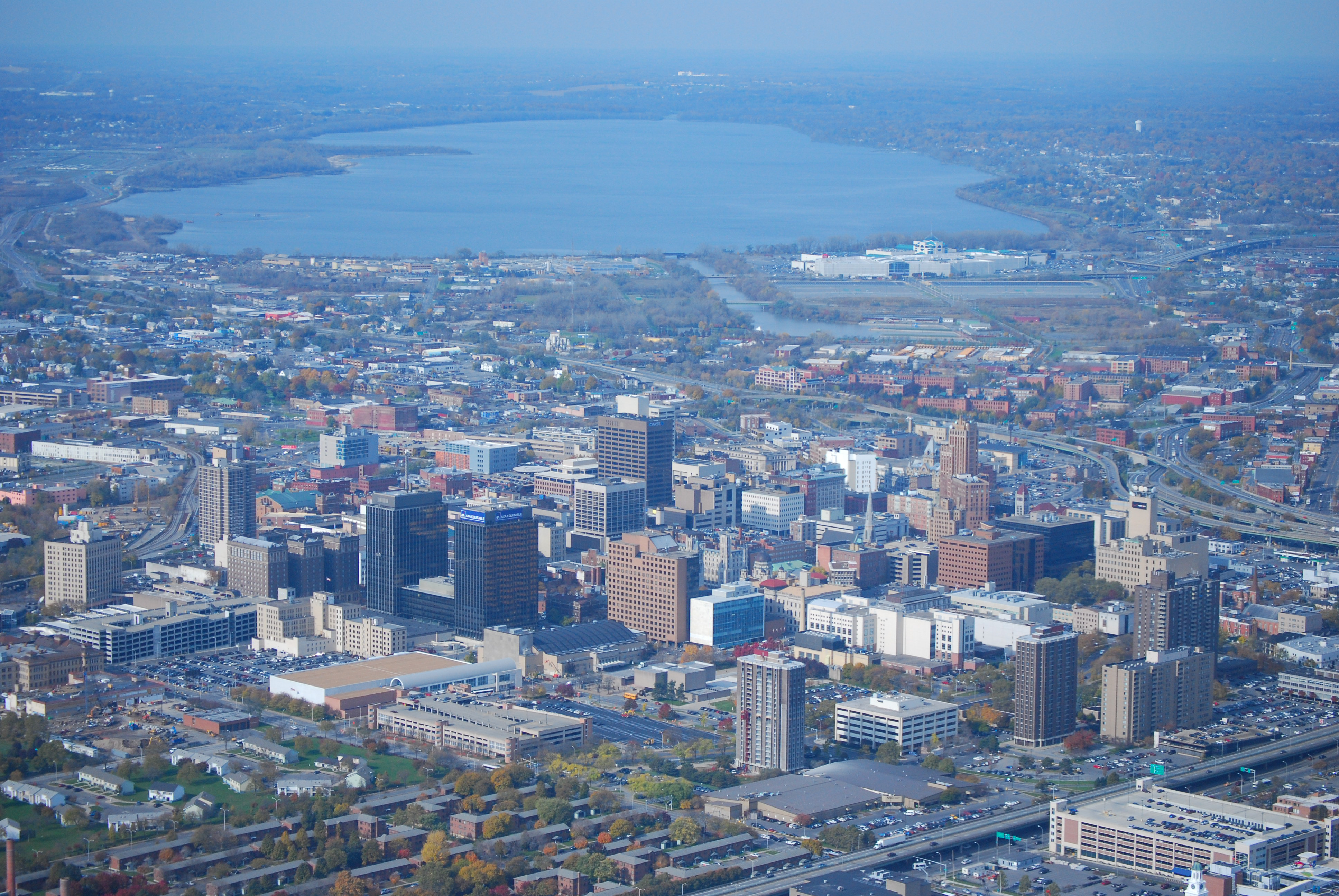
Located at 43.05°N, 76.15°W in central New York between the Finger Lakes and Lake Ontario. From altitude, Syracuse appears as urban development in the valley - Onondaga Lake visible to the northwest, the university campus visible on the hill, the I-81 viaduct (or its replacement) visible through downtown. What appears from altitude as an upstate New York city is the Salt City - where the Erie Canal brought prosperity, where I-81 is finally coming down, and where snow falls in quantities that define the character.