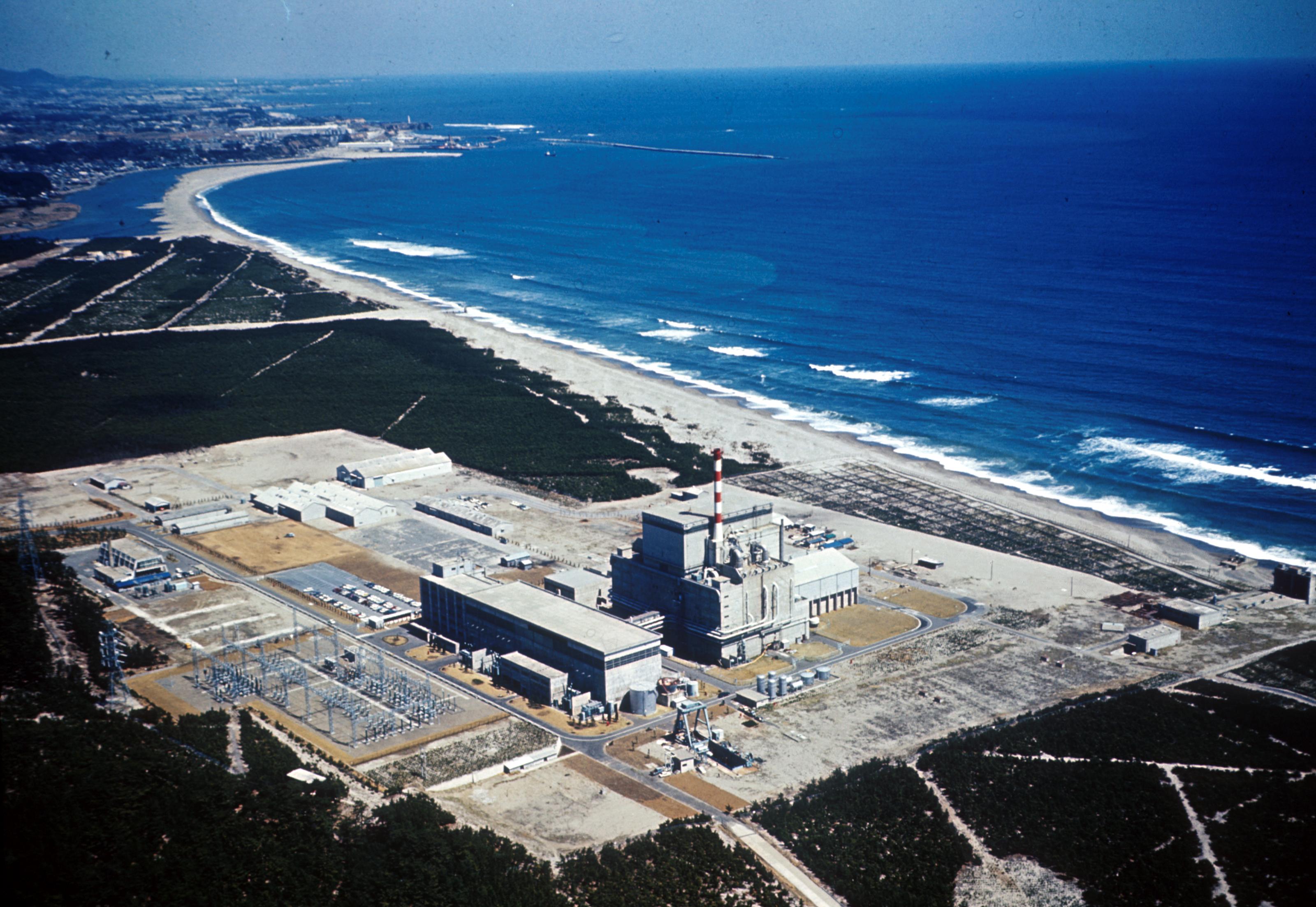
Tokai Nuclear Power Plant
The seawall was finished on March 9, 2011. Two days later, waves from the most powerful earthquake in Japan's recorded history crashed over it. The Tokai Nuclear Power Plant, sitting on the Pacific coast of Ibaraki Prefecture just 110 kilometers northeast of Tokyo, had come within centimeters and hours of a disaster that could have dwarfed the one unfolding 270 kilometers to the north at Fukushima. That the plant survived at all -- losing external power, watching its levee overrun, but keeping two of three cooling pumps alive -- owed everything to a last-minute construction project that had been delayed for years. The story of this facility, Japan's first commercial nuclear plant, is a decades-long study in the thin margin between preparation and catastrophe.
Britain's Blueprint on a Japanese Shore
Tokai Unit 1 was a transplant. Built in the early 1960s using British Magnox reactor technology -- a graphite-moderated, gas-cooled design originally developed for dual civilian and military purposes -- it began generating power in 1966, making it Japan's first commercial nuclear reactor. The Japan Atomic Power Company operated it on a 188-acre site in the village of Tokai, Naka District, where 43 percent of the grounds were maintained as green space. Unit 1 ran for 32 years before ceasing operations on March 31, 1998, and became the first full-size nuclear reactor to be decommissioned in Japan. The process stretched over more than a decade: fuel was removed by 2001, turbines came down in 2003, the fuel crane was dismantled in 2004, and the reactor itself was finally taken apart in 2011. A second unit, a Boiling Water Reactor that became the first in Japan to produce over 1,100 megawatts of electricity, was built at the same site in the 1970s. Despite being classified as a technically separate power station on paper, it shares a front gate with the rest of the complex.
Two Accidents in Tokaimura
The 1990s brought two nuclear accidents to the Tokai area, each exposing failures in safety culture. On March 11, 1997, a fire broke out at the nearby reprocessing facility's bituminisation plant, where low-level radioactive waste was being encased in molten asphalt for storage. The fire spread, and by evening, built-up gases exploded, shattering windows and doors and exposing more than 20 workers to radiation. Management compounded the disaster by ordering workers to falsify the timeline and delaying their report to the national Science and Technology Agency, prolonging emergency response. The second accident was far worse. On September 30, 1999, three poorly trained technicians at a separate fuel processing facility poured enriched uranium by hand into a precipitation tank, triggering an uncontrolled nuclear chain reaction -- a criticality accident -- that persisted intermittently for 20 hours. Two of the three workers died from radiation exposure. A total of 119 people were irradiated, and the accident was classified as Level 4 on the international nuclear event scale.
Racing the Waves
Engineers had long known the coast was vulnerable. In 2002, the Japan Society of Civil Engineers estimated that tsunami waves at the site could reach 4.86 meters. Ibaraki Prefecture's own 2007 calculations put the figure at 6 to 7 meters. The plant's existing seawall stood just 4.9 meters high. Japan Atomic Power began raising it to 6.1 meters in July 2009, prioritizing protection of the seawater pumps that cooled the emergency diesel generators. By September 2010 most of the work was done, but cable holes in the levee remained unsealed, with completion scheduled for May 2011. Workers managed to finish the seawall additions on March 9. On March 11, the magnitude 9.0 Tohoku earthquake struck. Waves measuring 5.3 to 5.4 meters hit the plant -- overtopping the old wall height but just barely within the margin of the new one. External power was lost. One of three seawater pumps failed. But the remaining two kept the emergency diesel generator cooled, and the reactor achieved cold shutdown. The margin of survival was measured in centimeters and days.
An Unresolved Future
The Tokai 2 reactor has not operated since it automatically shut down on March 11, 2011. Post-Fukushima stress tests revealed that the plant's electrical installations did not meet government earthquake-resistance standards. In 2017, the Nuclear Regulation Authority discovered that incorrect fuel rod position data had been used in safety evaluations for the entire life of the plant, stemming from a specification change during original construction. Despite these findings, the NRA approved a 20-year operating extension in November 2018. But public opposition has been fierce. Over 100,000 residents signed petitions against restart. In October 2011, the mayor of Tokai village publicly called for decommissioning. In March 2021, the Mito District Court ordered operations suspended after 224 plaintiffs challenged the plant's seismic safety calculations. Additional protective construction, including a 1.7-kilometer sea wall, has faced repeated delays. The plant sits in limbo -- cleared to operate by the national regulator but blocked by courts and local resistance, a symbol of Japan's unresolved reckoning with nuclear power.
From the Air
The Tokai Nuclear Power Plant is located at 36.47N, 140.61E on the Pacific coast of Ibaraki Prefecture, in the village of Tokai. From the air, the facility is visible as a large industrial complex on the shoreline, with the distinctive containment structures of Unit 2 and the decommissioning site of Unit 1. The adjacent JAEA campus and J-PARC accelerator complex are visible to the south. Nearest airport: Ibaraki Airport / Hyakuri Air Base (RJAH) approximately 30nm south. Narita International Airport (RJAA) is approximately 50nm southwest. The coastal location offers generally clear visibility, but sea fog is common in spring. The plant is 110 km northeast of central Tokyo.