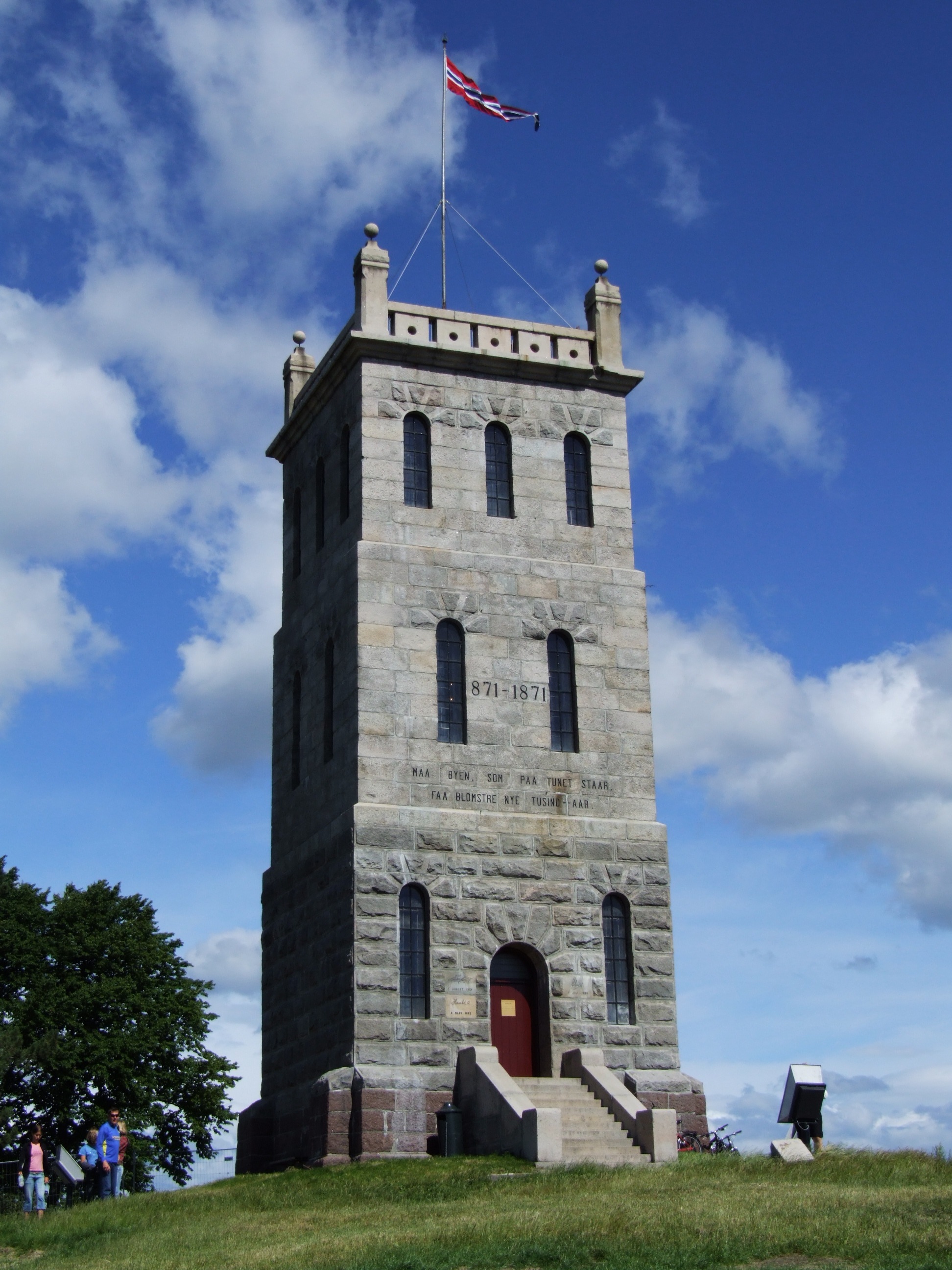
Tonsberg Fortress
A thousand years of Norwegian history are compressed into a single hilltop. Tonsberg Fortress -- Tunsberghus -- once crowned the heights above what is commonly believed to be Norway's oldest town, a settlement that according to the sagas predates the very unification of the nation. The Yngling dynasty made it their stronghold. Kings were proclaimed at the Haugating assembly nearby. And in 1319, the last monarch of a fully independent Norway died within these walls, closing a chapter that would not reopen for nearly six centuries.
Where Kings Were Made
Dating to 871, Tonsberg was already an established trading center when Harald I united Norway after the Battle of Hafrsfjord. According to the Icelandic chronicler Snorri Sturluson, the town existed before that pivotal conflict -- making it a place that predates Norway itself as a unified kingdom. The Haugating, the regional assembly for Vestfold, met here, and it became one of the most important sites in the country for the proclamation of kings. By the 11th century, Tonsberg's harbor on the Oslofjord had eclipsed the old trading center at Skiringssal, drawing merchants and power alike to its wharves.
Castrum Tunsbergis
In 1253, King Haakon Haakonson transformed the hilltop into something formidable. He ringed the mountain with castellated walls and filled the enclosure with support buildings, creating what would become Norway's largest castle. His successor Magnus Lagabote expanded it further, adding towers, residential halls, and a church. The fortress resisted a Danish attack in 1253. In 1261, Magnus brought his bride Ingeborg of Denmark to live within its walls. In 1335, King Magnus Eriksson married Blanche of Namur here, gifting the castle to her as a wedding present. These were not just military fortifications -- they were the living quarters of a dynasty, a place where royal marriages were celebrated and where the affairs of a nation were conducted.
The Siege and the Death
In September 1201, King Sverre Sigurdsson laid siege to Tunsberg mountain with a force of 1,000 men after rebel leaders from across eastern Norway took refuge on the heights. The siege lasted five months before the defenders surrendered. Sverre himself paid a price for the victory -- he fell ill during the campaign and died shortly after returning to Bergen in 1202. More than a century later, Hakon V Magnusson, the last king of the Harald lineage, lay ill and died at Tunsberghus in 1319. With his passing, the direct royal line that had built and sustained the castle came to an end, and Norway's independence slowly unraveled into the Kalmar Union with Denmark and Sweden.
Destruction and Memory
By 1387, Norwegian royalty no longer lived in the castle, and Tunsberghus became one of the four chief Norwegian fortresses administered by governors. When the Kalmar Union collapsed, the consequences were brutal. In 1503, Swedish soldiers and local peasants destroyed the fortress, leaving only scattered ruins on the hilltop. For centuries, the site lay largely forgotten. In 1856, the Tonsberg Maritime Club built a wooden watchtower on the heights, but it burned down in 1874. The present memorial tower, Slottsfjellet, was raised in 1888 -- not as a restoration but as a tribute to what had been. Inside, gilded plaques bear the signatures of three modern Norwegian kings: Haakon VII in 1906, Olav V in 1958, and Harald V in 1992, each acknowledging the continuity between the medieval stronghold and the modern nation it helped create.
Vestfold's Living Archive
At the base of the hill, the Slottsfjell Museum has preserved Vestfold's cultural history since 1939. Its exhibitions cover everything from the region's whaling and shipping traditions to rural and urban life through World War II. The museum and the fortress ruins together form a layered portrait of a place that was already ancient when the first castle stones were laid. Walking the paths among the remaining walls, it is easy to forget that the modest hilltop above the Oslofjord once held the largest castle in a kingdom that stretched from these southern shores to the Arctic.
From the Air
Located at 59.27N, 10.40E on the western shore of the Oslofjord, about 100 km south of Oslo. The hilltop with the memorial tower (Slottsfjellet) is visible from the air. Nearest airport is Torp Sandefjord (ENTO), approximately 30 km to the southwest. Best viewed at 2,000-3,000 ft AGL for the town and fjord context.