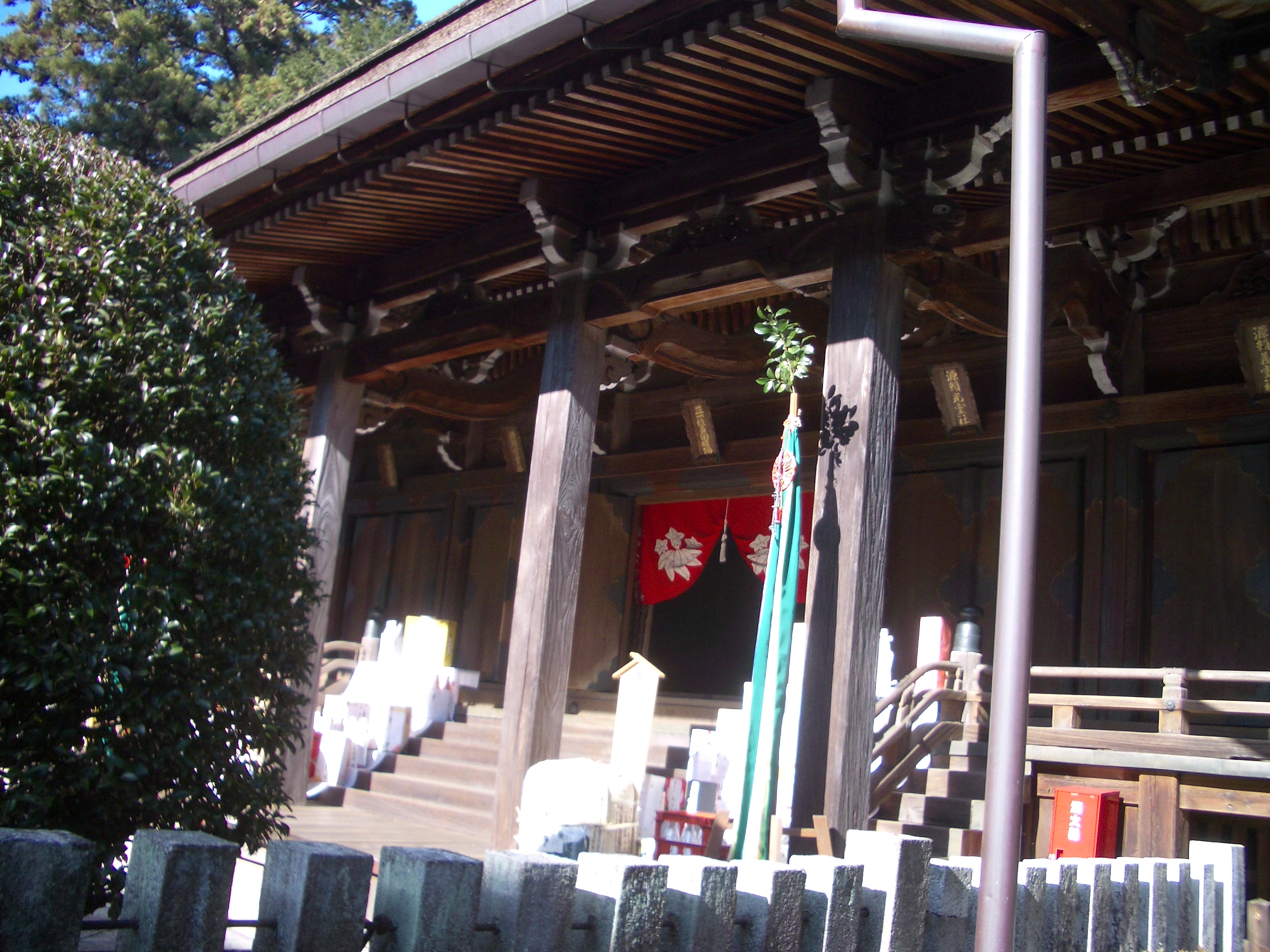
Tada Shrine
They called it the Nikko of Western Japan. That comparison -- to the lavishly decorated Tokugawa mausoleum complex near Tokyo -- speaks to how deeply the Tada Shrine in Kawanishi was revered by the warrior class that shaped Japan's feudal history. Nestled in a forested hillside in Hyogo Prefecture, this shrine is the spiritual home of the Seiwa Genji, the branch of the Minamoto clan that produced Japan's first shogun, Minamoto no Yoritomo, and from which the Ashikaga and Tokugawa shogunal dynasties also claimed descent. Five generations of Minamoto warriors are enshrined here as kami, their stories spanning from the tenth century through to the age of the samurai. Designated a National Historic Site in 1951, Tada Shrine stands as a living link to the founding mythology of Japanese military governance.
A Warrior's Oracle
The shrine's origins reach back to 970 when Minamoto no Mitsunaka, governor of Settsu Province and founder of the Seiwa Genji line, received a divine oracle from Sumiyoshi Okami directing him to establish his residence in what is now Kawanishi. Mitsunaka was a formidable figure -- he had exposed the Anna Incident, a political conspiracy that cemented his reputation as both warrior and political operator. But in his later years, visited by the Buddhist monks Ingen, Genshin, and Kaku'ub of the Tendai sect, Mitsunaka experienced a spiritual crisis. "I'm someone who has killed an immeasurable number of living things," he declared. "I'd like to atone for these sins." He converted to Buddhism and built a cluster of halls known as Tada-in. When he died in 997, he was buried within this compound, establishing it as the ancestral seat of his clan.
Demon Slayers and Heavenly Kings
The five kami enshrined at Tada Shrine read like a roster of Japan's most legendary warriors. Mitsunaka's eldest son, Minamoto no Yorimitsu, is among the most famous figures in Japanese folklore. He amassed wealth serving the Fujiwara clan and governing multiple provinces, but his fame rests on the monster-slaying adventures attributed to him and his four retainers, known as the Shitennō -- the Four Heavenly Kings. In legend, Yorimitsu infiltrated the lair of Shuten-doji, the drunken demon of Mount Oe, disguised as a mountain ascetic, poisoned the oni with enchanted sake, and severed its head. Yorimitsu's brother Yorinobu suppressed the rebellion of Taira no Tadatsune and laid the foundations for Minamoto power in eastern Japan. Their descendants, Yoriyoshi and Yoshiie, ended the Early Nine Years' War and Later Three Years' War respectively, earning Yoshiie the title "greatest and bravest warrior in the world."
Shoguns' Ashes, Shoguns' Patronage
As the ancestral mausoleum of the Seiwa Genji, Tada-in attracted the reverence of every warrior government that followed. During the Kamakura period, the regent Hojo Yasutoki became land steward of the Tada estate and commissioned a major reconstruction. In 1273, the monk Ninsho of Saidai-ji was appointed to oversee the restoration, and the complex shifted from the Tendai sect to the Shingon Risshu sect. When Ashikaga Takauji founded his shogunate in the fourteenth century, he claimed Seiwa Genji descent and made Tada-in a mortuary temple for successive Ashikaga shoguns, whose ashes were interred on the grounds. But this protection did not survive the wars of unification: Oda Nobunaga's forces destroyed the temple in 1577, leaving it in ruins for nearly a century.
Tokugawa Restoration
Recovery came in 1665, when Sakakibara Tadatsugu of Himeji Domain and Inaba Masanori of Odawara Domain joined with descendants of the original Tada-in retainers to rebuild the complex. Shogun Tokugawa Ietsuna endowed the shrine with an estate worth 500 koku for its upkeep, and by 1667 most structures had been reconstructed. These Edo-period buildings -- the main hall, worship hall, and zuishinmon gate, all dating to 1667 -- survive today as Important Cultural Properties. Shogun Tokugawa Tsunayoshi restored the main shrine building in 1695. Like the Ashikaga before them, successive Tokugawa shoguns had their ashes and ihai mortuary tablets enshrined at the temple, reinforcing its role as the spiritual headquarters of Japan's ruling warrior caste.
From Temple to Shrine
The Meiji Restoration of 1868 transformed Japan's religious landscape through a forced separation of Shinto and Buddhism. Tada-in, which had functioned as a Buddhist temple for nine centuries, was converted into a Shinto shrine. The five Minamoto ancestors were reclassified as kami rather than Buddhist spirits, and the complex was renamed Tada Shrine, receiving the rank of Prefectural Shrine under the modern system. Today, the shrine is one of the Three Genji Shrines, alongside Rokusonno Shrine in Kyoto and Tsuboi Hachimangu in Osaka. Its grounds hold 43 scrolls containing 492 historic documents, designated as Important Cultural Properties. The grave of Minamoto no Yorimitsu -- the legendary demon slayer -- rests within the compound, a tangible connection to the folklore that has fascinated Japan for a millennium. Kawanishi city celebrates the Genji Festival annually, keeping the warrior heritage alive in a prefecture better known today for the port of Kobe.
From the Air
Located at 34.861N, 135.403E in the hilly northern suburbs of the Osaka-Kobe metropolitan area, in Kawanishi, Hyogo Prefecture. The shrine sits in a forested valley along the Ina River. Osaka Itami Airport (RJOO) lies approximately 10 km to the south-southeast. Kansai International Airport (RJBB) is about 50 km to the south-southwest. Kobe Airport (RJBE) is roughly 30 km to the south. Best viewed at 3,000-5,000 ft AGL, where the forested shrine grounds contrast with surrounding residential development.