Tahrir Square
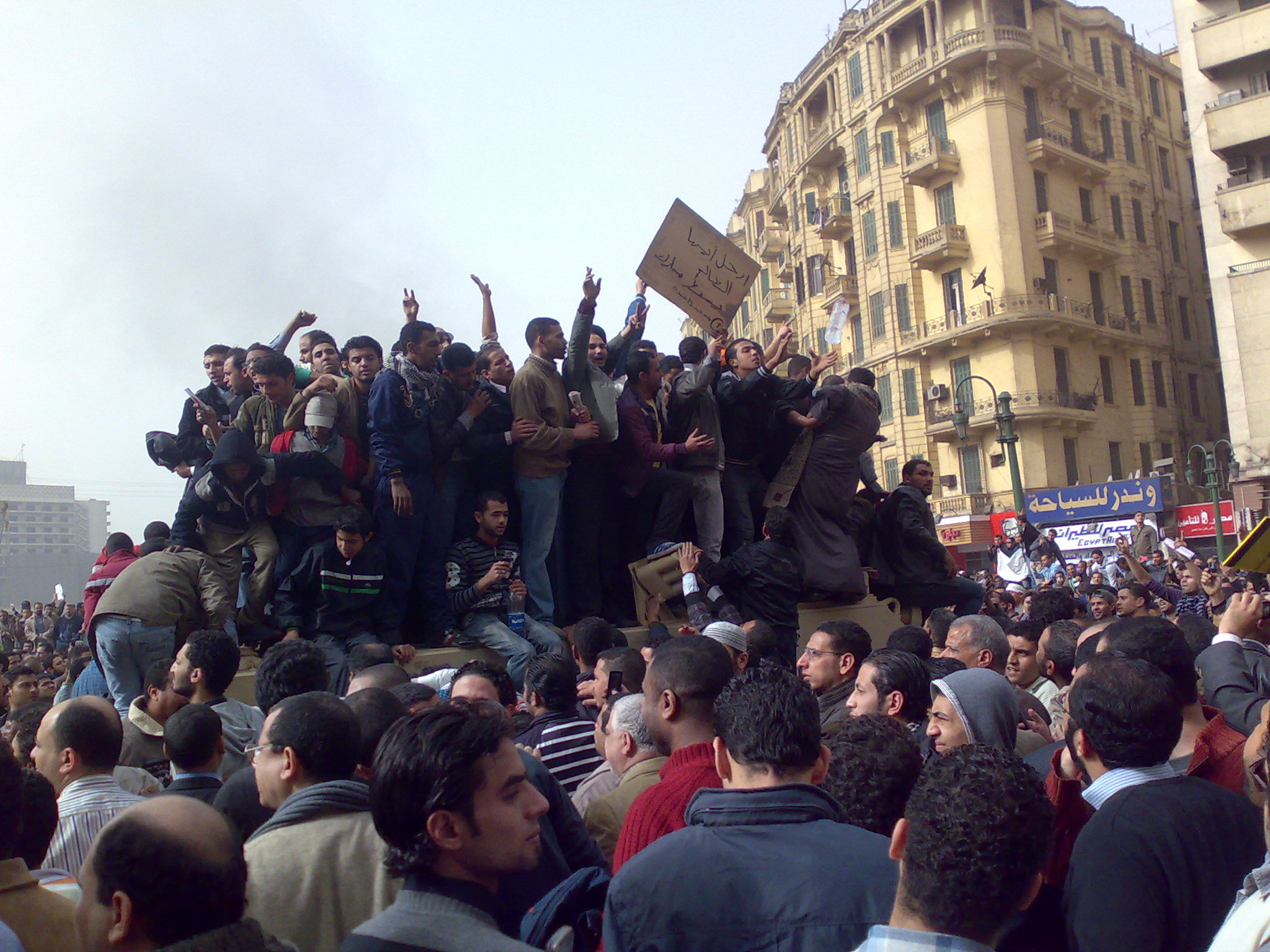
The name has changed four times, and each renaming tells you who held power. In 1867, Khedive Ismail laid out a grand public square as the centerpiece of his modernized downtown Cairo, his "Paris on the Nile," and called it Ismailia Square. After the 1919 revolution, Egyptians began calling it Tahrir, Liberation. In 1933, King Fuad renamed it after his father, Khedive Ismail. In 1953, after the revolution that ended the monarchy, the state made Tahrir its official name. That name never quite stuck in everyday speech until January 2011, when the world watched hundreds of thousands of Egyptians fill the square to demand the end of Hosni Mubarak's thirty-year rule. After that, no one called it anything else.
The Geometry of Protest
Tahrir Square is, in practical terms, a large traffic circle at the intersection of some of Cairo's most important streets. Qasr al-Ayni Street terminates at its southern edge, Talaat Harb Street at its western end, and Qasr al-Nil Street crosses its southern portion, giving direct access to the Qasr al-Nil Bridge over the Nile. The surrounding buildings include the Egyptian Museum, the Mogamma government building, the Headquarters of the Arab League, and the original downtown campus of the American University in Cairo. Beneath the square, the Sadat metro station serves as the junction of two metro lines. This convergence of roads, institutions, and transit made the square a natural gathering point long before it became internationally famous. The 1977 Egyptian Bread Riots brought crowds here. So did the March 2003 protests against the Iraq War. Every major convulsion of Egyptian public life passed through this space.
Eighteen Days
On 25 January 2011, more than 50,000 protesters occupied Tahrir Square, demanding the resignation of President Hosni Mubarak. Wireless services in the area were disrupted. On 29 January, fighter jets flew low over the crowds. By 31 January, Al Jazeera correspondents reported at least 250,000 people in the square. Independent crowd-size analyses later suggested the square's maximum capacity was between 200,000 and 250,000, though adjacent streets swelled the numbers further. On 2 February, violence broke out between pro-Mubarak and pro-democracy demonstrators. The next day, dubbed the "Friday of Departure," became one of the named protest days centered in the square. A Facebook page maintained by a rotating staff of twenty countered distorted coverage from state-aligned media. Within a week, Tahrir Square was a household name worldwide. On 11 February, Vice President Omar Suleiman announced that Mubarak had transferred all authority to the military. The square erupted in celebration. The next morning, men and women returned to sweep the cobblestones, replacing paving stones that had been used as projectiles and hauling away eighteen days of trash and graffiti.
Ancient Monuments, Modern Makeover
Between 2019 and 2020, the Egyptian government reimagined Tahrir Square as an open-air museum. Workers installed a 100-ton obelisk from the reign of Ramesses II, originally unearthed at the ancient city of Tanis in 2019, and four ram-headed sphinx statues relocated from Karnak. The installation required extensive excavation above the ceiling of the Sadat metro station to secure the obelisk's weight. Surrounding building facades, including the massive Mogamma, were repainted in uniform beige and brown tones. Commercial signage was standardized. Roughly 10,000 lighting units were installed for nighttime illumination. Palm and olive trees, marble benches, and new pedestrian walkways completed the transformation. Archaeologists criticized the relocation of the sandstone sphinxes, arguing that the soft stone would deteriorate rapidly in downtown traffic pollution and heat. The renovation, critics noted, also had the effect of making the square less hospitable to the kind of mass gatherings that had made it famous.
A Square That Cannot Be Neutral
Every Egyptian government since 1867 has tried to define what Tahrir Square means. Khedive Ismail saw it as a symbol of modernization. The revolutionaries of 1952 claimed it for liberation. In 2013, it filled again when hundreds of thousands demanded the resignation of President Mohamed Morsi, using the same slogan from 2011: "the people want the ouster of the regime." In 2015, President el-Sisi erected a large flagpole in the center, which authorities described as a neutral monument unlikely to attract controversy. The obelisk and sphinxes followed, anchoring the square in a pharaonic past that predates every modern political claim. But the name itself resists neutrality. Tahrir means liberation, and as long as the square carries that name, every monument placed upon it becomes a proposition about what Egypt is being liberated from, and by whom.
From the Air
Located at 30.044N, 31.236E in downtown Cairo on the east bank of the Nile. The large traffic circle with its central obelisk is clearly visible from the air, flanked by the Egyptian Museum to the north and the Mogamma building to the south. The Qasr al-Nil Bridge extends west to Gezira Island. Nearest major airport is Cairo International (HECA), approximately 20 km northeast. Recommended viewing altitude: 2,000-3,000 ft AGL. The square sits at the meeting point of several major avenues radiating through downtown Cairo.