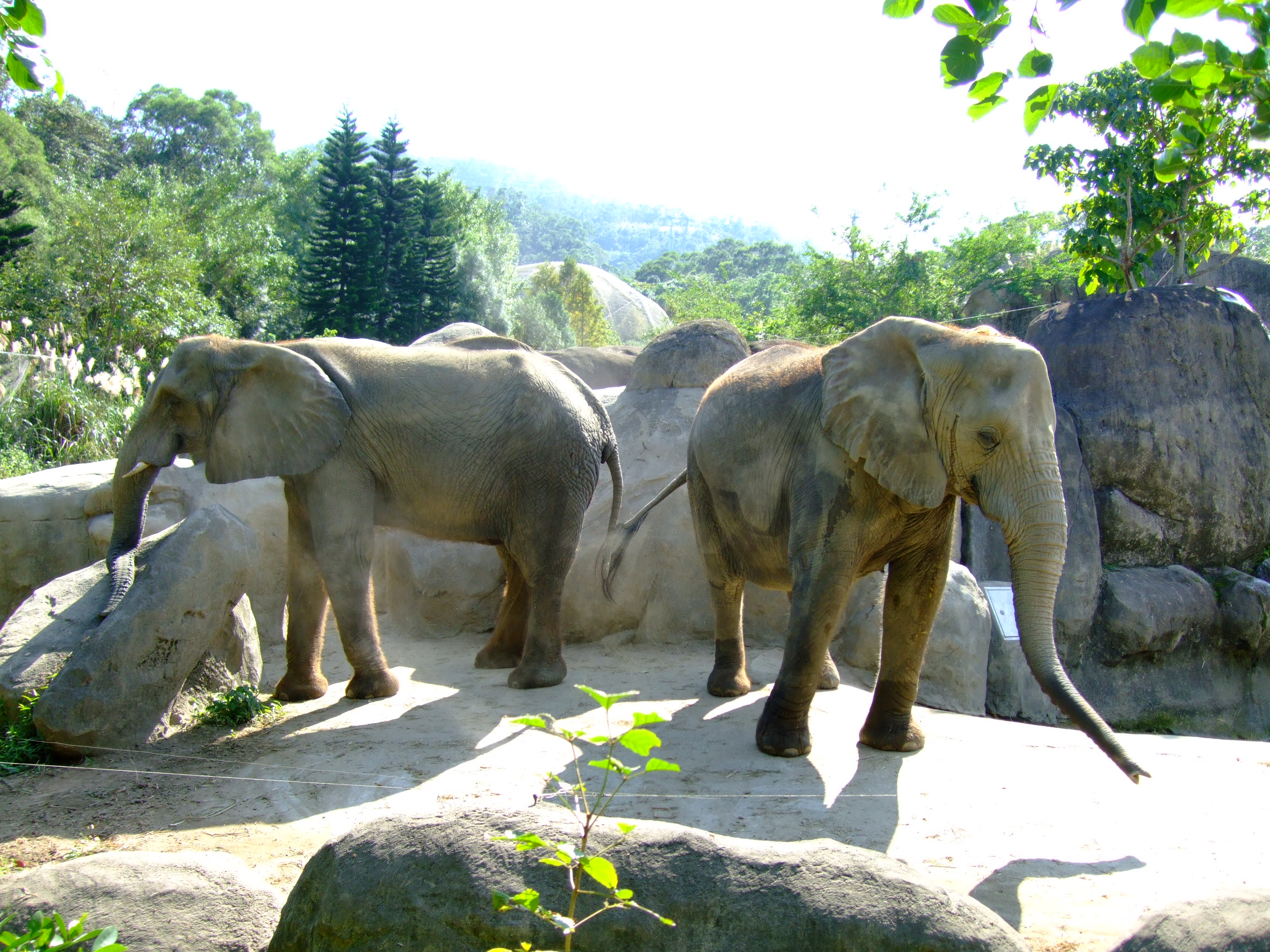
Taipei Zoo
For decades, the most famous animal in Taiwan was a bull elephant named Lin Wang. He had served with the Chinese Expeditionary Force during the Second Sino-Japanese War, relocated to Taiwan with retreating Kuomintang forces, and spent most of his life at the Taipei Zoo, where generations of children called him "Grandpa Lin Wang." His story mirrors the zoo's own: founded under one regime, transformed under another, and now sprawling across 165 hectares of Taipei's southeastern hills as one of the largest zoological gardens in Asia.
From Maruyama to Muzha
The zoo began as Maruyama Zoo in 1914, during Taiwan's years under Japanese rule. A Japanese citizen named Mr. Oe established it as a private garden on Mt. Maruyama, in what is now the Yuanshan district. The colonial government purchased it the following year and opened it to the public. After World War II, ownership passed to the Taipei City Government of the Republic of China. By the 1980s, the old Yuanshan site could no longer accommodate the growing collection. In 1986, the zoo relocated to its current site in the Muzha neighborhood of Wenshan District, earning the informal name "Muzha Zoo." The move gave it room to breathe: 165 hectares, with 90 open to visitors, stretching across forested hillside where the Maokong Gondola now carries passengers above the treetops.
Pandas and Politics
In 2008, the zoo received two giant pandas from the People's Republic of China, named Tuan Tuan and Yuan Yuan. Together, their names mean "reunion," a pointed message that was not lost on anyone in Taiwan. President Chen Shui-bian had rejected the offer in 2005, viewing it as propaganda against Taiwan's independence. His successor, Ma Ying-jeou, accepted the pandas as part of warmer cross-strait relations. The move drew 30,000 visitors per day to the zoo and fierce criticism from independence supporters, who noted that the pandas' combined name "perfectly matches Beijing's goal of bringing Taiwan into its fold." On July 6, 2013, the pandas produced Yuan Zai, the first panda cub born in Taiwan, whose public debut six months later drew enormous crowds.
Taiwan's Own Wildlife
Near the entrance, the Formosan Animal Area showcases species found nowhere else: Formosan black bears, Formosan rock macaques, Formosan sika deer, Taiwan serows, and the elusive clouded leopard. Taiwanese pangolins have their own architectural tribute in the Pangolin Dome, a 24-meter-tall pavilion completed in 2019 at a cost of NT$390 million. Shaped like a curled pangolin, the dome was designed to draw attention to wildlife trafficking and the pangolin trade. Inside, tropical rainforest species share space beneath the curved roof. A female aye-aye arrived from Tokyo's Ueno Zoo the same year, adding one of the world's rarest primates to the collection. The insectarium features over 125 butterfly species in a garden behind a stag beetle statue.
A World in Miniature
Beyond the Formosan exhibits, the zoo attempts something ambitious: a walk through the planet's ecosystems in a single afternoon. The African Animal Zone simulates the East African savanna across six hectares, housing elephants, giraffes, lions, gorillas, and white rhinos. The Tropical Rainforest Area brings together Bengal tigers, Bornean orangutans, and Malayan tapirs. Koalas arrived from Australia's Currumbin Wildlife Sanctuary in 1999. The Temperate Zone holds American bison, gray wolves, and Przewalski's horses alongside king penguins and African penguins. Bird World presents over 130 species, from red-crowned cranes to scarlet ibises. Even the Amphibian and Reptile House has a design flourish: a wavy ceiling meant to evoke the movement of snakes.
Weathering Storms
Typhoon Soudelor struck on August 8, 2015, causing NT$10 million in damage and an additional NT$4 million in repairs. The zoo reopened three days later, though some areas remained closed. The storm was a reminder that a zoo built into hillside terrain faces hazards that flat-ground facilities do not. In 2020, the Japanese Foreign Minister's Commendation recognized the zoo for promoting mutual understanding between Japan and Taiwan, a diplomatic nod to a relationship that stretches back to the zoo's founding as Maruyama more than a century ago. Through typhoons, political upheaval, and the complicated diplomacy of borrowed pandas, the Taipei Zoo has persisted as the island's most visited cultural institution.
From the Air
Located at 25.0026°N, 121.582°E in Wenshan District, southeastern Taipei. The zoo's 165-hectare footprint is visible as a large green area at the foot of the Maokong hills. The Maokong Gondola line is a visual landmark. Nearest airport is Taipei Songshan (RCSS), approximately 8 km northwest. Taoyuan International (RCTP) is 35 km west. Best viewed from 2,000-4,000 feet to distinguish the zoo's layout against the surrounding forest.