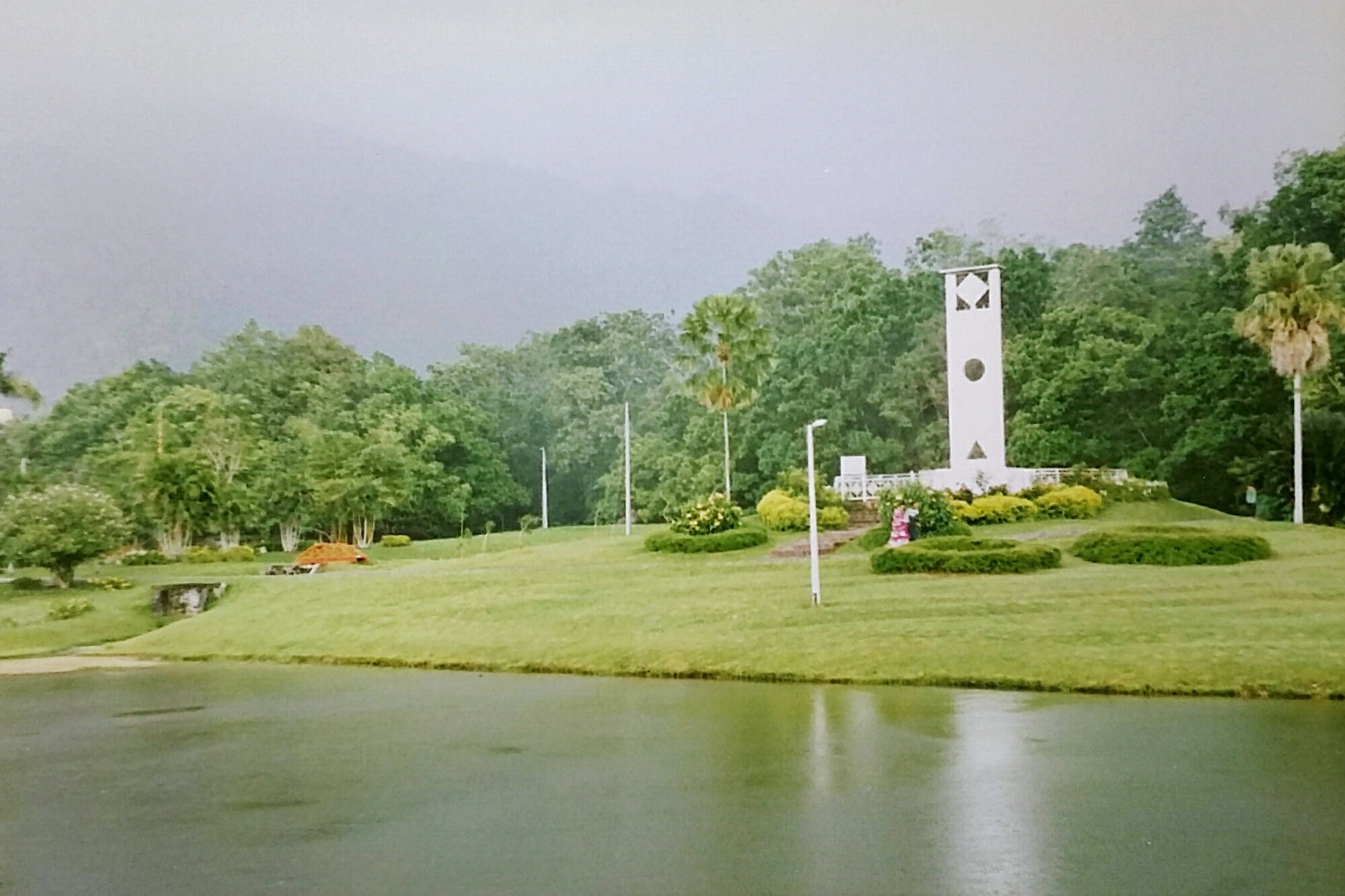
Taiping Lake Gardens
Before dawn, mist drifts low across ten man-made lakes, and the first light catches the silhouettes of rain trees reflected in still water. The Taiping Lake Gardens occupy 64 hectares at the foot of Bukit Larut, in the state of Perak -- and none of it was supposed to be beautiful. These lakes are the scars of tin mining, abandoned pits that filled with rainwater after the ore ran out. That they became Malaysia's first public garden, opened in 1880, is a story of vision imposed on wreckage, of a colonial officer and a Chinese tin magnate who looked at ruined ground and imagined something worth preserving.
Tin and Transformation
Taiping's name means "everlasting peace," an aspiration born from the Larut Wars of the 1860s and 1870s, when rival Chinese mining clans fought bloody battles over the tin deposits in the surrounding hills. When the fighting subsided under British intervention, the landscape bore the marks: open pits, stripped earth, pools of standing water. Colonel Robert Sandilands Frowd Walker, the first Superintendent of Perak, saw potential where others saw desolation. Chung Keng Quee, the Kapitan China of Perak and one of the wealthiest tin miners of his era, donated the abandoned mining ground for public use. By 1884, the gardens had been planted with grasses, flowers, and trees. Parts of the grounds were fenced -- not against vandals, but against roaming bulls. The town planner Charles Compton Reade, working with Lady Swettenham, shaped what would become a garden admired across British Malaya.
The Light Through the Bamboo
What distinguishes the Taiping Lake Gardens from other colonial-era parks is water. Ten lakes and ponds are threaded through the grounds -- Swan Lake, Jungle Lake, Pavilion Pond, Alamanda Pond -- each with its own character, from formal reflecting pools to wilder stretches bordered by jungle. Along Residency Road, golden rain trees (known locally as hujan-hujan, Pterocarpus indicus) once formed a canopy over the pathway. George L. Peet, visiting in 1933, wrote of the scene in terms that still hold: "I know of no more lovely sight in this country than the Taiping gardens when the rays of the early morning sun are shining obliquely through their clumps of bamboo, palms and isolated trees scattered on islands among the expanse of water." He called the experience of light in foliage "quite unobtainable in England." For a British visitor to concede that much tells you something about the power of the place.
A Colonial Neighborhood in Green
The gardens did not exist in isolation. Around their perimeter, the colonial administration built the architecture of governance and leisure. The Old Residency -- home to the Secretary to the British Resident -- sat near the gardens, along with the Raja's House at the junction of Birch Road and Residency Road. Army officers lived along Batu Tugoh Road, their quarters angled to catch the green views. This was the heart of British Taiping, a town that served as Perak's first administrative capital before Ipoh overtook it. The gardens anchored a social world of receptions, walks, and weekend outings. Travelers passing through consistently remarked on the beauty, a rarity in accounts of colonial Malaya that more typically catalogued discomfort and heat.
Where the Hills Meet the Water
Taiping sits in the wettest part of Peninsular Malaysia, and the gardens thrive on that rainfall. Bukit Larut -- formerly Maxwell Hill -- rises to roughly 1,000 meters just behind the town, a hill station accessible by four-wheel drive or a steep two-and-three-quarter-hour hike. The moisture that these highlands wring from passing clouds keeps the gardens lush year-round and feeds the lakes that give the place its character. Nearby, the Taiping Zoo -- Malaysia's first, like the gardens themselves -- draws weekend crowds, and a tulip farm on Bukit Larut adds an unlikely splash of temperate color to this equatorial landscape. But it is the gardens that remain the anchor, a place where locals jog at dawn, families picnic on weekends, and the old tin-mining scars have long since vanished beneath lotus pads and overhanging rain trees.
From the Air
Located at 4.854N, 100.733E in Perak, Malaysia. The gardens sit at the western foot of the Titiwangsa Range, with Bukit Larut (Maxwell Hill) rising prominently to the east. Sultan Azlan Shah Airport (WMBA) at Ipoh is approximately 60 km to the southeast. Penang International Airport (WMKP) is roughly 90 km to the northwest. From altitude, look for the distinctive cluster of elongated lakes amid dense green at the edge of Taiping town. Best viewed at 3,000-5,000 feet for lake detail. Overcast conditions are common given the region's high rainfall.