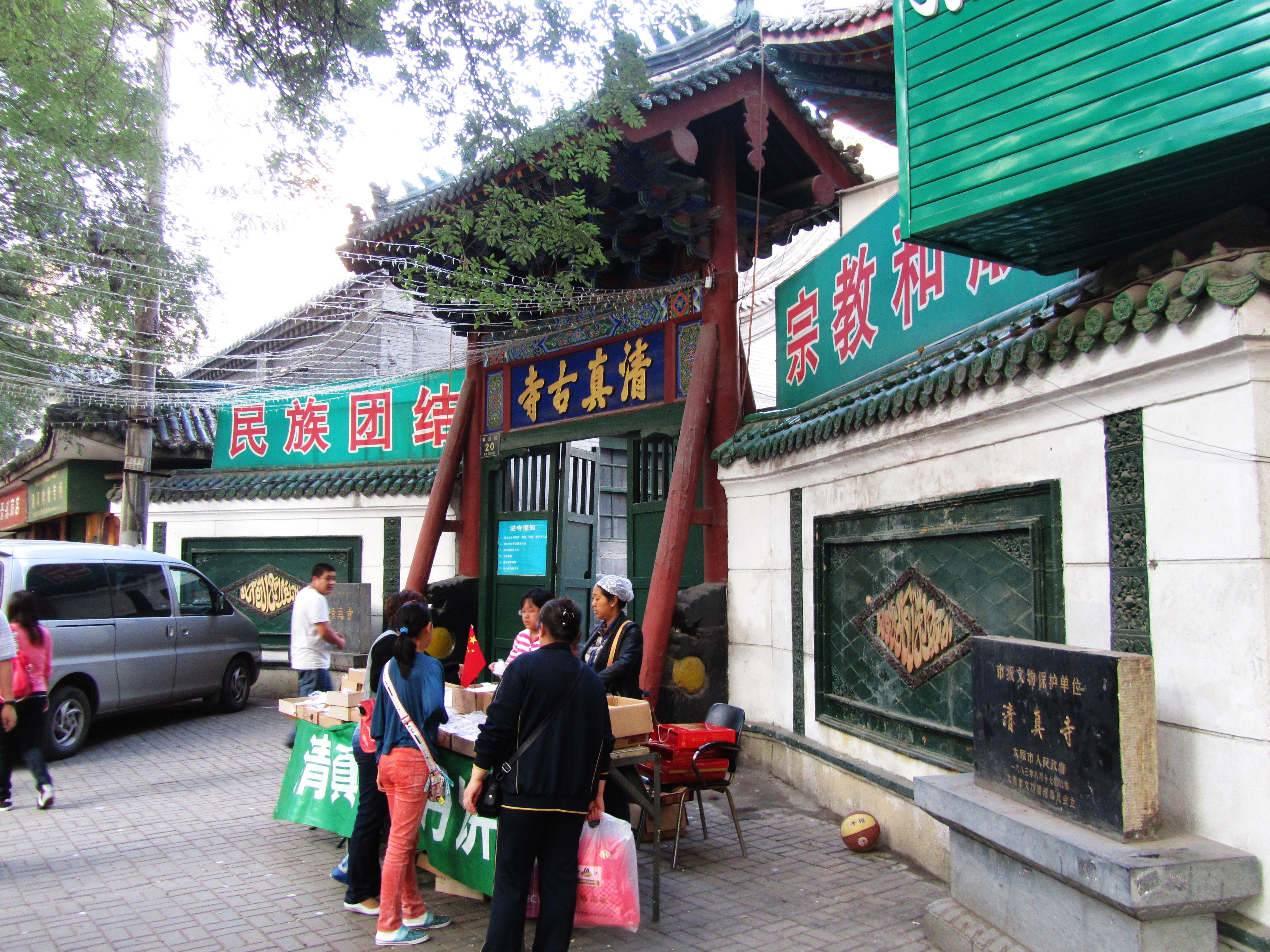
Taiyuan Ancient Mosque
From the street, it could be mistaken for a Chinese temple. Curved rooflines, carved wooden eaves, and a courtyard layout that follows the spatial grammar of traditional Chinese architecture greet visitors to the Taiyuan Ancient Mosque. But step inside the prayer hall and the orientation shifts, the architecture stretching toward Mecca in a space where Chinese craftsmanship serves Islamic devotion. This mosque, originally known as the Qingxiu Mosque, has stood in some form since the eighth century, during the Tang dynasty, making it one of the oldest Islamic religious sites in northern China.
Tang Dynasty Foundations
Islam arrived in China during the Tang dynasty (618-907 CE), carried by Arab and Persian merchants who traveled the Silk Road and sailed the maritime trade routes. The Taiyuan Ancient Mosque was established during the eighth century, within the first two centuries of Islam's presence in China. At that time, Taiyuan was a military and commercial hub, a city where diverse populations mixed as they moved between the Central Asian steppes and the Chinese heartland. The mosque's founding reflects the early establishment of Muslim communities in cities far from China's coastal trading ports, a reminder that the Silk Road's influence reached deep into the interior.
Two Courtyards, Two Traditions
The mosque's layout features two sahns, the open courtyards that are characteristic of Islamic architecture worldwide. But the buildings surrounding them follow traditional Chinese architectural conventions: timber-frame construction, upturned eaves, and decorative archways that would look at home in any Chinese temple complex. The result is a hybrid that feels natural rather than forced. The prayer hall is the most striking expression of this fusion, combining the spatial requirements of Islamic worship, including the orientation toward Mecca, with the structural and decorative vocabulary of Chinese building traditions. Additional structures include a gate, a sermon hall, and wudu facilities for ritual washing before prayer.
Rebuilding Through the Centuries
The existing structures date primarily to the Ming dynasty (1368-1644), the product of multiple renovations and reconstructions that began after the eleventh century. Each rebuilding layered new materials and techniques over the old foundations, so that the mosque visitors see today is a palimpsest of Chinese architectural history. The Ming-era builders chose to maintain the Chinese architectural idiom rather than adopt the domed and minaret-topped style associated with mosques further west, a decision that speaks to the deep integration of these Muslim communities into Chinese society. They were Chinese in culture, Islamic in faith, and the mosque they built reflects both identities without contradiction.
Faith in the Heart of the City
The mosque sits in the Xinghualing District of Taiyuan, accessible on foot from the city's main railway station. Its location in the urban core rather than on the margins underscores the historical centrality of Muslim communities to Taiyuan's commercial and civic life. Today the mosque continues to serve as an active place of worship, one of many mosques across Shanxi province that anchor local Hui Muslim communities. For travelers arriving by train, the walk west from Taiyuan Railway Station to this centuries-old prayer hall is a short journey across a vast span of history.
From the Air
Located at 37.86N, 112.55E in the Xinghualing District of Taiyuan, near the city's railway station. The mosque is in the dense urban center. Nearest major airport: Taiyuan Wusu International (ZBYN). Recommended viewing altitude: 3,000-5,000 feet for city context. The curved Chinese-style rooflines distinguish it from surrounding modern buildings.