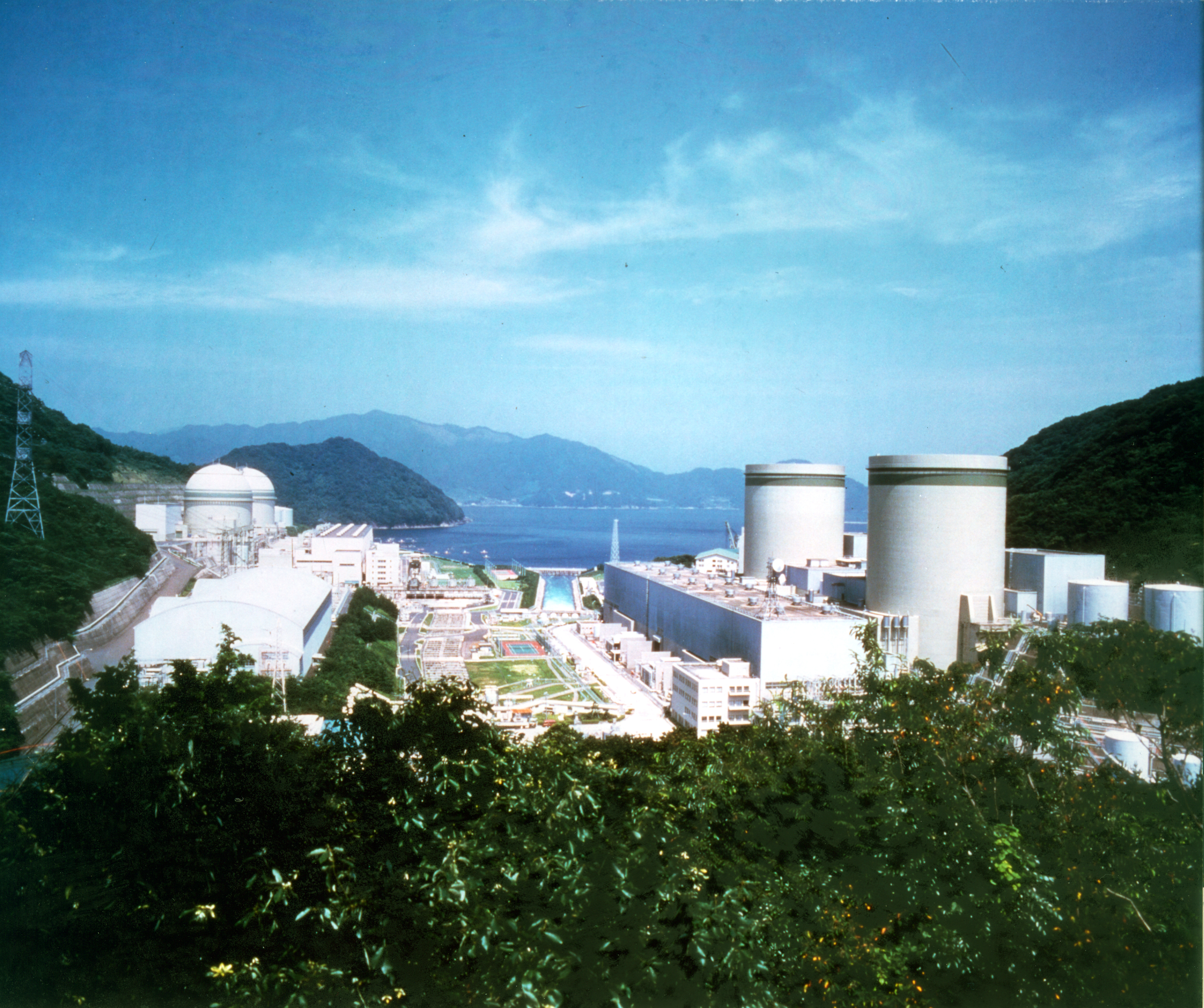
Takahama Nuclear Power Plant
On 29 February 2016, something almost absurd happened at a nuclear power plant in Fukui Prefecture. Reactor Unit 4 at the Takahama Nuclear Power Plant, restarted just three days earlier after years of legal battles and public opposition, shut itself down exactly one second after it began generating electricity. A main transformer failure had tripped the system. The reactor that courts had fought over, that protesters had marched against, that engineers had spent years preparing to restart, produced a single second of power before going silent again. In that one-second flicker lay the whole tangled story of Japan's post-Fukushima nuclear struggle.
Four Reactors on Wakasa Bay
The Takahama Nuclear Power Plant occupies roughly one square kilometer of coastline in the town of Takahama, Ōi District, Fukui Prefecture. Owned and operated by the Kansai Electric Power Company, the facility houses four pressurized water reactors with a combined gross capacity of 3,392 megawatts, enough to power several million homes. Between 2006 and 2010, the plant averaged 22,638 gigawatt-hours of annual production, making it one of the workhorses of the Kansai region's electricity grid. Units 1 and 2 date from the 1970s, while Units 3 and 4 are newer. All four sit on the southern shore of Wakasa Bay, part of the dense concentration of nuclear facilities along this stretch of the Sea of Japan coast that earned the region its informal name among energy analysts: Nuclear Alley.
Plutonium from Cherbourg
On 17 April 2013, a shipment of MOX fuel left the port of Cherbourg in northern France bound for Takahama. It was the first such delivery since the Fukushima disaster two years earlier. MOX fuel, a blend containing about 7 percent plutonium recycled from spent nuclear fuel, represented Japan's commitment to a closed nuclear fuel cycle, a policy that had become far more contentious after the meltdowns at Fukushima Daiichi. The shipment's journey across oceans and through international waters attracted protests in France and Japan alike. Takahama was one of only a handful of Japanese plants designed to use MOX fuel, placing it at the center of not just the domestic nuclear debate but international questions about plutonium transport and proliferation.
Judges Against the Atom
The courts became an unexpected battleground. On 16 April 2015, the Fukui District Court ordered Takahama's reactors to remain offline, ruling that the Nuclear Regulation Authority's safety guidelines were "lacking in rationality" and "too loose." Judge Hideaki Higuchi, who had issued a similar injunction against the nearby Ōi plant in 2014, drew sharp criticism from legal and industry figures. Former Tokyo High Court judge Jun Masuda accused Higuchi of demanding absolute safety from the outset. The Yomiuri Shimbun called the decision irrational, arguing that "seeking zero risk is unrealistic." An appeal by Kansai Electric was rejected by the same court in May 2015. Then in March 2016, just weeks after Units 3 and 4 had finally been restarted, the Otsu District Court in neighboring Shiga Prefecture issued yet another injunction, citing local residents' safety concerns. Unit 3 was shut down again the very next day.
Aging Reactors and Unprecedented Extensions
While the legal battles raged over Units 3 and 4, a quieter but equally significant decision was being made about the plant's oldest reactors. On 20 June 2016, Japan's Nuclear Regulation Authority approved a 20-year license extension for Units 1 and 2, authorizing them to operate until 2034 and 2035 respectively. It was the first time the NRA had approved an extension beyond a reactor's initial 40-year operating life, setting a precedent with implications for nuclear plants across the country. The additional safety measures required for the extension took years to complete. Unit 1 finally restarted on 28 July 2023, more than 12 years after it had last generated power. Unit 2 followed on 15 September 2023. These were among the oldest commercial reactors operating anywhere in the world, their restart a statement that Japan's nuclear infrastructure, battered by disaster and litigation, was not yet finished.
The Stubborn Persistence of Power
Takahama's decade-long saga of shutdowns, court injunctions, one-second failures, and eventual restarts mirrors Japan's broader struggle with nuclear energy. The country lacks significant domestic fossil fuel reserves, making it dependent on imported oil, gas, and coal. Nuclear power once provided roughly 30 percent of Japan's electricity. After Fukushima, that figure dropped to zero. The gradual return of reactors like Takahama's has been painful, contested at every step by citizens, courts, and local governments. From the air, the plant is a compact industrial compound on a narrow strip of coast, backed by the steep mountains of the Wakasa region and facing the calm waters of the bay. It does not look like the site of a national crisis. But the decisions made here about how much risk a society will accept for the energy it needs have echoed far beyond this quiet corner of the Japanese coast.
From the Air
Located at 35.52°N, 135.50°E on the coast of Wakasa Bay, Fukui Prefecture, approximately 15 km west of the Ōi Nuclear Power Plant. The facility appears as a compact cluster of industrial buildings and containment structures on a narrow coastal strip. Best viewed at 3,000-5,000 feet. Nearest airports: RJNF (Fukui Airport, approximately 80 km northeast), RJOY (Maizuru, across the bay to the southwest), and RJBB (Kansai International, approximately 150 km south). Multiple nuclear facilities are visible along this coastline.