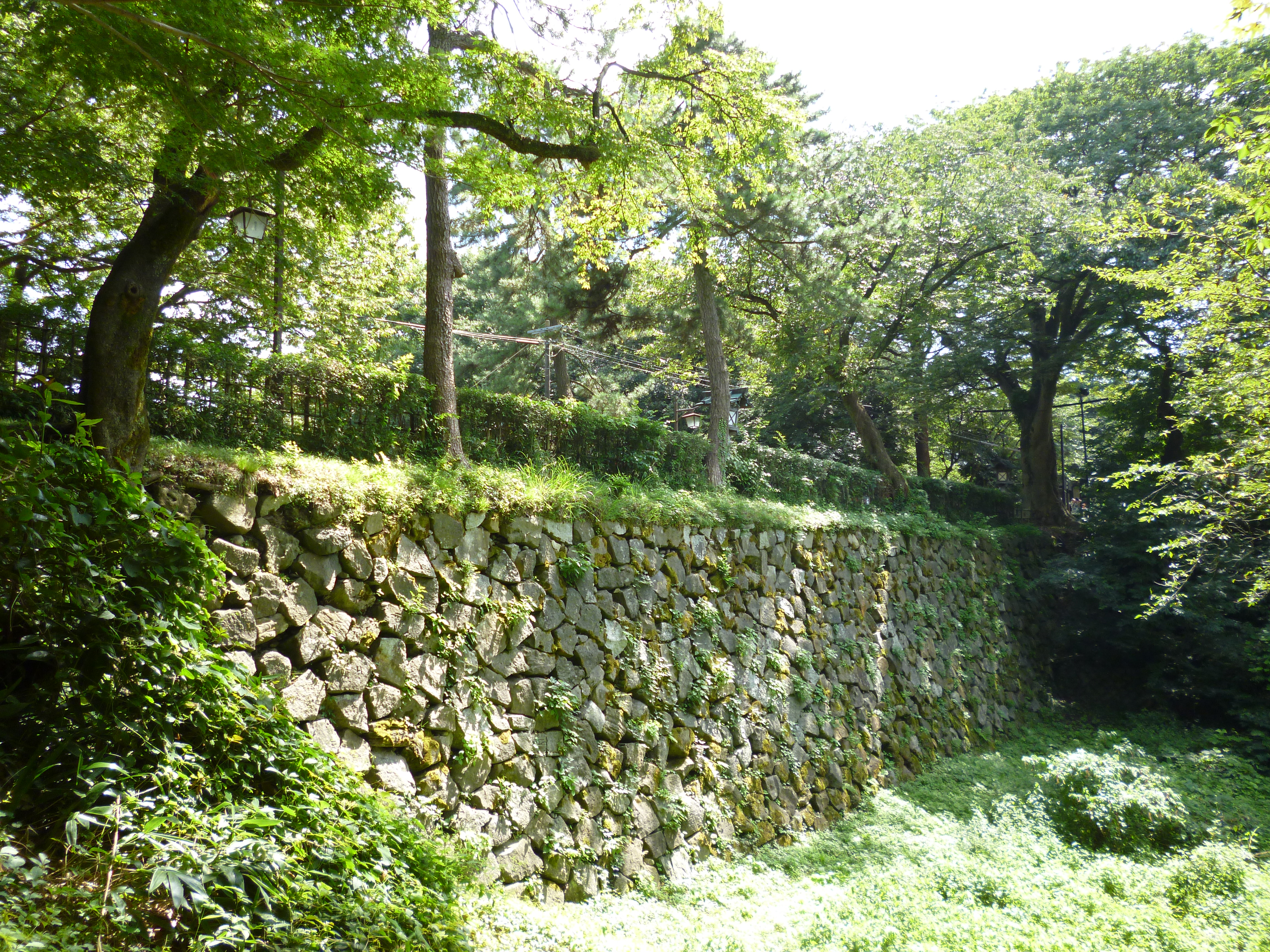
Takaoka Castle
The man who designed Takaoka Castle was not allowed to practice his faith. Takayama Ukon, a baptized Catholic samurai who had taken the name Justo, was exiled to Kaga Province by Toyotomi Hideyoshi for refusing to renounce Christianity. Stripped of his lands and title, Ukon found refuge with the powerful Maeda clan, and in 1609, when Maeda Toshinaga needed a new castle after fire consumed Toyama Castle, the exiled warrior-architect drew the plans. What he created was less a fortress than a statement of elegance: five enclosures arranged around wide moats, designed not primarily for defense but for the beauty of the views along the water. The castle stood at the center of its domain for barely a handful of years before the Maeda clan dismantled it. Today its ruins rank among Japan's Top 100 Castles and draw thousands of visitors each spring, not for walls or towers, but for cherry blossoms reflected in the moats Ukon shaped four centuries ago.
A Retirement Castle Born from Fire
Maeda Toshinaga was only 43 when he retired as daimyo of Kaga Domain in 1605, handing the position to his younger brother Toshitsune, who had married the daughter of Shogun Tokugawa Hidetada. The move was strategic: by linking the Maeda bloodline to the shogun's family, Toshinaga secured the clan's future. He withdrew from Kanazawa Castle to Toyama Castle, where he intended to live out his days. But in 1609, Toyama Castle burned. Toshinaga relocated temporarily to Uozu Castle and petitioned the shogunate for permission to build a new residence at a site called Sekino. When the castle was completed, the location was renamed Takaoka, a name the city still carries. The entire project unfolded in the western reaches of old Etchu Province, at the crossroads of the Hokuriku highway and the road to Noto Province, a site that had served as a provincial center since the Muromachi period.
Elegance Over Ramparts
Takaoka Castle stretched 400 meters long and 200 meters wide, a flatland rectangle surrounded by moats. Its five enclosures were arranged with the inner bailey centered along the western edge, flanked by smaller compounds to the north, east, and south. The west side needed no secondary enclosure because a natural marsh already guarded the approach. Takayama Ukon drew inspiration from the Jurakudai, Toyotomi Hideyoshi's lavish palace in Kyoto, prioritizing visual grandeur and ceremonial prestige over military function. The secondary enclosures were poorly suited for defense. Instead, they framed beautiful sightlines along the moat waters. Whether a tenshu keep or yagura watchtowers ever crowned the walls remains unknown. The castle was a retirement residence for a lord who had already fought his last battles, and its architecture reflected that peace.
From Castle to Warehouse
Toshinaga did not enjoy his new castle for long. After his death, the Maeda clan rebuilt Toyama Castle as the administrative center of Etchu Province and repurposed Takaoka Castle's grounds for more practical use. The enclosures that once hosted a retired lord became storage for tax rice collected across Kaga Domain. Sake breweries, salt warehouses, a gunpowder factory, and the offices of the Takaoka Machi-bugyo, the local governor, filled the castle grounds. For two centuries, the site functioned as a working compound rather than a noble residence. In 1821, fire swept through and destroyed many of these buildings. After the Meiji Restoration ended feudal rule, the government built the district office for Imizu District on the site, completing the castle's transformation from military stronghold to bureaucratic outpost.
Cherry Blossoms on the Moat
What remains of Takaoka Castle is mostly stone ramparts tracing the old enclosure lines and the moats that Ukon designed for their beauty. The ruins became a public park in 1875 and were elevated to a Toyama Prefectural park in 1967. Today the grounds hold the Imizu Jinja, a Shinto shrine ranked as the ichinomiya, the first shrine of Etchu Province, along with the Takaoka Municipal Museum, Takaoka Public Hall, and a small zoo. But the park's defining feature arrives each spring, when hundreds of cherry trees burst into bloom along the moat edges, making Takaoka Castle Park the city's premier hanami destination. The site is a ten-minute walk from Takaoka Station on JR West's Hokuriku Main Line, or five minutes from Etchu-Nakagawa Station on the Himi Line. The castle ruins are designated a National Historic Site, a quiet recognition that what matters here was never the warfare, but the water and the trees.
From the Air
Located at 36.749°N, 137.021°E in central Takaoka, Toyama Prefecture. The castle park's moat system is visible as a distinctive rectangular water feature surrounded by dense tree canopy. The nearest major airport is Toyama Airport (RJNT), approximately 12 nm to the east. The Hokuriku region's flat coastal plain and the Tateyama mountain range to the southeast provide orientation landmarks. Best viewed at 2,000-3,000 ft AGL in clear conditions, particularly stunning during cherry blossom season in spring.