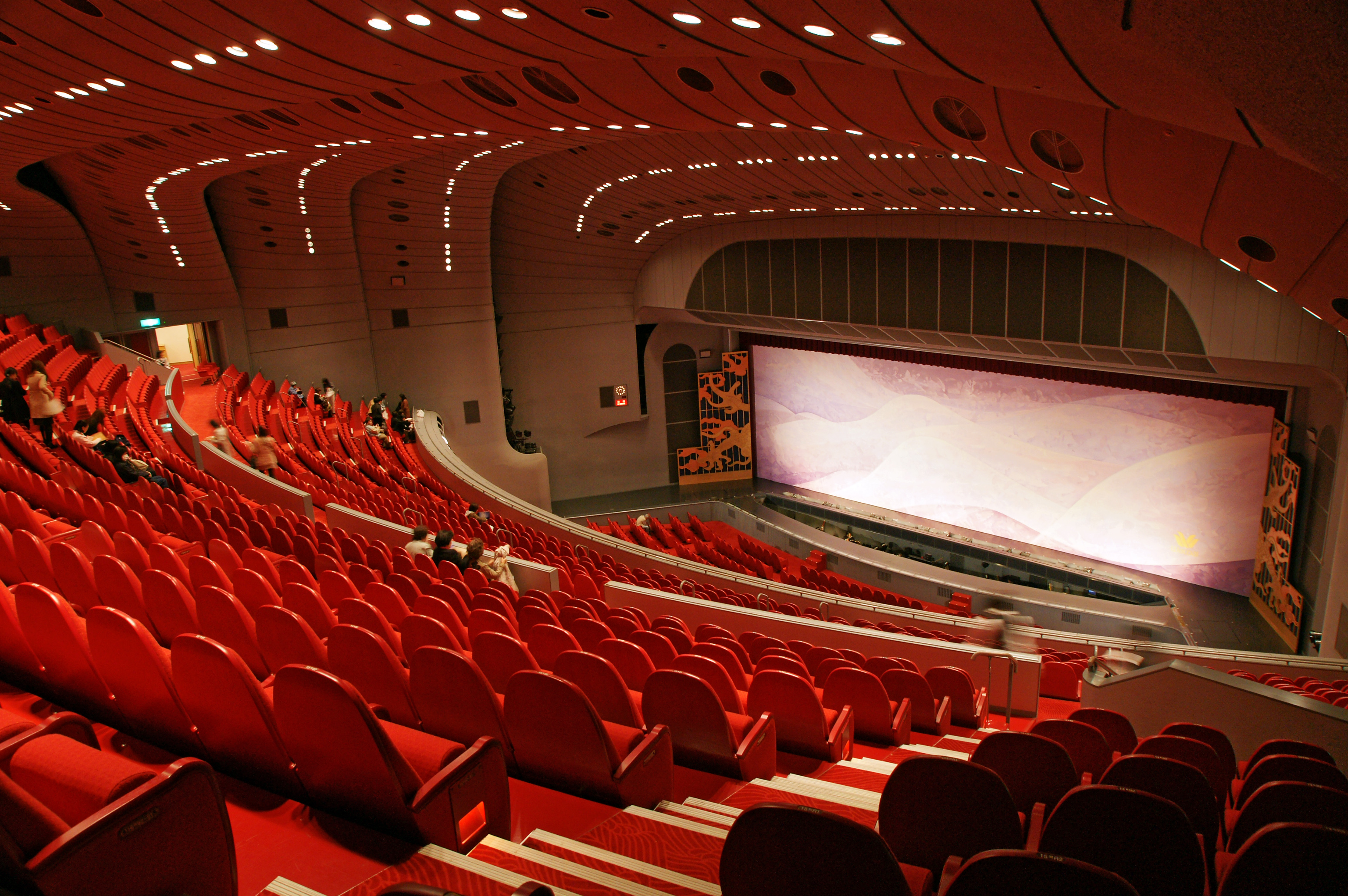
Takarazuka Grand Theater
The first home of the Takarazuka Revue was a converted swimming pool. By 1924, the all-female troupe had outgrown that improvised Paradise Theater so thoroughly that its founder, railway magnate Ichizo Kobayashi, built them something unprecedented: a grand theater in the suburbs, at the terminus of his Hankyu rail line to Osaka. Kobayashi's logic was equal parts showmanship and business strategy. Takarazuka was already a popular hot-springs resort, but he wanted passengers filling his trains in both directions. An immense theater -- bigger and bolder than the small, elite venues in the city center -- would give them a reason to ride all the way to the end of the line. A century later, that gamble has produced one of Japan's most beloved cultural institutions and a theater whose acoustics have been certified "very satisfactory" by the Acoustical Society of America.
Theater for Ordinary People
Kobayashi founded the Takarazuka Revue in 1913 with a deliberately populist vision. He considered kabuki theater old and elitist, and saw Western-style song and dance shows gaining popularity in Japan. His all-female troupe would stage taishuu engeki -- popular theater aimed at ordinary people, not the cultivated audiences of Tokyo and Osaka. The choice of Takarazuka as the troupe's home was pure railway thinking: the city sat at the end of a Hankyu line, and every ticket sold at the theater meant a round-trip fare on his trains. The formula worked. Within a decade, the Revue had become so popular that a proper theater was needed, and the Takarazuka Grand Theater opened in July 1924. A decade later, in 1934, Kobayashi opened a second venue in Tokyo, and the company settled into a rhythm it maintains to this day -- each production runs for a month in Takarazuka before transferring to Tokyo.
A Stage Built for Spectacle
The current Grand Theater opened in 1993, replacing the original structure. It seats 2,550 across two levels -- the capacity grew by 23 seats during 2005 renovations that improved sightlines on the upper tier. The stage is equipped with eight trapdoors, 26 graduated step stairs, three curtains, sixty decorative lights, seven floodlights, and a large circular rotating platform at its center. The technical systems are equally impressive. A sound field control system ensures that every seat in the house receives the same acoustic quality, while a positional sound image control system synchronizes audio movement with the physical positions of the performers onstage. Testing by the Acoustical Society of America measured a reverberation time of 1.1 seconds at 500 Hz -- numbers that place it among the finest performance venues in the world for musical theater.
More Than a Stage
Step inside the Grand Theater and you enter a self-contained world devoted to the Revue. The second floor houses the Salon de Takarazuka, an exhibition space showcasing costumes, stage drawings, videos, and music from the company's long history. The Salon also maintains publicly accessible multimedia archives -- a trove of information on past productions, performers, posters, and advertisements stretching back over a century. Five restaurants operate within the building, each themed to specific repertoires and featuring the favorite dishes of Takarazuka performers. For devoted fans, there is the Revue Shop for souvenirs and Quatre Reves, which sells memorabilia including photographs and catalogs. The theater complex is not just a place to watch a show; it is a destination built around a devotion that verges on the sacred.
The Bow of the Ship
Adjacent to the Grand Theater sits Bow Hall, a smaller 500-seat venue that opened in 1978. The name references the bow of a ship, chosen to convey the idea of leading the way for the Revue's artistic development. Bow Hall stages experimental and smaller-scale works that serve as a creative laboratory, giving directors room to take risks away from the main stage. Young directors develop their craft here, and new theatrical ideas are tested before being considered for Grand Theater productions. The combination of the two venues -- one grand and crowd-pleasing, the other intimate and adventurous -- has helped the Takarazuka Revue remain creatively vital for more than a century. The whole complex is served by Takarazuka Station, connecting to the Hankyu Takarazuka and Imazu lines and the JR West Fukuchiyama Line -- completing the circuit that Kobayashi envisioned, where the railroad brings the audience and the theater gives them a reason to come.
From the Air
Located at 34.807N, 135.346E in the city of Takarazuka, Hyogo Prefecture, along the Muko River. From the air, Takarazuka sits in the corridor between Osaka and the mountains to the north, with the distinctive layout of a Japanese hot-springs resort town visible along the riverside. The Grand Theater complex is identifiable near Takarazuka Station, at the edge of the urban area where the Osaka Plain meets forested hills. Nearest major airports: Osaka International (Itami, RJOO) approximately 5nm east, Kansai International (RJBB) approximately 40nm south-southwest. Kobe Airport (RJBE) is approximately 20nm south.