Takarazuka Revue
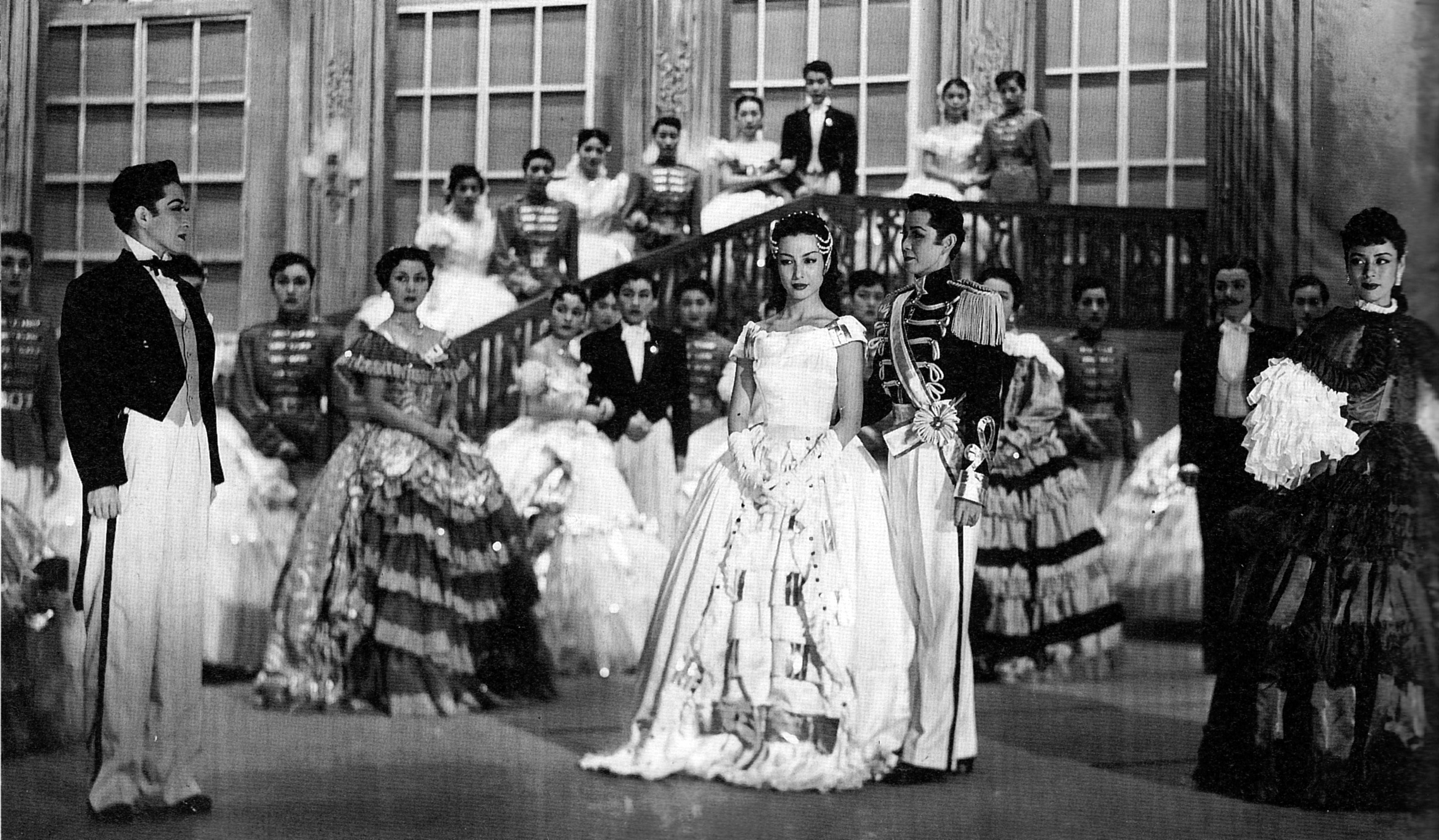
Osamu Tezuka, the godfather of manga, grew up in the town of Takarazuka. His mother knew many of the actresses. As a child, he watched women play princes, swordfighters, and romantic leads on a stage so wide it needed side pathways to contain its choreography. Those performances planted the seed for Princess Knight, the first manga aimed at a female audience, which in turn inspired The Rose of Versailles and Revolutionary Girl Utena -- works that defined an entire genre. But the Takarazuka Revue did not set out to reshape Japanese pop culture. It set out to sell train tickets. Founded in 1913 by railway tycoon Ichizo Kobayashi at the terminus of his Hankyu line from Osaka, this all-female troupe has grown into a cultural institution that performs for two million people each year, maintains five distinct troupes, and stages everything from Shakespeare to Ace Attorney with a glittering finale that would make Las Vegas blush.
A Railway Tycoon's Sideshow
Kobayashi saw kabuki as old and elitist. Western song and dance was gaining popularity. The hot-springs resort of Takarazuka needed a bigger draw. His solution was an all-female troupe performing popular theater for ordinary people -- a radical contrast to the exclusive, urban venues of the era. The first performance came in 1914, staged in a converted indoor swimming pool. By 1924, the company had its own Grand Theater. A decade later, Kobayashi opened the Tokyo Takarazuka Theater, and the company settled into the routine it follows today: each show runs for a month in Takarazuka, takes a three-week break, then runs for a month in Tokyo. Tickets are famously hard to get, though not ruinously expensive -- Grand Theater seats range from 3,500 to 12,500 yen. The troupe weathered World War II, when it was forced to perform only in Japanese and stage militaristic shows, and its theater was requisitioned by the military. Performances resumed in 1946.
Five Troupes, Five Temperaments
The Revue is organized into five main troupes, each with a distinct personality. Flower and Moon, the originals founded in 1921, anchor the company -- Flower is the lavish "treasure chest" known for operatic productions and big budgets, while Moon earns its nickname as the "Musical Research Department" with a focus on drama and Western musicals like Guys and Dolls. Snow Troupe, founded in 1924, upholds traditional Japanese dance and opera. Star Troupe, established in 1931, is the home of the company's most prominent performers. Cosmos, the youngest troupe, was founded in 1998 and leans experimental -- it was the first to perform Phantom and the first to commission a Broadway composer, Frank Wildhorn, to write an original score. Beyond these five, the Superior Members serve as an emeritus group for senior actresses who wish to continue performing without belonging to a regular troupe.
Otokoyaku and the Art of Becoming
Every aspiring Takarasienne must first survive the Takarazuka Music School, where thousands audition each year and only 40 to 50 are admitted. Two years of rigorous training in music, dance, and acting follow, along with a discipline regimen so strict that first-year students clean the premises each morning. At the end of the first year, students are divided into otokoyaku -- those who will play male roles -- and musumeyaku, who play female roles. The otokoyaku cut their hair short, adopt masculine speech patterns, and begin constructing what most describe as an "image" they learn to project onstage. The results are spectacular: extravagant finales feature scores of glittering performers descending an enormous stage-wide staircase in feathered back-pieces, capped by a Rockette-style kick line. The performers are collectively called Takarasiennes, a name blending the troupe's identity with its deep affection for French revue tradition.
From Versailles to Ace Attorney
The Revue's repertoire spans an astonishing range. Western novels fuel a substantial portion of the catalog -- adaptations of Gone with the Wind, The Great Gatsby, War and Peace, Wuthering Heights, and The Count of Monte Cristo sit alongside productions of West Side Story, Chicago, The Sound of Music, and Elisabeth. Japanese manga provides another rich vein: The Rose of Versailles, based on Riyoko Ikeda's manga about a cross-dressing noblewoman in revolutionary France, has become one of Takarazuka's signature works. In 2009, the Revue staged adaptations of Capcom's Ace Attorney video games, with the same actress who played Phoenix Wright later becoming a top star. Original biographical musicals have covered F. Scott Fitzgerald, Rudolph Valentino, James Dean, and Antoine de Saint-Exupery. Broadway composer Tommy Tune wrote and directed for the Moon Troupe in 1993, and Frank Wildhorn created the original musical Never Say Goodbye for Cosmos in 2006.
A Mirror and a Spark
The Takarazuka Revue has always existed in tension with the society around it. Kobayashi created it with conservative intentions, and scholars note that its corporate structure remains patriarchal -- writers, directors, and orchestra musicians are predominantly male. Yet the troupe simultaneously became a space where rigid gender roles are subverted by necessity, where women command the stage with the power and freedom typically reserved for men. As early as 1921, female fans were writing love letters to the otokoyaku, and newspapers soon decried the troupe as a "symbol of abnormal love." The company's influence rippled far beyond its own stages. Tezuka's Princess Knight, inspired by watching women play princes at Takarazuka, launched the entire tradition of shojo manga. Sailor Moon's Haruka and Michiru were modeled on Takarazuka gender dynamics. The anime Revue Starlight directly critiques the Top Star system. Over a century after a railway magnate converted a swimming pool into a stage, the Takarazuka Revue remains one of Japan's most fascinating cultural forces -- beloved, contradictory, and impossible to ignore.
From the Air
Located at 34.807N, 135.346E in Takarazuka, Hyogo Prefecture, in the urban corridor between Osaka and the northern mountains. The city sits along the Muko River in a narrow valley where the Osaka Plain meets forested foothills. From the air, Takarazuka is identifiable as a resort town nestled between the flat urban expanse of Osaka to the south and green hills to the north. Nearest major airports: Osaka International (Itami, RJOO) approximately 5nm east, Kansai International (RJBB) approximately 40nm south-southwest, Kobe Airport (RJBE) approximately 20nm south. The Hankyu rail corridor running from Osaka to Takarazuka is visible as a linear feature through the suburban landscape.