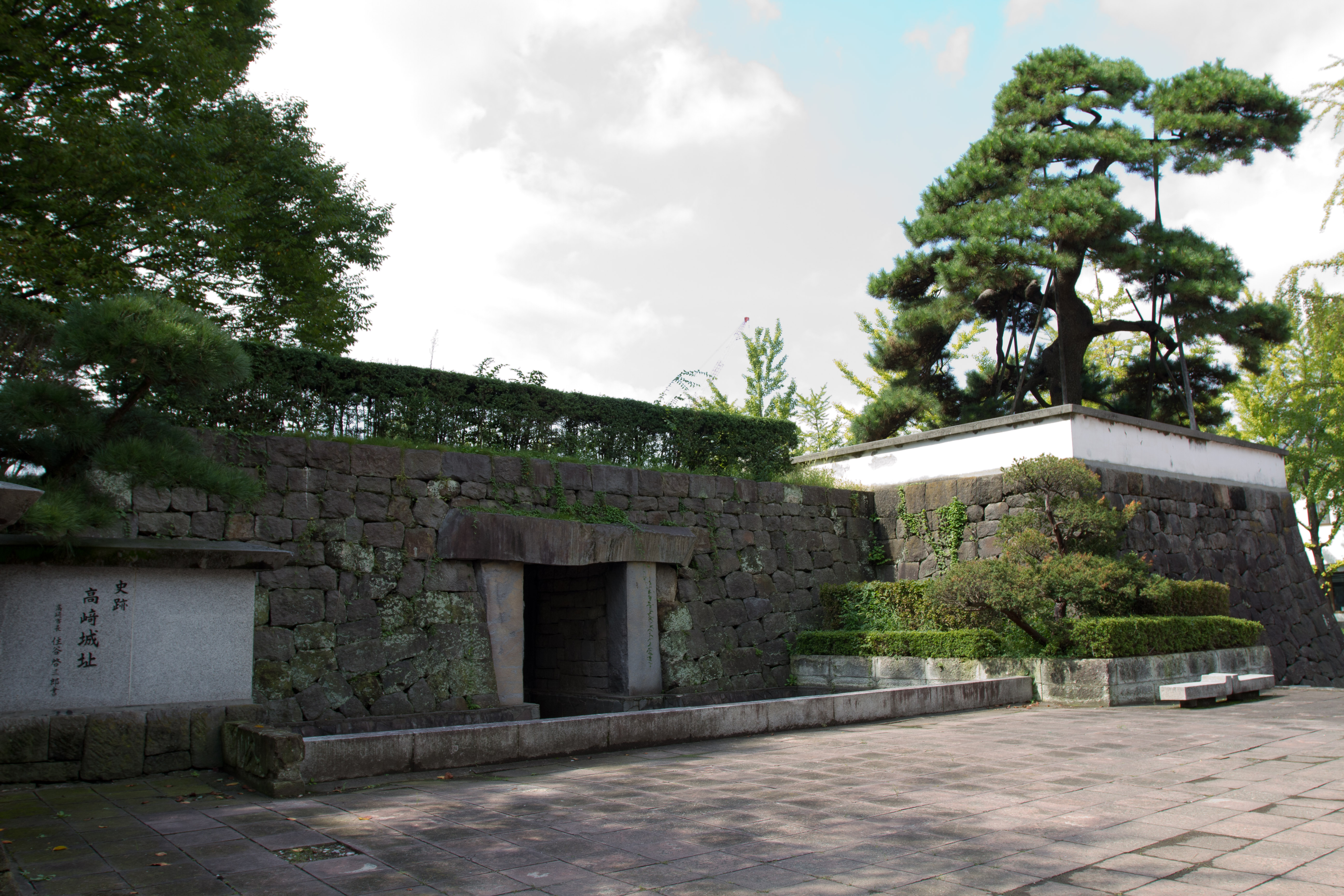
Takasaki Castle: Where a Shogun's Brother Was Ordered to Die
In December 1633, Shogun Tokugawa Iemitsu summoned his younger brother Tokugawa Tadanaga to Takasaki Castle and ordered him to commit seppuku. The castle had stood for barely thirty-five years, but it had already earned a reputation as a place where power was exercised with ruthless precision. Built at the command of Tokugawa Ieyasu to control the junction where the Nakasendo highway met the Mikuni Kaido, Takasaki Castle was never intended as a monument or a lord's retreat. It was a strategic instrument -- a fortress designed to dominate the movement of armies, merchants, and information through the mountains of what is now Gunma Prefecture.
A Fortress Born from Ruins
The site where Takasaki Castle would rise had already been fought over for centuries. During the late Heian period, the Wada clan controlled the area, building a fortified manor on the banks of the Karasu River. Through the Muromachi period, the Wada served the Uesugi clan, but in 1561, Wada Narishige defected to the rival Takeda clan in a dispute over leadership, and his son Wada Nobunari later aligned with the Odawara Hojo. That decision proved fatal. In 1590, Toyotomi Hideyoshi dispatched an army under Uesugi Kagekatsu and Maeda Toshiie to crush the Hojo strongholds, and Wada Castle was destroyed. The ruins lay along the Karasu River, waiting.
The Four Generals and a New Castle Town
When Tokugawa Ieyasu took control of the Kanto region in 1590, he stationed one of his most trusted warriors, Ii Naomasa -- one of the celebrated Four Generals -- at nearby Minowa Castle. But in 1597, Ieyasu ordered Naomasa to build a new fortification on the old Wada ruins, recognizing that the site commanded a critical crossroads. Naomasa relocated in 1598, renamed the place Takasaki, and brought the entire population of Minowa with him to form the core of a new castle town. After the Battle of Sekigahara in 1600, the Ii clan was transferred to Omi Province, and Takasaki began its long parade of rulers -- the Sakai, the Ando, and several branches of the Matsudaira. The Okochi Matsudaira arrived in 1695 and held the castle until the end of the Edo period, with only a brief interruption between 1710 and 1717.
Seventy-Seven Years of Construction
In 1619, Ando Shigenobu launched an ambitious reconstruction that would stretch across three generations and seventy-seven years. The project produced a three-story donjon at the center, flanked by two-story yagura watchtowers at each of the four cardinal directions. The castle complex grew into a formidable arrangement of baileys and moats along the Karasu River. Yet Takasaki's most infamous moment had nothing to do with siege warfare. In 1633, the shogun exiled his own brother Tokugawa Tadanaga to the castle after political disputes, then ordered his death by seppuku that same December. The room where Tadanaga died -- a shoin reception hall -- survived the centuries and now stands on the grounds of the Buddhist temple Chosho-ji, where it serves as the priest's residence.
Dismantled but Not Forgotten
The Meiji Restoration of 1873 ended the feudal era, and Takasaki Castle was swiftly dismantled. Most structures were destroyed or sold off, and the moats were filled in. By the time World War II ended, the Imperial Japanese Army's 15th Infantry Regiment occupied much of the former grounds. Today, Takasaki's city hall and public library sit where castle baileys once stood. But fragments survived. A yagura watchtower remained in private hands until 1974, when Takasaki city purchased it and relocated it to one of the original stone foundations in the Third Bailey. A castle gate followed in 1980, also repurchased and returned to the grounds. These reconstructed remnants, standing among cherry trees and administrative buildings, mark the outline of a fortress that once governed the crossroads of an empire.
From the Air
Located at 36.32°N, 139.00°E in central Takasaki, Gunma Prefecture, along the Karasu River. From the air, the castle grounds are identifiable by the park space, remnant moats, and the city hall complex occupying the former inner baileys. The Nakasendo and Mikuni Kaido highway junction that gave the castle its strategic importance is visible in the road patterns converging on the city center. Nearest airport is RJAH (Ibaraki Airport) approximately 100 km east, or RJTY (Yokota Air Base) approximately 80 km south. The site sits in the Kanto Plain with the mountains of Gunma Prefecture rising to the north and west.