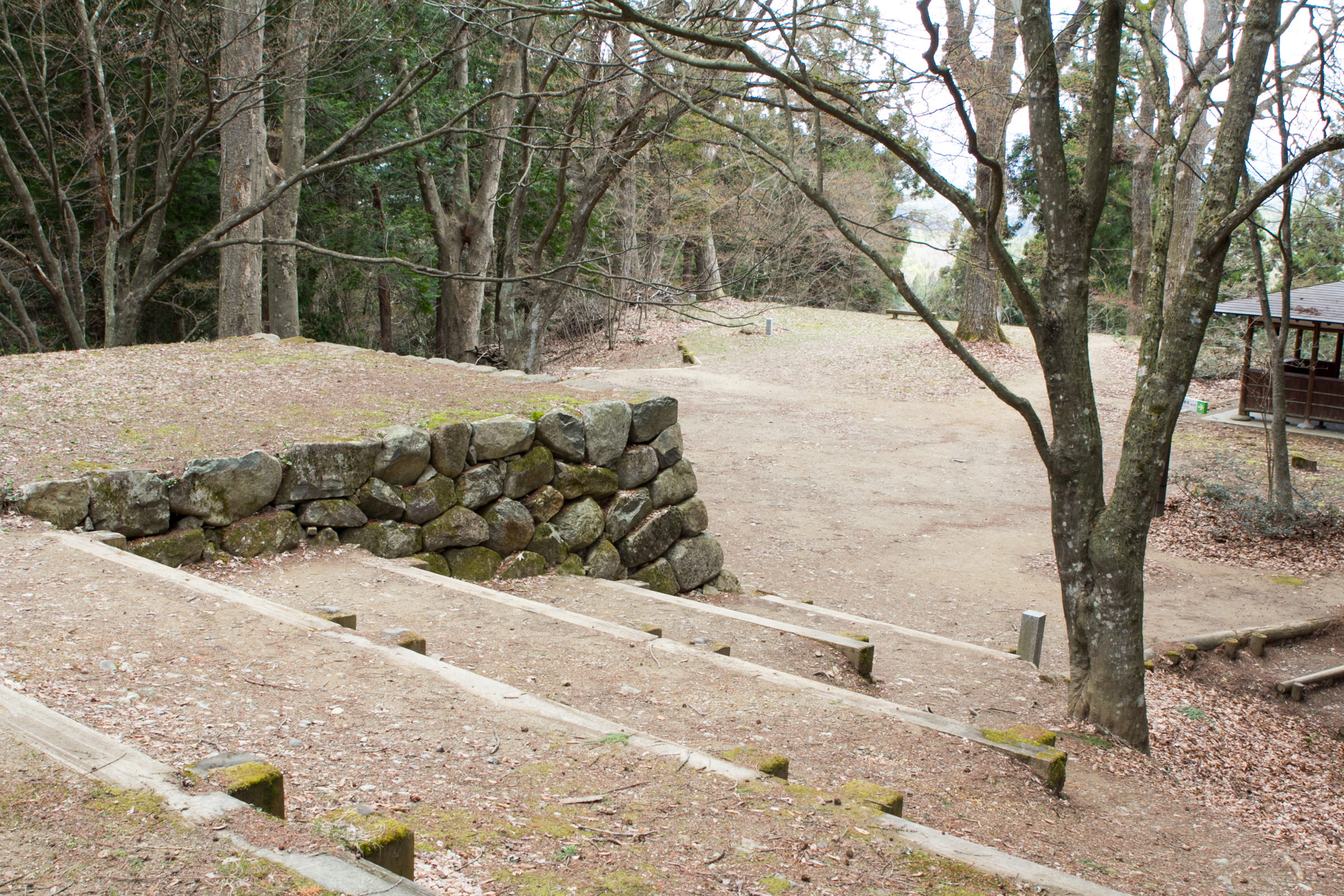
Takayama Castle
The castle is gone, pulled down on orders from Edo. But the town it created survived, and so did the magistrate's office at the foot of the mountain. Takayama Castle stood on Shiroyama for barely a century, from 1588 to 1695, yet in that short life it transformed an alpine valley in Hida Province into one of central Japan's most distinctive towns. The man who built it, Kanamori Nagachika, had fought his way through the chaos of the Sengoku period to claim these mountains, and he designed both fortress and town to last. The shogunate had other plans.
Warlords in the Mountains
During the Sengoku period, the mountainous Hida Province was nominally under the Kyogoku clan, but in reality it was carved up among petty warlords like the Anegakoji and Ema clans. Surrounded by the powerful Takeda, Uesugi, and Oda clans, these local lords shifted allegiances with the wind. Miki Yoritsuna, who controlled the southern half of Hida from his seat at Matsukura Castle, gradually expanded his territory with the backing of Oda Nobunaga. After Nobunaga's assassination in 1582, Yoritsuna defeated an alliance of rival lords and unified the province. But he chose the wrong patron next. Yoritsuna backed Sassa Narimasa in neighboring Etchu Province against Toyotomi Hideyoshi, and in 1585 Hideyoshi dispatched Kanamori Nagachika to destroy him. Nagachika, then lord of Echizen Ono Castle, crushed Yoritsuna's forces and was rewarded with all of Hida Province.
A Fortress on Shiroyama
Nagachika began building his castle on Shiroyama mountain in 1588, choosing a summit that commanded views of the entire Takayama valley. By 1600, the main and secondary castle keeps stood complete atop stone foundations, but the third keep would not be finished for another three years. The castle featured the classic elements of Japanese fortification: ishigaki stone walls, earthen ramparts, and a surrounding moat. Below the mountain, Nagachika simultaneously laid out a castle town, the jokamachi, designing the street grid and merchant quarters that still define Takayama's historic core today. The Kanamori clan ruled as daimyo of Takayama Domain for six generations across roughly a century, presiding over a period of stability that allowed the town's celebrated woodworking, sake brewing, and festival culture to take root.
Demolished by Decree
In 1692, the Tokugawa shogunate transferred the Kanamori clan to distant Dewa Province, and Hida briefly fell to the Maeda clan. Three years later, the shogunate declared Hida Province tenryo territory, placing it under direct central control. The decision meant Takayama Castle had to go. The shogunate systematically demolished castles across Japan to prevent any daimyo from mounting a challenge to Edo's authority, and a mountaintop fortress in a strategically located alpine province was exactly the kind of stronghold they wanted eliminated. The buildings were pulled down, and several structures were transferred to nearby temples, where some survive to this day. The Hida Kokubun-ji temple inherited the castle's main gate. At the foot of Shiroyama, a jin'ya, a magistrate's administrative office, was built to govern the province in the castle's place.
What Remains
Today Shiroyama is a quiet park. Fragments of stone walls poke through the undergrowth on the mountainside, tracing the outlines of where keeps and ramparts once stood. Hikers following the trails can sense the scale of the original fortification from the terraced layout of the summit, even though the towers are long gone. But the most remarkable survivor sits at the mountain's base. The Takayama Jin'ya, the magistrate's office built to replace the castle, is the only extant jin'ya in all of Japan. Designated a National Historic Site in 1969, it preserves the tatami-floored halls, rice storehouses, and interrogation rooms where shogunal officials governed Hida Province for nearly two centuries. The castle may have been erased, but its administrative successor endured, a tangible link to the era when Takayama answered directly to the shoguns in Edo.
From the Air
Takayama Castle ruins sit at 36.138N, 137.264E atop Shiroyama mountain on the eastern edge of Takayama city. The forested hilltop is visible adjacent to the historic town grid. The Takayama Jin'ya at the mountain's base sits near the Miyagawa River. The nearest airport is RJNT (Toyama Airport), approximately 65 km north. The castle site occupies a prominent hilltop in the valley, making it identifiable from the air. Best viewed at 3,000-5,000 feet AGL to appreciate the mountain's defensive positioning relative to the surrounding valley and town. The Northern Japanese Alps provide dramatic mountain scenery in all directions.