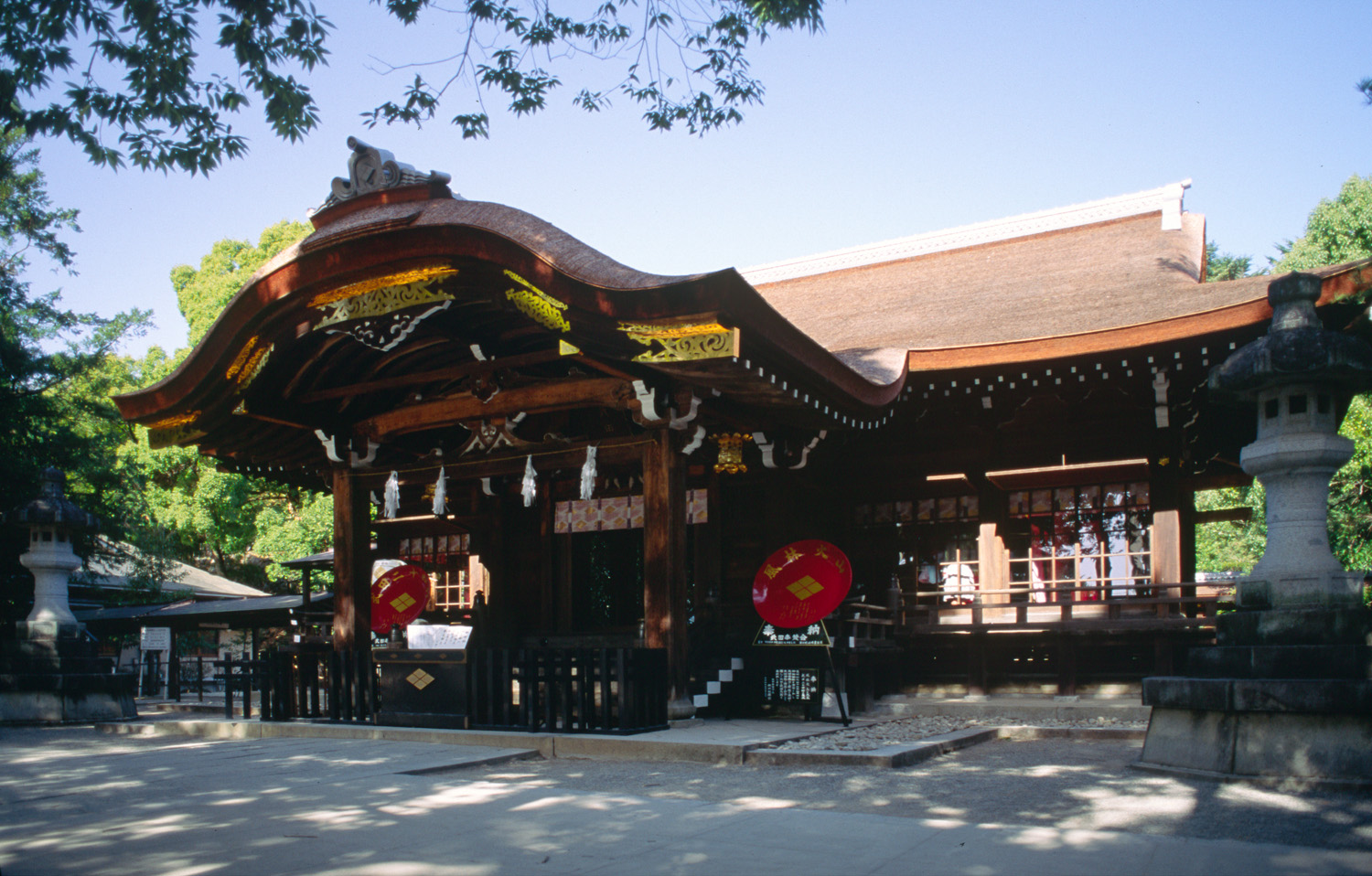
Takeda Shrine
Every April 12, the anniversary of his death in 1573, the city of Kofu gathers to honor a man who has been dead for over four centuries. Takeda Shingen -- the daimyo who controlled Kai Province during Japan's most violent era, whose battle banner bore the phrase "Swift as the Wind, Silent as a Forest, Fierce as Fire, Immovable as a Mountain" -- is not merely remembered here. He is enshrined. Takeda Shrine sits on the exact footprint of his former residence, the fortified compound of Tsutsujigasaki, in the heart of Kofu, Yamanashi Prefecture. The shrine is both a place of worship and a memorial to one of the Sengoku period's most formidable military strategists.
From Ruins to Sacred Ground
After the Takeda clan fell in 1582, crushed by the combined forces of Oda Nobunaga and Tokugawa Ieyasu, the Tsutsujigasaki compound was abandoned and slowly consumed by time. The center of Kofu shifted south to Kofu Castle under Tokugawa administration, and the old Takeda grounds became an overgrown relic. The Meiji Restoration changed everything. When Emperor Meiji visited Yamanashi Prefecture in 1880, local sentiment crystallized around the idea of a shrine to honor the region's martial heritage -- both the Boshin War loyalists and the legendary Takeda themselves. The government designated the Tsutsujigasaki ruins as a National Historic Monument, and in 1915, Emperor Taisho commissioned the construction of a shrine on the site. It was completed in 1919 and ranked as a Prefectural Shrine under Japan's prewar system of ranked Shinto shrines.
The Tiger's Arsenal
The shrine grounds contain a museum where Takeda Shingen's legacy takes physical form. Armor, weapons, battle standards, and personal effects fill the displays, each artifact a window into the life of a warlord who governed through a philosophy of human loyalty over stone walls. Shingen famously declared that men were his castle, his walls, and his moats -- a principle reflected in his choice to rule from a lightly fortified residence rather than a mountaintop fortress. His war banner, inscribed with the four characters of Furinkazan -- Wind, Forest, Fire, Mountain -- drew from Sun Tzu's Art of War and became one of the most recognizable symbols of the Sengoku period. The museum preserves these objects not as relics of a distant past, but as expressions of a governing philosophy that prized human bonds above brute fortification.
A Sword Between Clans
Among the shrine's treasures, one stands above the rest: a tachi Japanese sword designated as a National Important Cultural Property. The blade dates from the late Kamakura period and measures 64.5 centimeters in length with a width of 2.9 centimeters. It is attributed to Yoshioka Ichimonji, a celebrated swordsmith from Bizen Province, though the tang bears only the single kanji character for "ichi." The sword's provenance tells its own story of alliance and lineage. It passed from the Takeda clan to the Sanjo clan as part of the bridal gifts when Lady Sanjo married Takeda Shingen. Centuries later, in 1880, Sanjo Sanetomi presented the blade to Yamanashi Prefecture to commemorate Emperor Meiji's visit. The sword thus traces a line from medieval warfare through aristocratic marriage to imperial ceremony.
The Dragon's Grief
Takeda Shingen's most famous rivalry was with Uesugi Kenshin, the lord of Echigo Province, known as the Dragon of Echigo. The two fought five battles at Kawanakajima between 1553 and 1564, clashes that became legendary in Japanese military history and folklore. When Shingen died in 1573, Kenshin is said to have wept privately and declared, "I have lost my good rival. We won't have a hero like that again." That an enemy would mourn speaks to the stature Shingen held even among those who opposed him. The shrine in Kofu enshrines him as a kami -- a divine spirit -- and visitors still come to pray for success in battle, whether the battlefield is a corporate boardroom or a university entrance exam.
From the Air
Takeda Shrine is located at 35.6869N, 138.5775E in central Kofu, Yamanashi Prefecture. The site sits in the Kofu Basin, surrounded by mountains on all sides. Look for the urban core of Kofu with the shrine's forested grounds on the north side of the city. The nearest major airports are Matsumoto (RJAF) to the northwest and Tokyo Haneda (RJTT) to the east. Mt. Fuji is prominently visible to the south. Recommend overflying at 3,000-5,000 feet AGL to see the shrine grounds in context with the surrounding city grid and the nearby Kofu Castle ruins to the south.