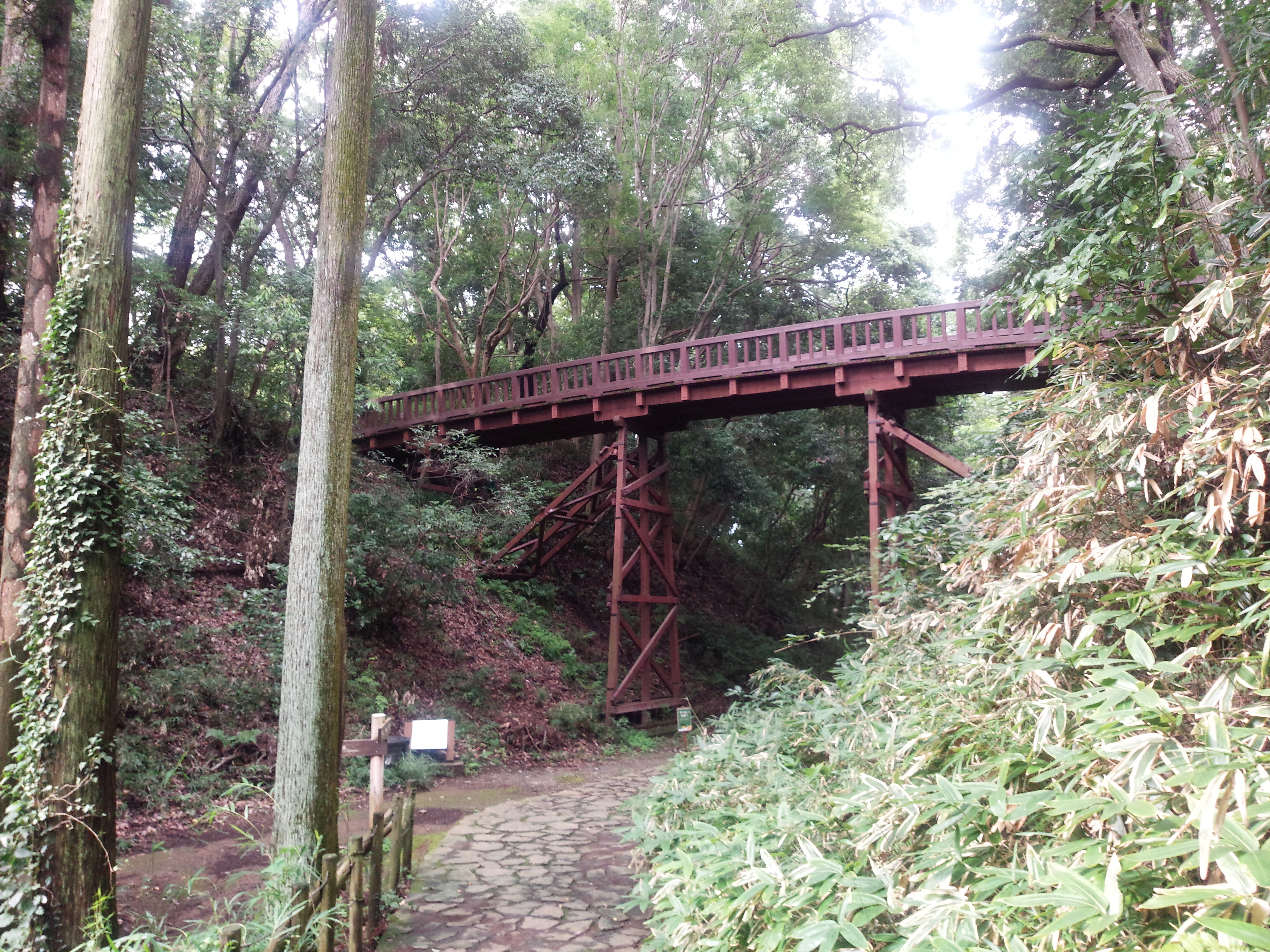
Takiyama Castle: The Fortress That Fooled 20,000 Soldiers
In the autumn of 1569, Takeda Shingen -- the Tiger of Kai, one of the most feared warlords in Japan -- sent 20,000 soldiers under the command of his son Katsuyori to seize a castle on a ridge above the Tama River in western Musashi Province. The Takeda army crossed the river and deployed along the opposite bank. Inside the fortress, Hojo Ujiteru's garrison braced for a devastating assault. It never came. The entire force was a feint. Shingen's real target was Odawara Castle, far to the south, and the army at Takiyama existed only to pin down Hojo troops and prevent reinforcement. When Shingen's siege of Odawara collapsed after a week, the forces at Takiyama quietly withdrew. The castle that stood against 20,000 men was never actually attacked -- and that bluff, five centuries ago, is what makes Takiyama Castle one of the most fascinating ruins in Tokyo.
A Ridge Between Two Rivers
Takiyama Castle sits on a long forested ridge south of the Tama River, near the confluence where the Tama flowing from the Ome direction meets the Aki River descending from the Okutama mountains. The site is within the borders of Takiyama Prefectural Natural Park, and the surrounding woodland has reclaimed much of the old fortification. Today the ruins lie within the city limits of Hachioji, in far western Tokyo -- a world away from the neon and concrete of Shinjuku, though technically the same metropolis. The ridge offered commanding views of the river valley below, natural defensive advantages on three sides, and proximity to the heartland of Musashi Province, which made it a strategic prize worth building on and worth besieging. It was designated a National Historic Site of Japan in 2007.
The Oishi Clan's Stronghold
During the Muromachi period, western Musashi Province was controlled by the Oishi clan, vassals of the Ogigayatsu branch of the powerful Uesugi clan and shugodai -- provincial military governors -- of the region. In 1521, Oishi Sadashige constructed Takiyama Castle to replace an earlier fortification at Takatsuki, roughly one kilometer away. The new castle was a simple affair: two enclosures called the Honmaru (central bailey) and Nakanomaru (intermediate bailey), ringed by rudimentary earthworks. It was enough for a regional power, but not for what came next. By the 1530s, the Late Hojo clan based at Odawara had swallowed neighboring Sagami Province and was pushing north. Their decisive victory at the 1546 Siege of Kawagoe Castle shattered Uesugi authority. The Oishi clan was forced to submit, and Hojo Ujiteru claimed Takiyama as his field headquarters for the broader conquest of Musashi.
Layers of Earth and Ambition
Ujiteru transformed the castle. Where the Oishi had built a modest hilltop fort, the Hojo warlord added a Ninomaru (second bailey), Sannomaru (third bailey), and Komiya Kuruwa (Komiya enclosure). Each new section was surrounded by deep dry moats and earthen ramparts. Every gate received a yagura watchtower, and umadashi buffer zones were constructed in front of each entrance -- curved earthen barriers that forced attackers to turn sideways under fire rather than charge straight through. The engineering was sophisticated: layered defenses that could be held by a modest garrison against far superior numbers. Walking the ruins today, the dry moats are still startlingly deep, cutting through the forested ridge like wounds in the earth. The Masugata gate of the Honmaru compound remains legible in the landscape, its bent approach still visible five hundred years after it was designed to channel and slow an enemy that never came through.
Shingen's Bluff
The Siege of Todoroki in 1569 was Takiyama's greatest moment, and it was built on deception. Takeda Shingen wanted Odawara Castle, the Hojo seat of power on the coast. To prevent the Hojo forces garrisoned in the interior from reinforcing Odawara, Shingen dispatched his son Katsuyori with 20,000 troops to threaten Takiyama. The army seized the opposite bank of the Tama River and made every show of preparing for assault. Ujiteru's garrison held firm behind their dry moats and earthen walls, ready for a battle that was never intended to happen. Shingen reached Odawara and encircled it for a week but could not breach its defenses. He withdrew back to Kai Province, and the Takeda forces at Takiyama melted away. The castle's fortifications had worked perfectly -- not by repelling an attack, but by being formidable enough that 20,000 men could not afford to ignore them.
Ruins in the Forest
Takiyama Castle was eventually superseded by the larger Hachioji Castle, and its military importance faded. But the ruins endured. The forested ridge preserved the earthworks far better than urban development would have, and today the site offers one of Tokyo's most remarkable walks through feudal military architecture. The dry moats cut deep trenches through hillside greenery. The compound layouts are clearly traceable. Views from the Nakanomaru look out over the Tama River valley much as Ujiteru's sentries once watched for the banners of the Takeda. Reaching the castle requires only a short bus ride from JR Hachioji Station to the Takiyama Jyoshi Shita stop, followed by a ten-minute walk uphill through the park. It is a strange and powerful thing to stand in a fortress within Tokyo's city limits, five centuries of silence around you, and consider that the most dramatic event in its history was an attack that was never meant to land.
From the Air
Located at 35.70N, 139.33E on a forested ridge south of the Tama River in Hachioji, western Tokyo. The castle ruins are within Takiyama Prefectural Natural Park and appear as a densely wooded ridgeline amid surrounding suburban development. The Tama River and its confluence with the Aki River are prominent landmarks to the north. Best viewed at 2,000-3,000 feet AGL from the north, looking south across the river to the ridge. Yokota Air Base (RJTY) lies approximately 5 nautical miles to the east-northeast. The surrounding terrain is hilly and forested, contrasting sharply with the flat urban sprawl to the east.