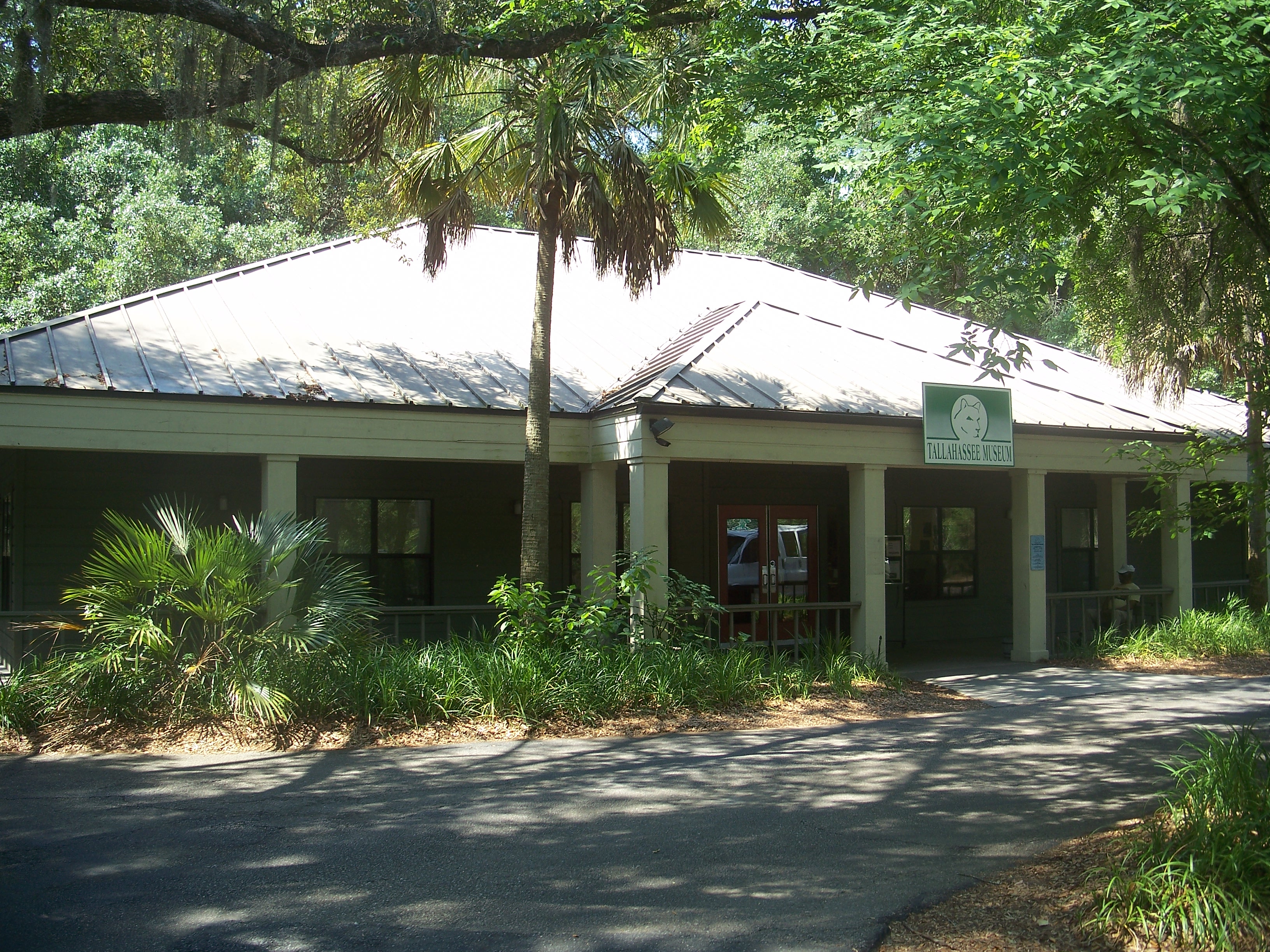
Tallahassee Museum
Napoleon's grandniece once lived here. That unlikely fact anchors the Tallahassee Museum, a sprawling 52-acre complex wedged between Lakes Bradford and Hiawatha in Leon County, where the Florida panhandle bends into the peninsula. This is not a museum of glass cases and velvet ropes. Florida panthers pace through dense palmetto, red wolves -- among the rarest canids on Earth -- watch visitors from forested enclosures, and a reconstructed 1880s farmstead smells of turned earth and hay. Founded in 1957 as the Tallahassee Junior Museum, it grew into something far more ambitious: a living portrait of the Big Bend region, the stretch of Gulf Coast where north Florida's rolling hills meet the flat expanse of the peninsula.
Where the Wild Things Stay
The wildlife habitats at the Tallahassee Museum are not zoo exhibits in the conventional sense. Animals occupy large, densely vegetated enclosures designed to mimic their native environments -- swamp, hardwood hammock, pine flatwoods. Black bears lumber through shaded clearings. White-tailed deer browse in dappled sunlight. Bobcats watch from elevated perches with feline indifference. But the most significant residents are the endangered ones: Florida panthers, whose wild population has hovered around 200 in recent years, and red wolves, a species so critically endangered that fewer than two dozen survive outside of captive breeding programs. Twice daily, Animal Encounters bring visitors face to face with raptors, snakes, and small mammals -- many of them injured animals that would not survive in the wild. State law requires these creatures be used for education or euthanized, and the museum chose education.
The 1880s Come Calling
Step past the split-rail fencing and the 21st century drops away. The Big Bend Farm recreates rural life in north Florida around 1880, a period when the region's economy ran on turpentine, timber, and small-scale agriculture. Weathered clapboard houses sit among kitchen gardens and outbuildings. A working gristmill grinds corn the old way. A turpentine commissary -- the company store where pine resin workers once traded labor for goods -- stands as a reminder of an industry that shaped Florida's interior long before tourism arrived. Farm animals wander the grounds: chickens scratch in the dirt, goats eye visitors with suspicion. The effect is immersive rather than theatrical, a place where the textures and rhythms of a vanished Florida become tangible.
A Princess in the Panhandle
The Old Florida section preserves buildings that trace the region's complex social history. The centerpiece is the 19th-century Bellevue Plantation house, once home to Catherine Murat -- a grandniece of George Washington who married Achille Murat, nephew of Napoleon Bonaparte. Their union linked two revolutionary dynasties in the unlikely setting of territorial Florida. Nearby stands the 1937 Bethlehem Missionary Baptist Church, founded by Reverend James Page, a slave preacher whose congregation endured through Reconstruction, Jim Crow, and beyond. The 1897 Concord Schoolhouse offers a sobering look at early African-American education in the segregated South -- a single room where Black children studied under conditions their white counterparts never experienced. A 1920s caboose rounds out the collection, a relic of the railroad era that connected these remote communities to the wider world.
Dinosaurs in the Cypress
Nature trails wind through the museum's acreage, including a boardwalk that crosses over flooded cypress habitat -- the kind of swamp where bald cypress trees stand knee-deep in tannin-dark water, their knobby roots breaking the surface like wooden stalagmites. Spanish moss hangs from every branch. In 2011, an unexpected addition transformed the landscape: 23 monumental sculptures by artist Jim Gary, whose Twentieth Century Dinosaurs series fashioned prehistoric creatures from salvaged automobile parts. The sculptures are scattered across the grounds, their chrome and steel bodies gleaming among the live oaks. A Tyrannosaurus assembled from bumpers and fenders towers over a nature trail. The juxtaposition -- industrial art in a natural setting, metal dinosaurs among living wildlife -- captures the museum's essential character: nothing here fits neatly into a single category.
Discovery and the Deep End
The Fleischmann Natural Science Building houses freshwater aquaria stocked with species from Florida's rivers and springs, along with bird-watching facilities that take advantage of the museum's lakeside setting. The Phipps Gallery rotates exhibits on local art, culture, and history, drawing from the deep well of Big Bend heritage. The Discovery Center invites hands-on exploration of north Florida's ecosystems -- the longleaf pine savannas, the limestone springs, the coastal marshes that define this overlooked corner of the state. For a region that most travelers pass through on their way to beaches or theme parks, the Tallahassee Museum makes a quiet but persuasive case: the real Florida is right here, walking among black bears and cypress knees, between two lakes that most maps barely bother to name.
From the Air
Located at 30.41°N, 84.35°W in southwestern Tallahassee, between Lakes Bradford and Hiawatha. The 52-acre complex is visible as a green patch surrounded by suburban development. Tallahassee Regional Airport (KTLH) lies approximately 6nm to the southwest. Florida's capital city spreads across rolling terrain unusual for the state -- expect canopy-height deciduous and pine forests rather than flat coastal landscape. Approach from the south for the best view of the twin lakes framing the museum grounds.