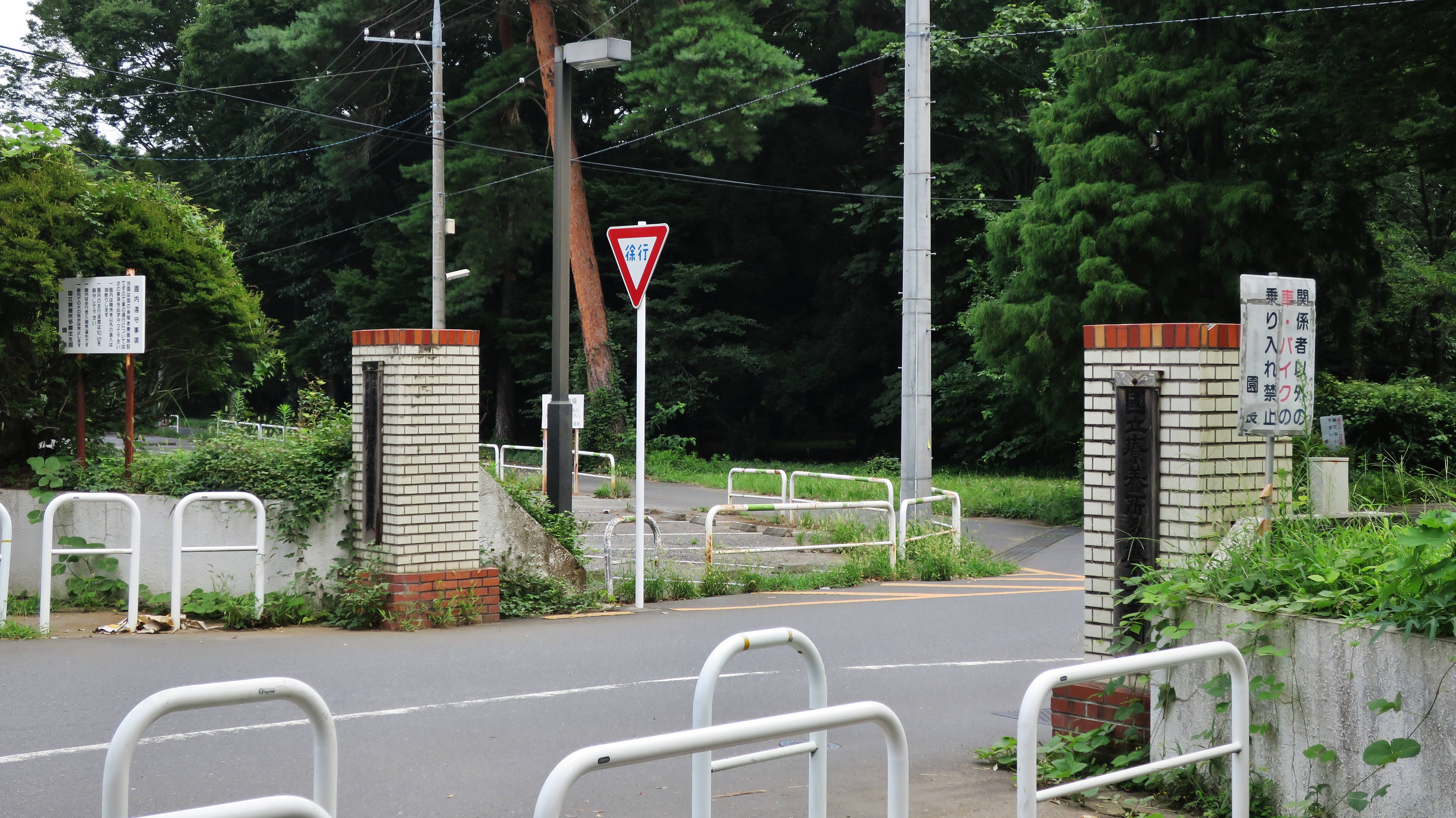
Tama Zenshoen: The Colony That Printed Its Own Money
Starting in September 1919, the patients of Tama Zenshoen Sanatorium in Higashimurayama, Tokyo, used money that did not exist anywhere else in Japan. Called enken, this special currency circulated only within the sanatorium walls -- a physical manifestation of the isolation that defined life there. Patients could not leave. Visitors were rare. The outside world treated leprosy as something to be hidden away, and the enken coins in their pockets were a daily reminder that they inhabited a separate economy, a separate society, a separate country within a country. Tama Zenshoen had opened ten years earlier, in 1909, as one of the first institutions established under Japan's leprosy prevention law. It would operate for nearly a century before a court finally ruled that the law forcing patients into confinement was unconstitutional. By then, the stigma had sunk so deep that many former patients chose to stay -- the sanatorium had become the only home they knew.
A Law Born of Shame
Japan's first leprosy prevention law was promulgated on March 19, 1907, though financial difficulties delayed its implementation until April 1, 1909. The law divided Japan into five administrative zones. The first zone -- encompassing Tokyo, Kanagawa, Niigata, Saitama, Gunma, Chiba, Ibaraki, Tochigi, Aichi, Shizuoka, Yamanashi, and Nagano Prefectures -- selected Tokyo as the site for its sanatorium. Two forces drove the legislation. Foreign visitors arriving after the Meiji Restoration were shocked to encounter leprosy patients wandering freely in Japanese cities, and the government faced an uncomfortable discovery: a significant number of men examined for the military draft at age twenty were found to have the disease. International embarrassment and military fitness concerns combined to produce a policy of forced segregation that would persist for nearly ninety years.
Walls Within Walls
Prefectural Tama Zensho Byoin -- Tama Zensho Hospital -- opened on September 28, 1909, with Tokutaro Ohno serving as acting director. The physician who would shape its legacy arrived the same month: Kensuke Mitsuda, who became chief doctor and later second director. Mitsuda developed a diagnostic skin test for leprosy that came to bear his name -- the Mitsuda reaction, first reported in June 1919. Three months later, the sanatorium began issuing enken, special scrip redeemable only inside the facility. The currency served a practical purpose -- preventing what authorities feared was contamination through money -- but its psychological weight was far greater. Every transaction reminded patients that they existed outside normal Japanese society. In 1931, Mitsuda led 81 patients from Tama Zenshoen to the newly established National Sanatorium Nagashima Aiseien, intending to build what he considered an ideal leprosy colony.
A Masterpiece from Confinement
In February 1936, a young writer named Tamio Hojo, himself a patient at a leprosy sanatorium, published a short story called 'The First Night of Life' in the literary journal Bungakukai. The story drew on the experience of entering a sanatorium for the first time -- the terror, the resignation, the strange calm that follows. It was recommended for publication by Yasunari Kawabata, who would win the Nobel Prize for Literature in 1968. Hojo's work became a milestone of leprosy literature in Japan, giving voice to people the nation had chosen to forget. That a Nobel laureate championed this voice from behind sanatorium walls speaks to the quality of the writing and to the depth of the silence it broke. Hojo died young, but his story endured as one of the most powerful accounts of life under forced medical confinement in Japanese letters.
Unconstitutional
The 1953 Leprosy Prevention Law reinforced the policy of compulsory isolation even as medical advances were making leprosy treatable and far less contagious than once believed. Patients who tried to leave were brought back. The stigma attached to the disease ensured that even patients technically free to go had no community willing to receive them. It was not until April 1996 that the law was finally abolished. Former patients then filed suit, and on May 11, 2001, a court ruled that the decades of forced confinement had been unconstitutional. Two weeks later, on May 25, the ruling was confirmed, and compensation of eight million to fourteen million yen was awarded to patients based on how long they had been held under the unconstitutional regime. The victory was bittersweet. After a lifetime of segregation, many elderly residents had nowhere else to go.
Memory and the Museum Next Door
Today, Tama Zenshoen continues to operate in Higashimurayama, a quiet residential district in western Tokyo. The number of residents has declined steadily as the aging population of former patients shrinks, but those who remain were shaped by an era of forced isolation that most of Japan would rather not discuss. Adjacent to the sanatorium stands the National Hansen's Disease Museum, which preserves the history of leprosy in Japan -- the laws, the confinement, the enken currency, the literature, and the long fight for recognition. The Leprosy Research Center of the National Institute of Infectious Diseases also operates nearby, continuing scientific work on a disease that once drove an entire system of internal exile. The sanatorium grounds are quiet now, shaded by old trees, a place where the loudest sounds are birdsong and the rustle of visitors at the museum learning about a chapter of Japanese history written in isolation and shame.
From the Air
Located at 35.77N, 139.49E in Higashimurayama, a residential area in western Tokyo. The sanatorium grounds and adjacent National Hansen's Disease Museum appear as a cluster of low-rise institutional buildings amid dense suburban neighborhoods. The site is not prominent from altitude but is identifiable by its relatively open grounds compared to surrounding development. Best approached at 2,000-3,000 feet AGL. Chofu Airport (RJTF) lies approximately 10 nautical miles to the south-southwest. Yokota Air Base (RJTY) is roughly 12 nautical miles to the west-northwest.