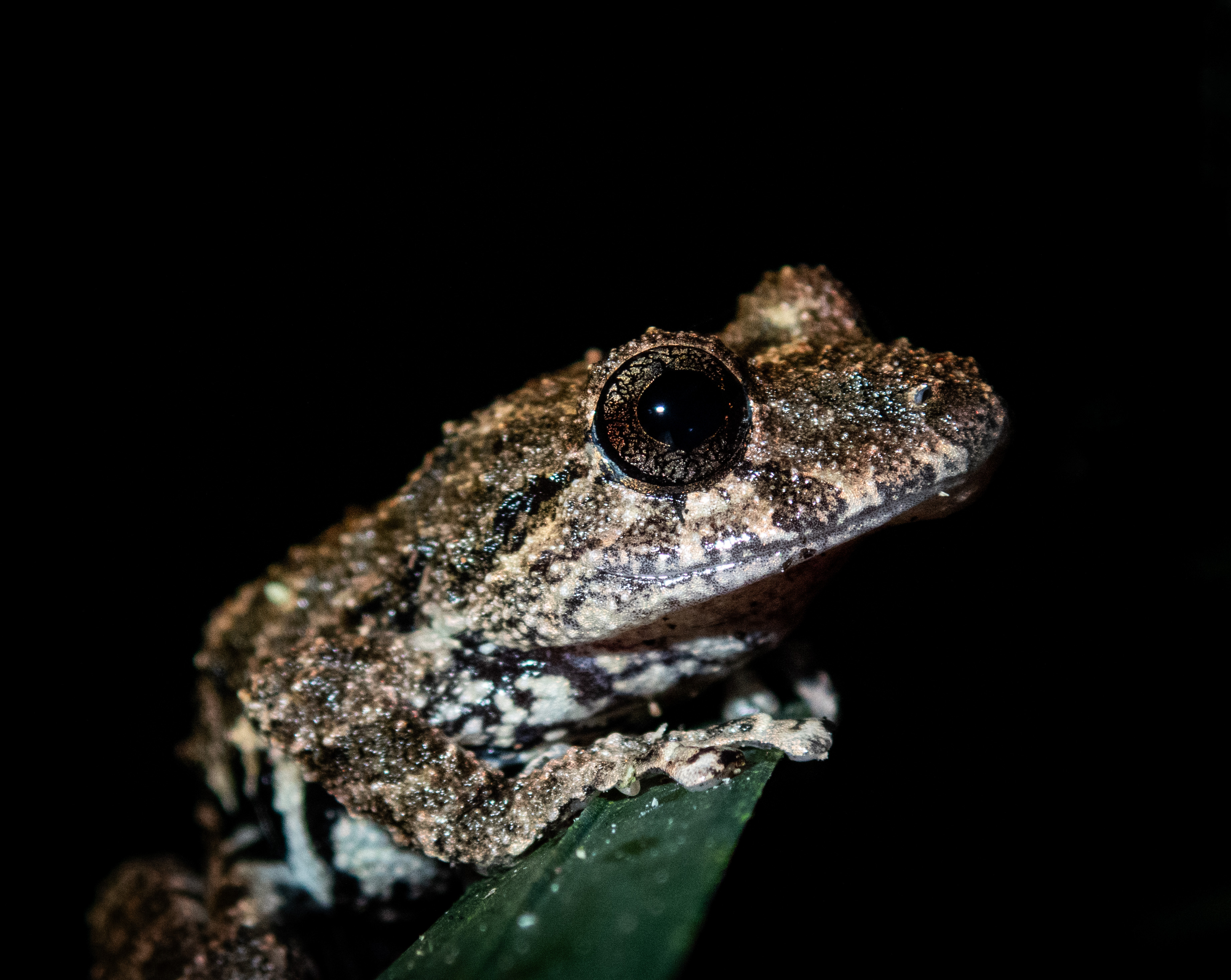
Tambopata National Reserve
In 2013, a Georgia Tech researcher named Troy Alexander was walking through the Peruvian Amazon when he noticed something no scientist had seen before: tiny structures made of silk, each one a circular fence surrounding a central spire, looking for all the world like a microscopic Stonehenge. He posted photos on Reddit. Nobody could identify the builder. An expedition returned to find 45 more of these structures, watched spiderlings hatch from them, and still could not determine the species. DNA testing proved inconclusive. The mystery remains unsolved. This is Tambopata National Reserve, a place where the known and unknown coexist in every square meter of forest.
The Silkhenge Enigma
The structures Troy Alexander discovered have come to be known as Silkhenge, a name that captures their uncanny resemblance to ancient stone circles. Each consists of a circular fence-like formation woven from an undocumented silk compound, with a single spire rising from the center. Phil Torres led a follow-up expedition later in 2013, locating 45 additional structures and documenting spiderlings hatching from the central spires on video. But none of the hatchlings survived to adulthood in observation, and no adult specimen of the species has ever been positively identified. The silk compound itself defies easy classification. Tambopata has been studied by biologists for decades, yet this single mystery illustrates how much tropical forest science still has to learn. Whatever builds these structures is small enough to hold in your palm and sophisticated enough to baffle entomologists worldwide.
Corridor of Life
Tambopata sits south of the Madre de Dios River in southeastern Peru, part of the Vilcabamba-Amboro wildlife corridor that stretches across the border into Bolivia. This corridor is one of the most biologically important pathways in South America, allowing genetic exchange between populations of large mammals that would otherwise become isolated. Within Tambopata's boundaries, the roster of predators reads like a catalog of apex carnivores: jaguars, pumas, and ocelots all hunt here. Giant otters, the largest of their family at nearly two meters long, fish cooperatively in river channels, their high-pitched calls echoing across the water. Peruvian spider monkeys swing through the canopy while capybaras, the world's largest rodents, graze the riverbanks below.
Clay, Feathers, and Forest Floors
Tambopata is famous among birdwatchers for its clay licks, exposed riverbanks where hundreds of macaws and parrots gather each morning to eat mineral-rich soil. The spectacle is one of the Amazon's great wildlife events: scarlet macaws, blue-and-yellow macaws, and dozens of parrot species descend in raucous clouds of color, clinging to the clay face and squabbling for position. Scientists believe the minerals help neutralize toxins in the birds' seed-heavy diet. On the forest floor, a different world operates. Hoffmann's two-toed sloths hang motionless overhead, nearly invisible against the bark. Collared peccaries move in herds through the understory, and the brown-throated sloth descends its tree once a week to defecate, a ritual so predictable that researchers can set their watches by it.
Guardians and Gold Miners
The Ese Ejja and Pukirieri peoples inhabit the buffer zone surrounding the reserve, communities whose relationship with the forest predates any government designation. The reserve was established on September 4, 2000, by decree of President Alberto Fujimori, with a mandate to protect tropical rainforest ecosystems while allowing sustainable resource use by surrounding communities. But the balance is precarious. Illegal gold mining has destroyed more than 450 hectares of forest within the area, leaving behind mercury-contaminated moonscapes where canopy once stood. The tension between conservation and extraction plays out across the Amazon, but at Tambopata it carries a particular urgency: the reserve sits within one of the most biodiverse corridors on the planet, and every hectare lost diminishes a system that science has barely begun to catalog.
From the Air
Located at 12.92S, 69.28W in southeastern Peru's Madre de Dios region. Nearest airport is Padre Aldamiz International (SPTU) at Puerto Maldonado, approximately 40 km north. From the air, the reserve appears as unbroken rainforest canopy south of the Madre de Dios River, with oxbow lakes and river meanders visible in clear conditions. Gold mining scars may be visible as bare patches amid the green. Expect tropical weather with frequent afternoon convective buildup.