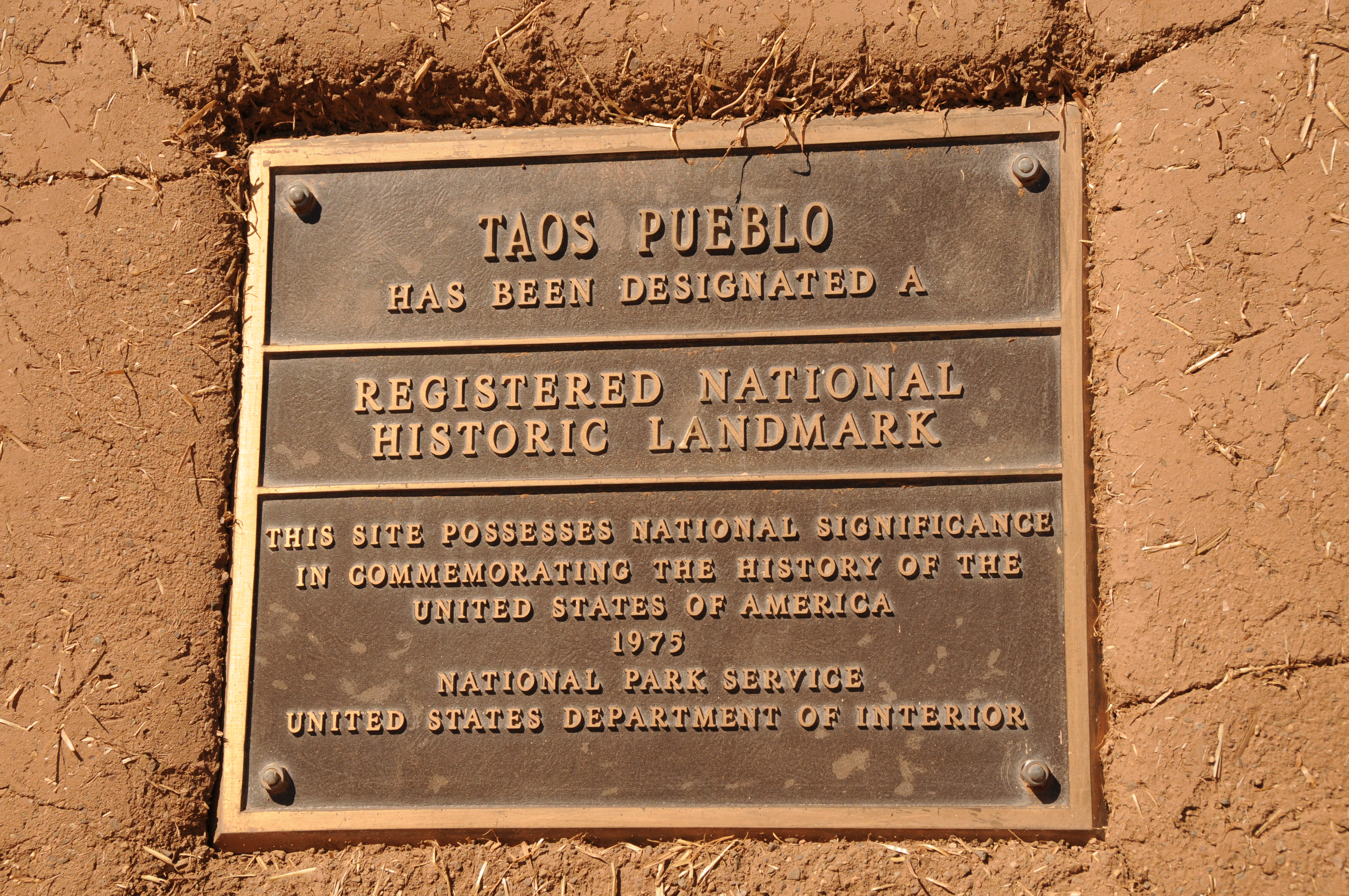
Taos Pueblo: A Thousand Years of Continuous Occupation
The mud walls of Taos Pueblo have stood for a thousand years. When the first Spanish explorers arrived in 1540, they found a thriving community in multi-story adobe buildings that had already weathered five centuries. The Spanish built their mission; the Pueblo people revolted in 1680, driving colonizers from New Mexico for twelve years. The walls were rebuilt. The people remained. Today, roughly 150 Taos Pueblo members live in the ancient village year-round, without running water or electricity - not from poverty but from choice, maintaining a way of life that predates European contact by half a millennium. The adobe structures, replastered each year with the same mud used by their ancestors, constitute the oldest continuously inhabited community in the United States.
The Architecture
The North House and South House rise five stories above the plaza, their stepped profiles unmistakable against the mountain backdrop. The buildings are constructed from adobe - sun-dried bricks of earth, water, and straw - plastered smooth with the same material. Each level steps back from the one below, creating terraces that serve as outdoor living space. The walls are two feet thick, keeping interiors cool in summer, warm in winter. Doors and windows are small, heat-conserving. The construction techniques have remained essentially unchanged for a thousand years, though the buildings themselves are constantly renewed - fresh mud applied annually, rooms rebuilt as needed. The structures are living things, maintained rather than preserved.
The Revolt
In 1680, the Pueblo people coordinated a rebellion that expelled Spanish colonizers from New Mexico for twelve years - the only successful indigenous revolt against European colonization in North American history. The planning was meticulous: runners carried knotted cords to dozens of pueblos, each knot representing a day until the uprising. When the Spanish discovered the plot and executed two messengers, the revolt launched early. Taos Pueblo played a central role; the Spanish priest and settlers were killed, and refugees fled south. The Spanish returned in 1692, but the Pueblo people had made their point. The revolt ensured that New Mexico's colonization would proceed differently than elsewhere - through accommodation rather than elimination.
The Sacred Mountain
Blue Lake, high in the mountains behind the pueblo, is the spiritual center of Taos Pueblo religion. The lake was taken by the federal government in 1906 and made part of Carson National Forest. For sixty-four years, the Pueblo people fought to reclaim it. In 1970, President Nixon signed legislation returning Blue Lake and 48,000 surrounding acres - the first time the United States returned land to a tribe for religious purposes rather than monetary compensation. The lake remains closed to outsiders; the ceremonies conducted there are private. The mountain behind the pueblo, visible from everywhere in the valley, marks the boundary between the world that can be shared and the world that cannot.
Living History
The roughly 150 people who live in the old village maintain a deliberate separation from modernity. No electricity runs through the ancient walls. No running water flows from taps. Cooking is done on wood stoves; water is carried from Red Willow Creek. This is not enforced simplicity but chosen continuity - a decision to maintain the connection between how their ancestors lived and how they live. The broader Taos Pueblo reservation of 1,900 members has modern amenities; the choice to live in the old village is exactly that. Children grow up learning what their great-grandparents knew: how to live in the buildings their great-great-grandparents built.
Visiting Taos Pueblo
Taos Pueblo is located just north of Taos, New Mexico, 70 miles north of Santa Fe via Highway 68. The pueblo is open to visitors most days, with fees supporting preservation; hours vary seasonally, and the pueblo closes for religious ceremonies (typically late winter through early spring). Photography permits are required and are separate from admission. Some areas are restricted; respect all posted boundaries. Guided tours are available and recommended. The San Geronimo Chapel, rebuilt after the 1847 destruction, anchors the plaza. The pueblo's feast day, September 30, draws large crowds for traditional dancing. The experience offers direct contact with a culture that has maintained continuity across a millennium - the oldest community in a nation that often measures history in decades.
From the Air
Located at 36.44°N, 105.55°W in the Taos Valley of northern New Mexico, at the base of the Sangre de Cristo Mountains. From altitude, the pueblo appears as a distinctive cluster of adobe structures - the multi-story North House and South House visible as terraced brown buildings flanking a central plaza. Red Willow Creek traces through the community. The modern town of Taos lies to the south; the mountains rise dramatically to the east, with Blue Lake hidden in their heights. The reservation land extends into the peaks. What appears from altitude as an ancient village is precisely that - the oldest continuously inhabited community in the United States, where people have lived in the same buildings, using the same techniques, for over a thousand years.