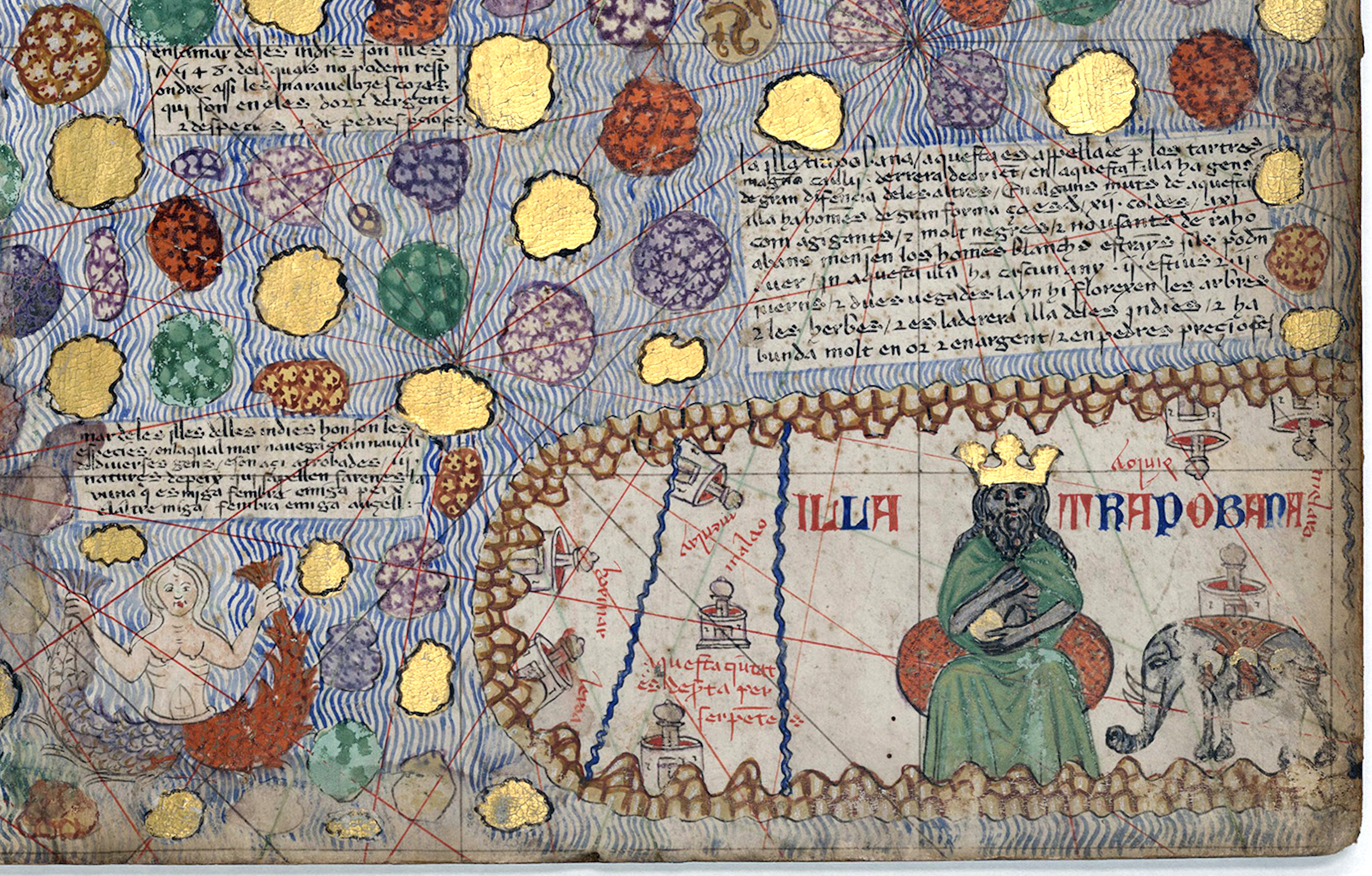
Taprobane Island
The locals called it Galduwa, which means simply "Rock Island" in Sinhalese. A Frenchman who styled himself Count de Mauny Talvande renamed it after Taprobana, the ancient Greek word for Sri Lanka itself, as though a single rocky islet off the coast of Weligama deserved the grandeur of an entire civilization's name. Maurice Talvande had been searching for an earthly paradise when he spotted the island around 1925. He built a villa, replanted the vegetation, and created what he considered a private Eden. The island has been sold, inherited, neglected, restored, and reimagined many times since, but Talvande's essential gesture has never been undone: this remains a place where people project their fantasies of escape onto a very small piece of land.
The Novelist's Island
In 1952, the American author and composer Paul Bowles bought Taprobane. Bowles was already known for The Sheltering Sky, and he came to the island not for retirement but for work. He completed his novel The Spider's House on Taprobane in 1955, writing in the villa that Talvande had built decades earlier. But paradise proved complicated to own. Tax obligations and other difficulties forced Bowles to sell in 1957 to C.R. "Shaun" Mandy, an Irish writer and editor of the Illustrated Weekly of India. That same year, Arthur C. Clarke visited and found the place showing its age. Windows had been boarded up, plaster was flaking away, and though Clarke judged the villa perfectly livable, he noted a general air of neglect. Clarke would later set his novel The Fountains of Paradise in a place called "Taprobane," though the setting is recognizably Sri Lanka as a whole, not this particular isle.
Owners and Visitors
Taprobane's ownership has traced an unlikely path across continents. After Bowles and Mandy, the island eventually came to Sir Desmond Lorenz de Silva, a Sri Lankan-born former United Nations Chief Prosecutor, who acquired it through inheritance. From him it passed to the Australian businessman Geoffrey Dobbs. Between and around these owners, the island drew a rotating cast of notable guests. Prince Stanislaus Klossowski de Rola, son of the painter Balthus, stayed in the 1970s. Dutch author Peter ten Hoopen spent a month there in 1984 during civil unrest on the mainland, the surrounding chaos making the island's isolation feel less like luxury and more like refuge. Kylie Minogue visited and composed a song inspired by her stay, "Taprobane (Extraordinary Day)." German artist Tomas Kurth painted the island repeatedly during a 1991 visit, and the experience spawned an entire series of paintings depicting stylized lonely islands. Jason Kouchak composed "Dark Island" for his 1999 album Watercolours after his own stay.
Paradise Compromised
Robin Maugham, the English author, first visited Taprobane as a young man and returned in the mid-1970s. What he found troubled him. After Talvande's death, the villa's interior had been partitioned, its original furniture and fittings dispersed. The unique harmony that the count had designed, where the architecture and the island's landscape existed in deliberate conversation, had been broken. Worse, a new road had been built along the mainland beach opposite the island, and Maugham considered the surrounding area despoiled. Since his visit, the changes have only accelerated. The 2004 Indian Ocean tsunami reshaped the coastline, and substantial residential development has filled in the mainland shore facing Taprobane. The island itself remains a private villa, available for rental, still perched on its rock with coconut palms arching overhead. But the solitude Talvande sought in 1925 is no longer the same kind of solitude. The rock has not moved, but the world around it has drawn closer.
A Rock by Many Names
There is something revealing about the island's name changes. The Sinhalese name, Galduwa, is plainly descriptive: a rock in the water, nothing more. Talvande's renaming it Taprobane was an act of literary ambition, borrowing the ancient Greek geographers' name for the entire island of Sri Lanka and draping it over a rock you can wade to at low tide. Each subsequent owner and visitor has layered their own meaning onto the place. Bowles found a writing desk. Clarke found elegant decay. Ten Hoopen found shelter from a civil war. Kurth found a subject he would paint for years. The island is small enough that a person can walk its perimeter in minutes, yet large enough, apparently, to contain whatever its visitors need it to be. From the air, it appears as a green dot just off the crescent beach at Weligama Bay, absurdly small against the Indian Ocean, carrying a weight of story that its physical dimensions cannot possibly explain.
From the Air
Taprobane Island sits at 5.968N, 80.426E just off the southern coast of Sri Lanka in Weligama Bay. It is a tiny, heavily vegetated island visible as a green dot immediately offshore from the crescent-shaped beach at Weligama. Best viewed from the south at 500-1,000 feet AGL. The island is small but distinctive against the lighter color of the bay's shallow water. Mattala Rajapaksa International Airport (VCRI) is approximately 60 nautical miles to the east. Koggala Airport (VCCK) is roughly 15 nautical miles to the west. Bandaranaike International Airport (VCBI) is about 95 nautical miles to the north. The Weligama Bay coastline and the fishing village are clearly visible landmarks.