Where World Leaders Go for a Morning Walk
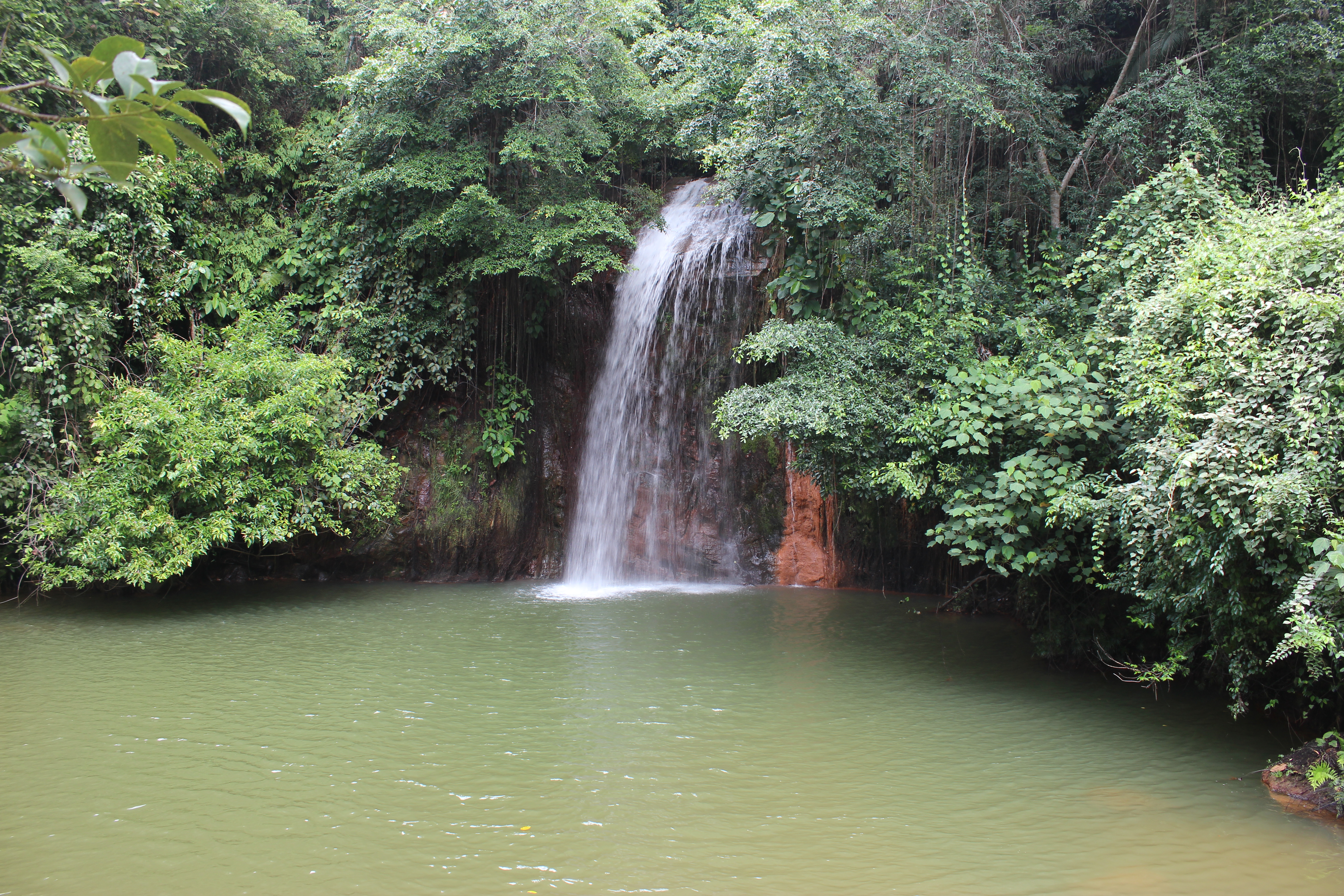
When the President of Indonesia visited Brunei in 2011, Sultan Hassanal Bolkiah did not take him to the palace, or to a state dinner, or to the oil fields that fund the sultanate's wealth. He took him for a walk in the park. Susilo Bambang Yudhoyono and the Sultan strolled through Tasek Lama Recreational Park in the early morning light, past the waterfall and under the canopy, and before leaving, the president planted a Symplocos polyandra tree. It was not the first time the Sultan had done this. A year later, Singapore's Prime Minister Lee Hsien Loong would have breakfast at the park and plant two Tristaniopsis trees near the waterfall. In 2009, Malaysia's Prime Minister Najib Razak planted a Cyrtostachys renda -- a lipstick palm, its bright red stems a flash of color in the tropical green. Tasek Lama has become Brunei's unofficial venue for personal diplomacy, the place where the Sultan signals to visiting leaders that real relationships are built on shared ground, not shared boardrooms.
A Dam Before It Was a Park
Tasek Lama's origins have nothing to do with recreation. In 1926, colonial engineers built a concrete dam at the summit of what is now the park's waterfall, directing water flow downhill to Brunei Town. It was pure infrastructure -- the first serious attempt to give the capital a reliable water supply. That dam launched a cascade of expansion projects from the 1930s through the 1940s as the growing town demanded more than a single reservoir could provide. In 1964, the much larger 60-acre Tasek Dam was completed alongside a treatment facility capable of processing 7,300 cubic meters of water per day. Sultan Omar Ali Saifuddien III opened the expanded dam on 13 February 1965. For decades, the area was defined by utility rather than beauty. It was not until the early 1990s that the site was reimagined as a recreational park, built near Sultan Omar Ali Saifuddien College in Kampong Tasek Lama. The old waterworks became a waterfall. The reservoir became a lake. Infrastructure became scenery.
Eighty Species in the Heart of the City
What makes Tasek Lama remarkable among urban parks is not its size but its density of birdlife. Roughly 80 species have been recorded within its boundaries, a number that would be impressive for a rural nature reserve and is extraordinary for a park surrounded by the capital's streets. The roster includes the white-throated kingfisher, the oriental dollarbird, the black-and-red broadbill, and the white-rumped shama -- species more commonly associated with deep forest than city parkland. Most significant is the straw-headed bulbul, a bird whose rich, melodious song made it a prize of the Southeast Asian cage-bird trade. Relentless trapping has driven the species to critically endangered status, with global estimates placing the surviving population at only 600 to 1,700 mature individuals. The straw-headed bulbul now persists only in Singapore, Brunei, parts of Malaysia, and remote areas of Indonesian Kalimantan. That one of its remaining refuges sits within walking distance of Brunei's parliament building says something about what this park quietly protects.
Trails That Climb Into the Hills
The park spreads across a terrain that rises sharply from the lake and waterfall into a series of forested hills. Hiking trails lead to Bukit Sarang Helang -- Eagle's Nest Hill -- and continue to Bukit Luba, Bukit Karamunting, and Bukit Markuching, each offering progressively wider views of Bandar Seri Begawan and the surrounding lowlands. At the lower elevations, paved pathways wind through the vegetation, used by joggers and walkers who arrive at dawn to beat the equatorial heat. The park provides gym equipment stations along some routes, a reflexology path made of smooth stones, and a children's play area near the entrance. A viewing tower gives visitors an elevated perspective over the canopy. The park opens daily at 6:00 a.m. and closes at 6:00 p.m., with no entrance fee -- a detail that matters in a capital where most indoor attractions carry a price. The result is a park that serves simultaneously as gym, bird sanctuary, hiking trail, and diplomatic venue, all compressed into the green fold between the city and the hills behind it.
The Diplomatic Grove
The tree-planting tradition at Tasek Lama has created an informal arboretum of diplomatic goodwill. Each species was chosen with care. The Cyrtostachys renda planted by Malaysia's prime minister is native to the peat swamp forests of both nations -- a living symbol of shared ecology. Singapore's contribution of two Tristaniopsis trees near the waterfall added species known for their hardy wood and modest beauty, an apt metaphor for the city-state's relationship with its tiny neighbor. Indonesia's Symplocos polyandra is an understory tree found across the archipelago, a quiet presence in a diverse forest. In 2013, Singapore's Deputy Prime Minister Teo Chee Hean visited with Brunei's Crown Prince Al-Muhtadee Billah and Prince Abdul Malik, continuing the pattern of high-level walks through the park. The grove these leaders have planted is still young, the trees still growing. But the gesture is unmistakable: in a sultanate that could host visiting leaders anywhere, the Sultan chooses a public park with a waterfall and birdsong. Power prefers the morning air.
From the Air
Located at 4.903N, 114.945E, in the hills immediately north of Bandar Seri Begawan's city center. The park's lake is visible as a dark water feature surrounded by dense green canopy, distinguishable from the surrounding urban development. Brunei International Airport (WBSB) is approximately 9 km northeast. When approaching from the south, look for the green wedge between the capital's built-up area and the forested hills to the north. Best viewed from 2,000-4,000 feet. The Omar Ali Saifuddien Mosque's golden dome, roughly 2 km to the southwest, serves as the primary orientation landmark.