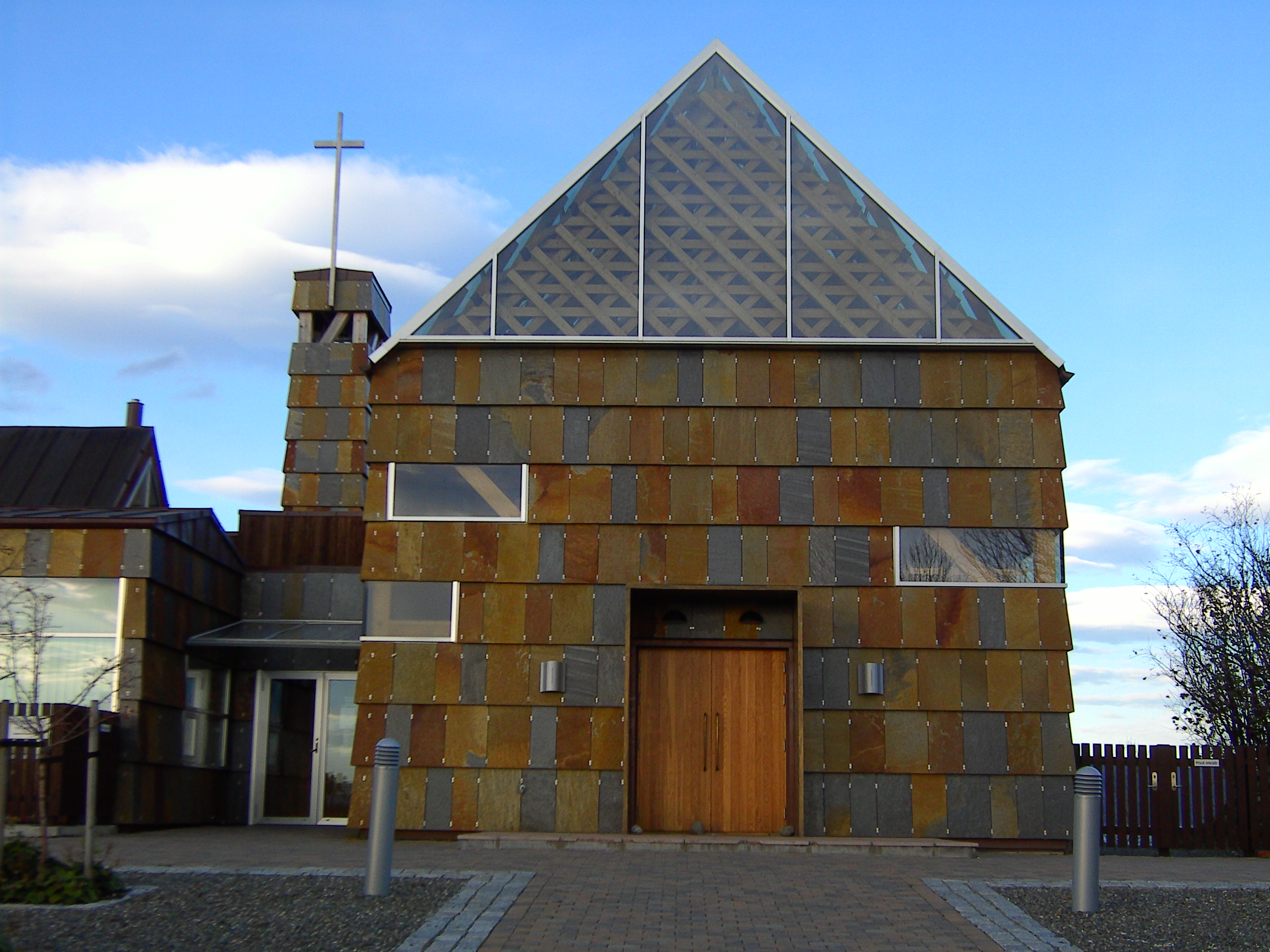
Tautra Abbey
On 25 March 1207, Cistercian monks from Lyse Abbey near Bergen consecrated a new monastery on the island of Tautra in the Trondheimsfjord. Nearly eight centuries later, on 25 March 2012, the monastery that had risen on the same island was elevated to a Major Priory in the Cistercian Order. The date was not a coincidence. Between those two March days lies one of the more remarkable stories in Norwegian religious history -- a monastic community that grew wealthy and politically powerful, was swept away by the Reformation, lay in ruins for over four hundred years, and then returned, this time from an unlikely direction: Dubuque, Iowa.
Power on an Island
The original Tautra Abbey occupied a strategic and beautiful site in the Trondheimsfjord, part of what is now Frosta Municipality in Trondelag county. The monks who founded it came from Lyse Abbey, itself one of Norway's major Cistercian houses, and the new community quickly absorbed the earlier foundation at nearby Munkeby Abbey. Tautra grew wealthy. Its abbots wielded real political influence, playing significant roles in Norwegian governance over the centuries that followed. The monastery flourished until the sixteenth century, when the same Reformation that toppled Catholic authority across Scandinavia reached its island. Tautra Abbey ceased functioning as an independent monastery in 1532, and its property was seized by the Crown in 1537 when it was formally closed. The monks dispersed. The buildings began their slow collapse into ruin.
Stones That Survived
The ruins of Tautra Abbey proved remarkably durable. The nave walls, the western portal, the north wall of the church -- these survived the centuries of abandonment better than many Norwegian medieval structures that received at least nominal care. Today the ruins are managed by Fortidsminneforeningen, the Society for the Preservation of Norwegian Ancient Monuments, and they remain a popular destination for visitors drawn to the combination of medieval stonework and fjord scenery. The preservation is partly a matter of geography. An island is harder to quarry than a roadside ruin, and the remoteness that once made Tautra attractive to monks seeking contemplative isolation also protected its remains from the kind of systematic dismantling that reduced other medieval sites to scattered fieldstone.
Return from Iowa
In 1999, something genuinely unexpected happened. A group of Trappistine nuns from Our Lady of the Mississippi Abbey in Dubuque, Iowa, founded a new monastic community on Tautra, near the medieval ruins. It was the first permanent Cistercian settlement in Norway since the Reformation -- a gap of more than four and a half centuries. Queen Sonja of Norway laid the foundation stone for the new monastery on 23 May 2003, and the community was granted autonomy in 2006. The new church, designed by the acclaimed Norwegian firm Jensen and Skodvin Architects, sits near the medieval ruins in a deliberate dialogue between old and new. The connection to Iowa may seem improbable, but the Cistercian order has always been international, and the route from France to Norway to America and back again traces the arc of a tradition that has survived by being willing to travel.
The Circle Closes at Munkeby
The story has one more turn. Near the site of Munkeby Abbey -- the community that was absorbed into Tautra in the thirteenth century -- a new foundation of Cistercian monks is being established. It will be the first new foundation by the Abbey of Citeaux, the motherhouse of the entire Cistercian Order, since the thirteenth century. The monk in residence at Munkeby serves as chaplain to the nuns at Tautra. Eight hundred years after Cistercian monks first walked the shores of the Trondheimsfjord, their successors are walking those shores again. The ruins stand beside the new walls, and the chanting that fell silent in 1537 has resumed.
From the Air
Located at 63.58N, 10.62E on the island of Tautra in the Trondheimsfjord, Frosta Municipality. The island is visible as a distinct landmass in the fjord. The abbey ruins and new monastery buildings are identifiable from lower altitudes. Best viewed at 2,000-3,000 ft AGL. Nearest airport: Trondheim Airport Vaernes (ENVA), approximately 12 nm southeast. The Trondheimsfjord provides excellent visual orientation.