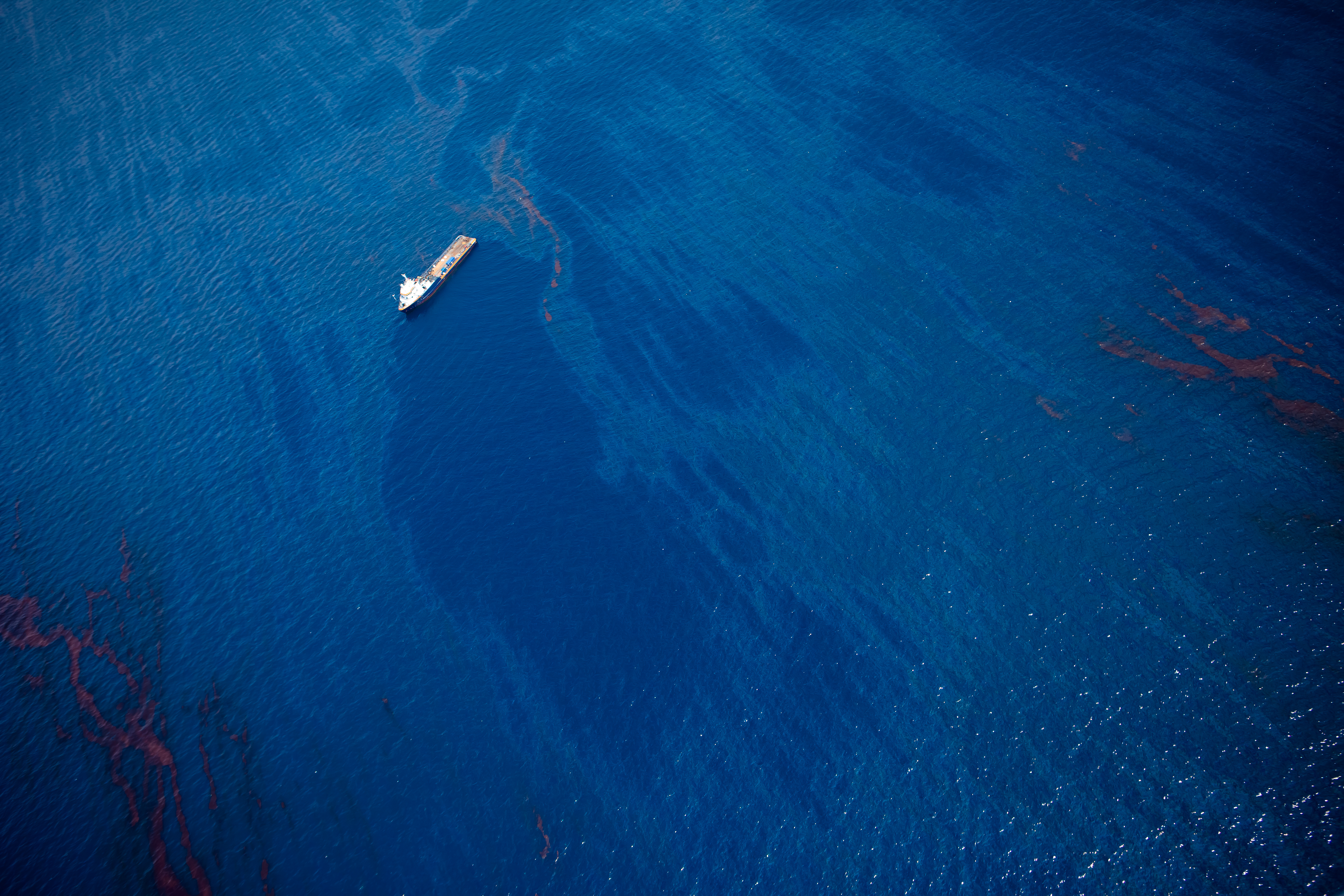
Taylor Energy Oil Spill
Most people have never heard of it. The Deepwater Horizon disaster of 2010 consumed global headlines for months, but twelve miles off the Louisiana coast, a smaller, quieter catastrophe had already been leaking crude oil into the Gulf of Mexico for six years by then. When Hurricane Ivan slammed the northern Gulf in September 2004, it triggered an underwater mudslide that toppled Taylor Energy's MC20 platform, a fixed eight-pile structure built in 1984 southeast of the Mississippi River Delta. The rig capsized, more than 600 barrels of crude oil tumbled into the water, and 25 to 28 well heads were buried beneath roughly 150 feet of seafloor sediment. As of June 2022, the Taylor MC20 spill holds the grim distinction of being the longest-running oil spill in United States history -- and the second largest.
Buried Beyond Reach
The fundamental problem at the Taylor Energy site is geometry. The well heads are not exposed on the seafloor where they could be capped or plugged using conventional technology. They are entombed under an enormous volume of mud, the result of the same underwater landslide that destroyed the platform. Taylor Energy claimed that the technology needed to plug wells buried this deeply did not exist -- and as of 2015, the company had been reduced to a single employee overseeing one leaking platform with 28 wells. The Minerals Management Service ordered the company to complete decommissioning by June 2008. Taylor Energy failed to meet that deadline, entering instead into an agreement that established a multi-agency unified command structure under the Coast Guard to oversee the work. For years, the oil kept seeping upward through the sediment and into open water.
The Spill Nobody Talked About
What made the Taylor spill extraordinary was not just its duration but the secrecy surrounding it. The Louisiana Environmental Action Network and other conservation groups sued Taylor Energy in 2012, alleging that the company and the federal government had withheld information from the public in violation of the Clean Water Act, which mandates citizen participation in enforcement of environmental regulations. According to the lawsuit, Taylor Energy and the U.S. Coast Guard purposefully neglected their obligation to inform the public about the ongoing contamination. In 2009, a private company testing fish near the spill site confirmed there was an 'acceptable risk' to humans consuming the fish -- yet Taylor Energy still did not make the spill public. The Associated Press examined 2,300 pollution reports and concluded the spill was dramatically increasing in both volume and area, contradicting Taylor Energy's own estimates that the leak was in decline.
A Containment System That Works
The turning point came in 2018 when the United States Coast Guard, under Captain Christi Luttrell, issued a nationwide request for proposals to contain the spill. The Couvillion Group, an engineering firm, won the contract and designed a subsea containment system to capture the leaking oil before it reached the surface. On May 16, 2019, the Coast Guard reported that the system was performing well enough to reduce the heavy surface sheen to barely visible levels. The containment dome collects oil that would otherwise enter Gulf waters, and the Couvillion Group continues its work. By mid-2022, more than one million gallons of oil had been recovered from the site. Taylor Energy sued the Couvillion Group for trespassing, but the lawsuit was dismissed, and the contractor kept working.
Invisible Toll
The environmental and human health consequences of two decades of continuous oil release are difficult to quantify. Research on marine life in the area has determined that most fish species do not accumulate harmful oil-derived chemicals to levels dangerous for human consumption. However, certain invertebrates near the spill site do accumulate those toxins, posing potential risks to anyone consuming them. The oil sheen, which by 2014 was spreading across a significant area of open water, carries polycyclic aromatic hydrocarbons and other compounds that affect marine organisms at every level of the food chain. For the fishing communities of southeastern Louisiana, the Taylor spill adds another layer of uncertainty to waters already stressed by coastal erosion, seasonal dead zones, and the lingering effects of the Deepwater Horizon disaster.
A Stain That Won't Fade
In December 2021, Taylor Energy agreed to pay $43 million to settle federal claims related to the spill. CBS News profiled the disaster on 60 Minutes, bringing national attention to what Sierra Club called 'the longest-running offshore oil spill you've never heard about.' The containment system continues collecting oil, but the wells themselves remain unplugable with current technology. The seafloor sediment that entombs them shows no sign of releasing its grip. From the air, the spill site 12 miles offshore reveals itself as a faint rainbow sheen on the Gulf's surface -- a persistent, shimmering reminder that not all environmental disasters announce themselves with explosions and burning platforms. Some simply refuse to stop.
From the Air
Located at 28.936N, 88.970W in the Gulf of Mexico, approximately 12 miles offshore from the Louisiana coast, southeast of the Plaquemines-Balize Delta. The spill site may be identifiable from lower altitudes as an oil sheen on the water surface, particularly in calm seas with good visibility. Nearest airports: Louis Armstrong New Orleans International (KMSY) approximately 90nm northwest, Stennis International (KHSA) approximately 60nm north-northeast. The area is surrounded by offshore oil infrastructure -- platforms, service vessels, and helicopter traffic are common. Exercise caution for low-altitude helicopter operations in the vicinity.