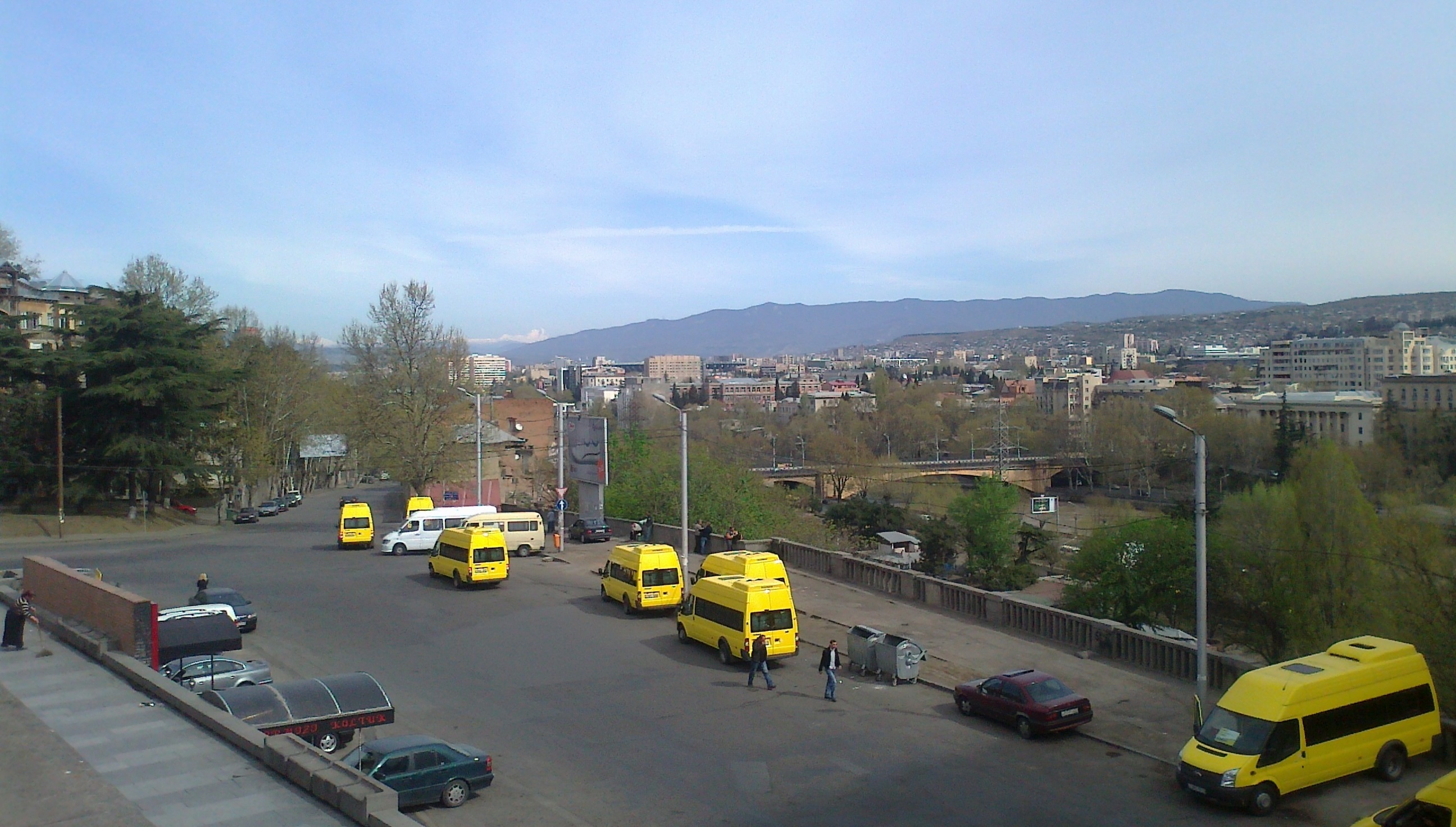
Tbilisi
Tbilisi spills down the walls of a gorge carved by the Mtkvari River, its buildings climbing slopes so steep that houses stack on top of each other. Legend says the city was founded in the 5th century when King Vakhtang Gorgasali discovered hot sulfur springs while hunting; the name Tbilisi derives from the Georgian word for warm. The city has been conquered over fifty times - by Persians, Arabs, Mongols, Turks, Russians - each occupation destroying and rebuilding, each departure leaving traces. Tbilisi holds 1.1 million people, the capital of a country whose wine culture may be the world's oldest, whose alphabet is unique, whose position between empires has made survival its defining achievement.
The Old Town
Tbilisi's old town, Kala, clings to hillsides below Narikala Fortress, its narrow streets and wooden balconies surviving Soviet-era neglect and post-Soviet renovation. The architecture is distinctive: the carved wooden balconies that overhang streets, the courtyards hidden behind anonymous doorways, the mix of Persian, Ottoman, Russian, and Georgian influences that occupation layered. The old town is not museum - people live here, laundry hangs from the famous balconies, cars squeeze through streets designed for horses.
The restoration is ongoing and uneven. Some buildings have been beautifully renovated, their woodwork repaired, their courtyards restored; others remain neglected, their balconies sagging, their futures uncertain. The preservation that tourism demands conflicts with the development that residents need; the old town's charm depends on the poverty that made renovation impossible and the continued residence that makes it genuine.
The Sulfur Baths
The sulfur baths of Abanotubani - the bath district - have operated since the city's founding, their domed buildings clustered in a neighborhood that Alexander Dumas and Pushkin both praised. The hot springs that attracted King Vakhtang still flow, their sulfurous water believed to cure ailments and certainly providing relaxation. The baths range from ornate public facilities to private rooms where scrubbing attendants provide traditional treatment.
The bath culture is genuinely Georgian, not performance for tourists. The negotiations and deals that happen in bath houses, the social function that water enables, the tradition that extends back centuries - these continue alongside the tourism that has discovered what Georgians always knew. The smell of sulfur that drifts through Abanotubani, unpleasant to newcomers, becomes familiar and eventually nostalgic to those who stay.
The Wine
Georgia may be where wine was invented - archaeological evidence suggests winemaking here 8,000 years ago, earlier than anywhere else. The traditional qvevri method, fermenting wine in clay vessels buried underground, is UNESCO-recognized intangible heritage. The grape varieties that grow here - Saperavi, Rkatsiteli, dozens of others - exist nowhere else, their names as distinctive as their flavors.
Tbilisi's wine bars have multiplied as Georgia has marketed its heritage. The natural wines that qvevri produce, the amber wines made from white grapes fermented with skins, the reds that accompany Georgian feasting - these have found international audiences seeking alternatives to conventional winemaking. The wine is entry point to Georgia, the liquid that carries culture, the tradition that survived Soviet attempts to industrialize production.
The Alphabet
Georgian is written in its own alphabet, one of only fourteen scripts currently in use that developed independently. The curved, elegant letters that cover signs and buildings are unique to Georgia, unchanged in their basic form for over 1,500 years. The alphabet's distinctiveness represents cultural survival - the Georgian identity that persisted through occupations that tried to erase it.
The alphabet creates both charm and barrier for visitors. The signs that cannot be read, the menus that require translation, the mystery that unfamiliar script creates - these define the experience of being foreign in Georgia. The three-letter word for bread (პური, 'puri') becomes achievement when visitors learn to recognize it; the full alphabet remains beyond most who come only briefly.
The Feast
The supra - the Georgian feast - is institution as much as meal. The tamada, or toastmaster, leads elaborate sequences of toasts that can continue for hours; the khinkali dumplings and khachapuri cheese bread provide sustenance; the wine flows in quantities that other cultures would find excessive. The feast is where business happens, friendships are sealed, and Georgia displays its hospitality.
The tradition is genuine but also performance - Georgians know that foreigners find the supra exotic and provide accordingly. Yet the hospitality is real: the insistence that guests eat more, drink more, stay longer represents values that survive commercialization. The feast that visitors experience is not what Georgians do every night, but neither is it fake; it is tradition concentrated for occasion.
From the Air
Tbilisi (41.69N, 44.83E) sits in a gorge of the Mtkvari (Kura) River at 380-770m elevation. Shota Rustaveli Tbilisi International Airport (UGTB/TBS) is located 17km southeast of the city center with one runway 13R/31L (3,000m). Narikala Fortress on the hill is a visible landmark. The old town climbs the hillsides below the fortress. The river runs through the city center. The terrain is hilly with mountains visible to the north (Caucasus). Weather is humid subtropical - hot summers, mild winters. Valley orientation channels winds. Visibility can be reduced by haze in summer.