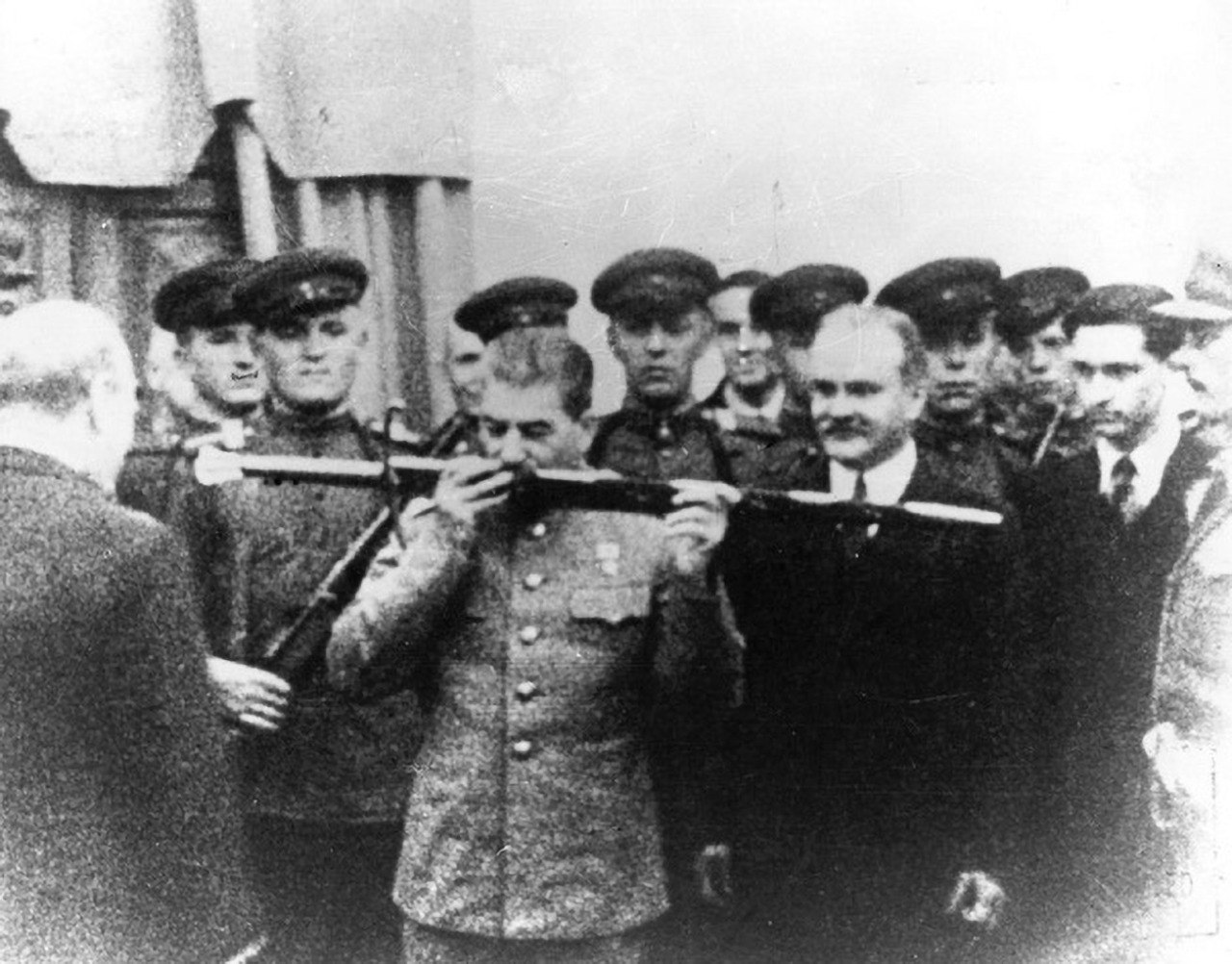
Tehran Conference
Stalin chose the colonel's plane. Two aircraft waited for him at Baku in late November 1943 -- one piloted by a colonel-general, the other by a mere colonel. The Soviet leader picked the lower-ranking officer's craft, reasoning that colonel-generals rarely flew anymore. It was a small, telling decision by a man about to make enormous ones. Across Tehran, Franklin Roosevelt settled into the American legation while Winston Churchill unpacked at the British Embassy. For four days beginning November 28, the three most powerful leaders of the Allied world would sit together for the first time, in a city none of them had chosen and all of them found inconvenient, to decide the fate of the war and the shape of a world that did not yet exist.
An Unlikely Crossroads
Tehran was nobody's first choice. Roosevelt had suggested Alaska or Cairo. Churchill preferred somewhere in the Mediterranean. But Stalin refused to travel far from the Soviet Union, citing his duties as commander-in-chief. Iran, jointly occupied by British and Soviet forces since 1941, offered neutral ground of a sort -- a nation under the boot of the very allies meeting within its borders. The conference, codenamed Eureka, convened at the Soviet Embassy compound on Ferdowsi Avenue, its high walls enclosing gardens where the future of nations would be bartered. Roosevelt had arrived aboard the USS Iowa, crossing the Atlantic before flying the final leg from Cairo. Churchill, an avid traveler who had already met Roosevelt seven times and Stalin twice, brought his daughter Sarah along with Foreign Secretary Anthony Eden and a retinue of military advisors.
The Second Front
Stalin wanted one thing above all else: a Western invasion of France. Since June 1941, the Soviet Union had absorbed the overwhelming weight of the German military, suffering millions of casualties while Churchill and Roosevelt debated timing and logistics. Churchill had argued for Mediterranean operations first, pointing to the physical impossibility of a cross-Channel assault without adequate shipping. Stalin pressed. Roosevelt leaned toward the Soviet position. On November 30, over lunch, the decision finally came: Operation Overlord would launch by May 1944. Stalin, pleased at accomplishing his principal goal, pledged a simultaneous Soviet offensive on the Eastern Front to prevent Germany from shifting forces west. The assault that would become D-Day was now committed, shaped not in London or Washington but in a walled compound in Tehran.
The Sword and the Toast
The conference produced moments of high theater. On November 29, Churchill presented Stalin with the Sword of Stalingrad, a ceremonial blade commissioned by King George VI and forged in Sheffield to honor the Soviet victory at Stalingrad. Stalin received it with both hands and kissed the scabbard. Then he passed it to Marshal Voroshilov, who took it the wrong way up so that the sword slipped from its scabbard and clattered to the floor. That evening at dinner, Stalin proposed executing 50,000 to 100,000 German officers to prevent future wars. Roosevelt, assuming it was dark humor, joked that perhaps 49,000 would suffice. Churchill erupted, denouncing the cold-blooded execution of soldiers who fought for their country, and stormed from the room. Stalin brought him back, insisting he had been joking. Churchill returned, but he believed Stalin had been testing the waters.
Borders Redrawn Over Brandy
Beyond the military decisions, the Tehran Conference began redrawing the map of postwar Europe. Churchill and Stalin discussed shifting Poland bodily westward -- its eastern marshlands absorbed by the Soviet Union, compensated with industrialized German territory to the west along the Oder and Neisse rivers. Roosevelt asked to be excused from the Polish question entirely, citing the sensitivities of Polish-American voters in the upcoming 1944 election. The Baltic states of Lithuania, Latvia, and Estonia were addressed with a grim formality: Roosevelt demanded that citizens vote on incorporation into the Soviet Union, and Stalin formally agreed -- while refusing any international oversight of those elections. The leaders also pledged to recognize Iranian independence, a diplomatic courtesy to the nation hosting them under occupation. These decisions would not be ratified until Yalta and Potsdam in 1945, but the trajectories were set in Tehran.
Assassins in the Shadows
According to Soviet intelligence, the conference nearly ended in catastrophe. The NKVD informed Roosevelt's security chief, Mike Reilly, that German agents had parachuted into Tehran days before the leaders arrived. Close to midnight on the eve of the conference, Molotov summoned the British and American ambassadors to the Soviet Embassy, warning that assassins had been apprehended but others remained at large. Roosevelt, who had initially refused invitations from both Stalin and Churchill to avoid appearing to favor one ally, was persuaded to move from the American legation to the Soviet compound. Whether the plot was genuine or a Soviet maneuver to keep Roosevelt under closer influence remains debated. What is certain is that for four days in November 1943, three leaders who distrusted one another sat in a city that belonged to none of them and committed the world to the invasion that would end the war in Europe.
From the Air
The Soviet Embassy compound, where the conference was held, sits in central Tehran near Ferdowsi Avenue at approximately 35.70N, 51.41E. Mehrabad International Airport (OIII) lies about 10 km to the west. From the air, Tehran sprawls across a plain backed by the dramatic wall of the Alborz Mountains to the north. The embassy district occupies the older central core of the city, distinguishable by its tree-lined avenues and walled compounds amid dense urban fabric.