Tehuantepec
Juana Cata Romero began as a candy seller in the market. She ended as the wealthiest and most powerful person in the Isthmus of Tehuantepec, owner of sugar and coconut plantations, head of an intelligence network, and lover of Porfirio Diaz for four decades -- even though both married others. The railroad across the isthmus was built to pass by her house. Her story captures something essential about Tehuantepec: this is a city where women have long wielded the real economic power, where the market is the institution that matters most, and where the line between official authority and actual influence has never been the same.
Where Mexico Narrows to a Thread
Tehuantepec sits at the waist of Mexico, on the isthmus where the country pinches to its narrowest point between the Pacific Ocean and the Gulf of Mexico. This geography has defined everything. Long before the Spanish arrived, the area was a critical link in trade routes connecting Central America with central Mexico. Through it passed jade, gold, manta rays, shells, feathers, cocoa, cotton, and spices. The Zapotecs founded the city in the period just before European contact, and when the original capital at Zaachila came under pressure from the Mixtecs and later the Aztecs in the late fifteenth century, Tehuantepec grew in importance. The sixteenth-century Dominican monastery of Santo Domingo, now the city's main cathedral, anchors the colonial center. Its former monastery wing houses the Casa de Cultura, which contains the Museo de Antropologia e Historia Zapoteca del Istmo -- a museum with halls dedicated to archaeology, the Mexican Revolution, regional dress, and folk art.
The Tehuanas and the Market
The most important institution in Tehuantepec is not the municipal palace but the market. There are four traditional markets; the main one, built in 1970, sits just off the central plaza. Ninety-five percent of portable goods in the city are sold there, which means Tehuantepec has almost no department stores, electronics shops, or clothing boutiques. The market is dominated by women known as Tehuanas. Until the 1970s, men were completely banned from the area. Today, fewer than five percent of the people in the market are men, and those who venture in still risk public taunting from the women who question their presence. This female dominance attracted the attention of French traveler Brasseur de Bourbourg in the nineteenth century and later the Mexican educator Jose Vasconcelos, both of whom described Tehuantepec as a matriarchal society. The characterization is partly true: women control commerce and household finances, spending their earnings as they choose regardless of what husbands say. But men still hold political office. The painter Frida Kahlo adopted Tehuana traditional dress in solidarity with these women, depicting it in paintings such as Memory, the Heart.
Boom, Canal, and the Promise of Revival
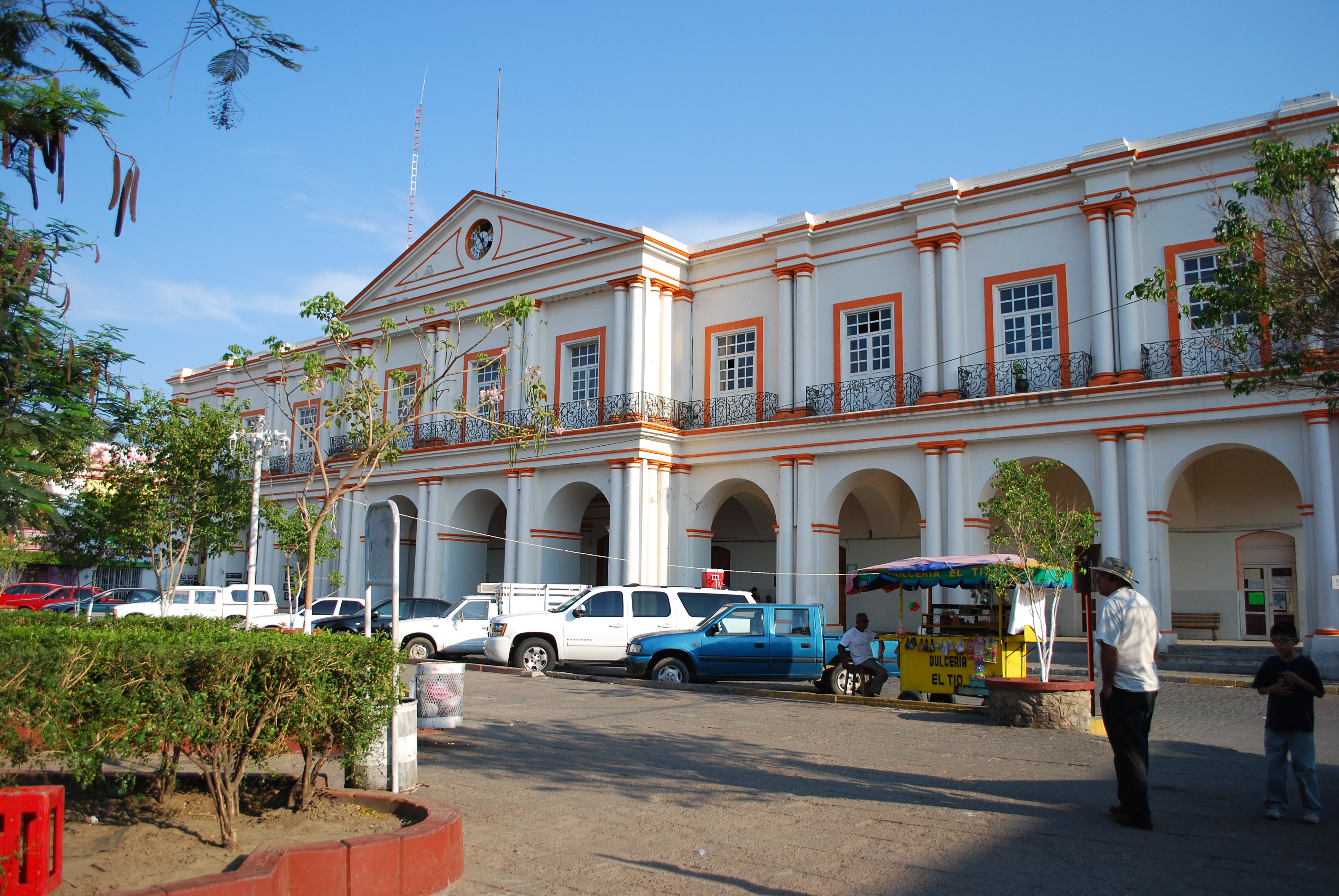
The city experienced a brief economic golden age in the early twentieth century when a railroad was built across the isthmus, linking the two oceans. For a few years, Tehuantepec mattered to global commerce. Then the Panama Canal opened and rendered the rail crossing obsolete almost overnight. The municipal palace, built during the boom in provincial Neoclassical style with massive columns and arches covering an entire side of the main plaza, was never actually finished. Since 1906, the city has promised to complete the rear of the building -- an irregular patchwork of brickwork that looks half-collapsed -- but never has. The railroad itself was privatized in 2001, and the twenty-four kilometers nearest the city were virtually abandoned. In 2018, the Mexican government began reviving the concept under the name Interoceanic Corridor of the Isthmus of Tehuantepec, modernizing the existing rail line and planning ten industrial parks across the isthmus. Described as a complement rather than competitor to the Panama Canal, the project represents the latest attempt to capitalize on the geography that has made this narrow strip of land coveted for five hundred years.
Rivals Across the Isthmus
Tehuantepec and neighboring Juchitan have maintained a fierce rivalry since the nineteenth century. It began during the French intervention of 1862, when Napoleon III sent troops to collect on debts Mexico owed. A captain in Tehuantepec switched sides to join the French, and when the people of Juchitan learned of it, they attacked Tehuantepec and were defeated. Four years later the same captain attacked Juchitan but lost. After the French withdrew, Juchitan attacked Tehuantepec as a personal vendetta. No blood has been shed since, but the competitive spirit has never faded. Each city tries to outdo the other in the quality and quantity of its festivals, particularly the velas -- celebrations of pre-Hispanic origin held in each neighborhood, featuring processions, ceremonial candles offered to patron saints, and queens crowned with flowers. The two communities mock each other's looks, hairstyles, and clothing with the affectionate venom that only true rivals can sustain.
From the Air
Located at 16.33N, 95.24W on the Isthmus of Tehuantepec, the narrowest point of Mexico between the Pacific Ocean and the Gulf. The city is visible as a settlement in the lowland plain south of the Guiengola hill. Nearest airport is Ixtepec Airport (MMIT). Federal Highway 190 passes through the city connecting Oaxaca (243 km northwest) with the isthmus region. The railroad line crossing the isthmus is visible from altitude, as is the nearby port of Salina Cruz on the Pacific coast.