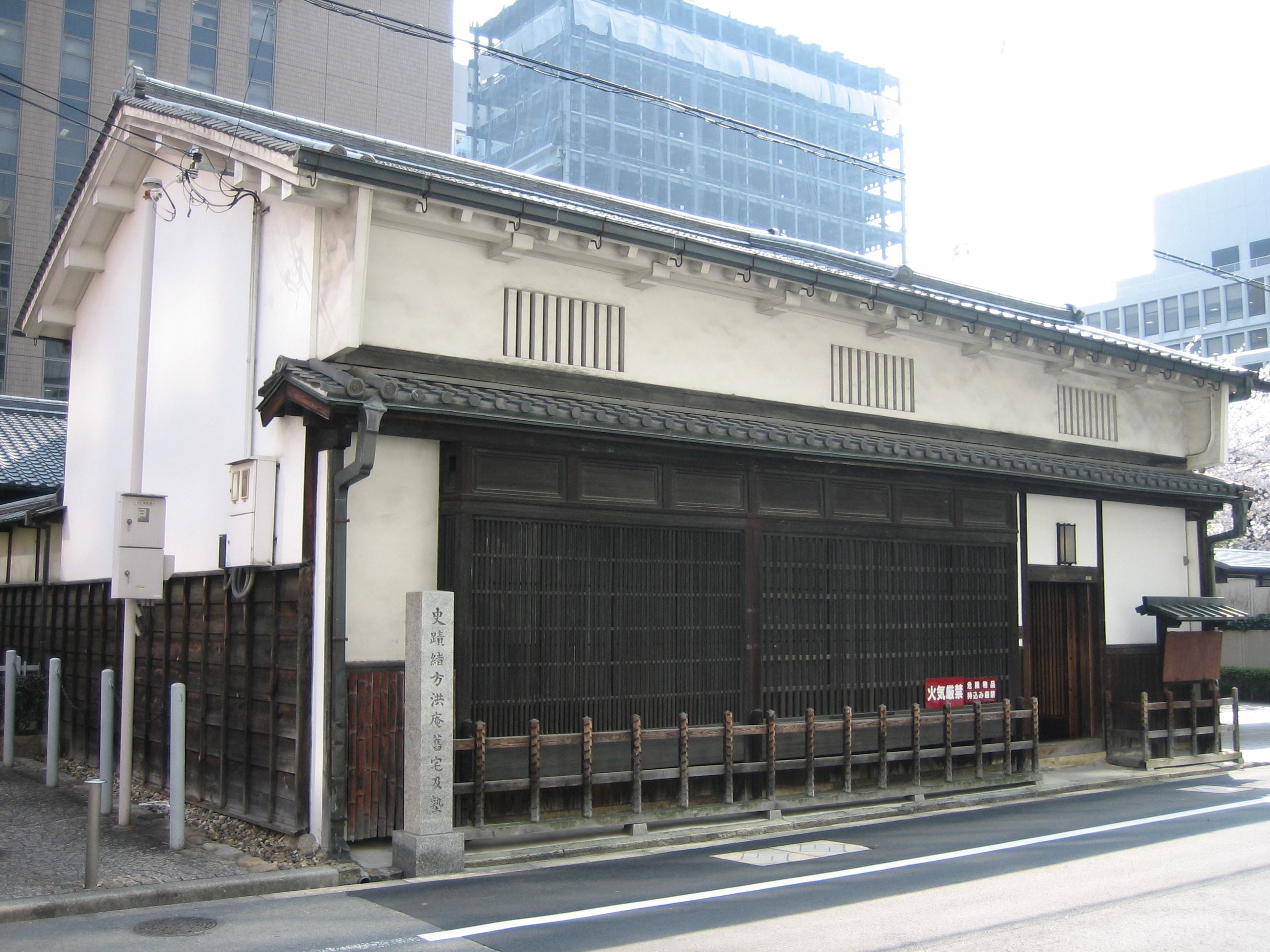
Tekijuku: The Tiny School That Modernized Japan
The building is easy to miss. Tucked into the Kitahama business district of central Osaka, the two-story wooden townhouse looks unremarkable beside the glass towers of Japan's financial quarter. But between 1838 and 1862, this cramped structure -- Japan's only surviving Edo-period school of Western learning -- produced an astonishing concentration of talent. Fukuzawa Yukichi, the founder of Keio University and for four decades the face on Japan's ten-thousand-yen note, studied here. Omura Masujiro, considered the father of the modern Japanese army, studied here. So did doctors, diplomats, military strategists, and one man whose great-great-grandson would create Astro Boy. Tekijuku -- formally Tekitekisaijuku -- was a private school where a physician named Ogata Koan taught Western science using the only foreign language Japan's isolationist government permitted: Dutch.
The Doctor Who Opened a Window
Ogata Koan (1810-1863) was a physician and scholar of Rangaku -- literally 'Dutch studies,' the narrow channel through which Western knowledge trickled into Japan during two centuries of national seclusion. Under the Tokugawa shogunate's sakoku policy, only the Dutch were permitted to trade at the artificial island of Dejima in Nagasaki harbor. Dutch books, particularly on medicine, became the sole written bridge between Japan and European science. Koan mastered this material and in 1838, during the Tenpo era, opened Tekijuku in Osaka's merchant quarter. His curriculum centered on medicine but extended into chemistry, physics, and other sciences that had no Japanese equivalent at the time. Students did not merely memorize -- they learned to read Dutch, translate scientific texts, and think empirically. Koan also mounted a pioneering vaccination program and developed treatments for cholera, putting his Western medical training to practical use.
The Thousand Who Shaped a Nation
Roughly one thousand students passed through Tekijuku's cramped rooms during its twenty-four years of operation. The alumni roster reads like a who's who of Meiji-era Japan. Fukuzawa Yukichi arrived as a young man, excelled to become head student, and later founded Keio University -- one of Japan's most prestigious institutions. Omura Masujiro applied Western military tactics to reorganize Japan's armed forces. Nagayo Sensai modernized the nation's public health system. Sano Tsunetami founded the Japanese Red Cross. Hashimoto Sanai became a reform-minded samurai who pushed for governmental modernization before his execution at age twenty-five. And Tezuka Ryosen, a doctor who studied under Koan, began a family line that produced his great-great-grandson Tezuka Osamu, the manga artist credited with creating Astro Boy and pioneering modern Japanese animation.
A Classroom Frozen in Time
The Tekijuku building survives as Japan's only remaining physical school of Western learning from the Edo period. Designated both a National Important Cultural Property and a National Historic Site, the wooden structure preserves the atmosphere of a mid-19th-century merchant-class townhouse repurposed for education. The rooms are small and spartan -- students slept, studied, and debated in tight quarters, poring over Dutch medical texts by candlelight. The school's official name, Tekitekisaijuku, derived from one of Ogata Koan's art names, and the word tekiteki carries connotations of 'suitable' or 'appropriate' -- fitting for a place that trained people to adapt foreign knowledge to Japanese needs. Today the building sits in the Kitahama neighborhood of Chuo-ku, a short walk from Yodoyabashi Station, surrounded by the corporate headquarters and financial firms that now define the district.
Two Universities, One Schoolhouse
Tekijuku's legacy branches into two of Japan's most important universities. Osaka University traces its institutional lineage directly back to Koan's school, claiming 1838 as its founding year -- making it, in spirit if not in continuous operation, one of the oldest modern universities in Japan. The university's Tekijuku Memorial Center now oversees the preserved school building and maintains its historical archives. Keio University, founded by Fukuzawa Yukichi in Tokyo in 1858, carries a different thread of the same legacy: its founder's intellectual formation happened in these Osaka rooms. When Koan died in 1863, Japan was on the brink of the Meiji Restoration that would sweep away the feudal order his students had been quietly preparing to replace. The school closed, but its graduates were already building the institutions, armies, and public health systems of a new Japan. The quiet townhouse in Kitahama had done its work.
From the Air
Located at 34.691N, 135.503E in Osaka's Kitahama business district along the Tosabori River. The small wooden building is not visible from altitude, but the neighborhood is identifiable by the dense cluster of office towers near the Nakanoshima island area between the Dojima and Tosabori rivers. Osaka International Airport (RJOO/Itami) lies approximately 9 nautical miles to the north-northwest; Kansai International Airport (RJBB) is about 26 nautical miles southwest. The nearby Nakanoshima island, with its distinctive parks and public buildings flanked by two rivers, provides a useful visual landmark from 2,000-4,000 feet AGL.