Tel Aviv Museum of Art
On May 14, 1948, 250 delegates filed quietly into a modest building on Rothschild Boulevard in Tel Aviv. They were not there for an art exhibition. Beneath a portrait of Theodor Herzl, David Ben-Gurion read aloud the Declaration of Independence of the State of Israel. The building was the Tel Aviv Museum of Art, and the room where a nation was proclaimed would eventually become Independence Hall -- a separate museum entirely. The art collection, meanwhile, outgrew its birthplace and moved to grander quarters, becoming one of the most visited museums in the world.
A Mayor's Gift, a Nation's Cradle
The museum's origins are intimate and personal. Meir Dizengoff, Tel Aviv's first mayor, donated his home at 16 Rothschild Boulevard as a museum in 1932, dedicating it to the memory of his wife Zina, who had died two years earlier. Haim Gamzou became its first director, and the institution grew modestly through the turbulent years of the British Mandate. Then came the day that changed everything. The choice of the museum as the venue for the independence declaration was partly practical -- it was one of the few halls in the young city large enough to hold the delegates but small enough to keep the event discreet from British authorities. By 1971, the collection had so thoroughly outgrown the Rothschild Boulevard building that the museum relocated to Shaul Hamelech Boulevard, and Dizengoff's home was reborn as Independence Hall.
Masterworks in Mediterranean Light
The collection that moved to those new quarters is formidable. Gustav Klimt's 1916 portrait of Friedericke Maria Beer hangs here, as does Wassily Kandinsky's Untitled Improvisation V from 1914. In 1950, Peggy Guggenheim donated 36 works by Abstract and Surrealist artists -- Jackson Pollock, Yves Tanguy, Roberto Matta, Andre Masson -- a gift that instantly elevated the museum's international standing. Van Gogh, Monet, Pissarro, and Henry Moore are also represented. The holdings span Israeli art extensively, from early 20th-century works through contemporary practice, making the museum both a window onto global modernism and a mirror of the country's own artistic evolution. By 2019, annual attendance reached 1,322,439 visitors, placing it 49th among the world's most-visited art museums.
Architecture as Statement
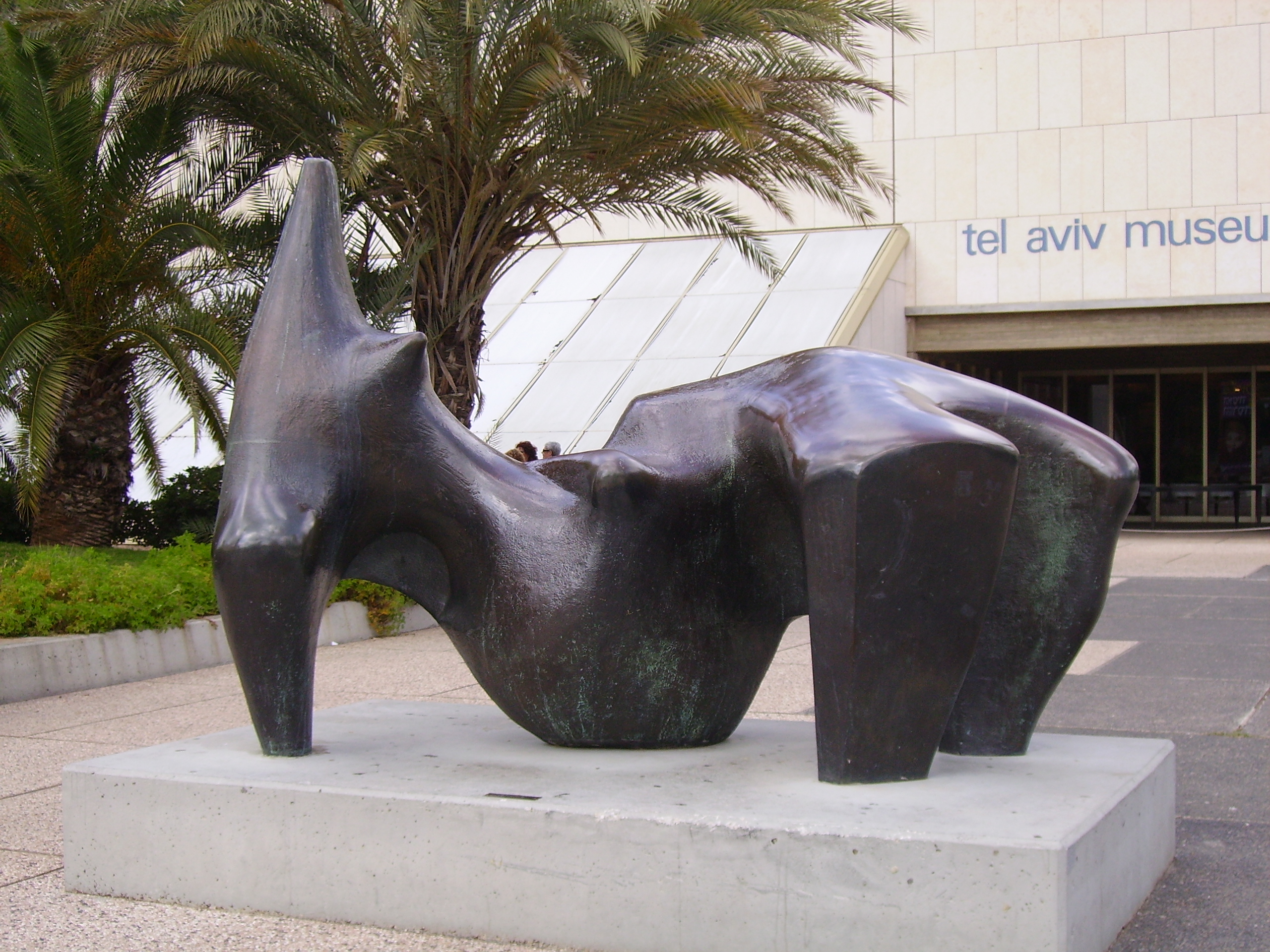
The museum's physical expansion reflects Tel Aviv's own ambitions. The Herta and Paul Amir Building, designed by architect Preston Scott Cohen and opened in 2011, added 18,500 square feet of gallery space across five hypnotic, light-filled floors. Its spiraling geometric interior has become an architectural landmark in its own right. The original Helena Rubinstein Pavilion for Contemporary Art, built by Israel Prize laureate Yaakov Rechter in 1959, underwent an extensive renovation and reopened in 2023 as the Eyal Ofer Pavilion with a retrospective of Alberto Giacometti. The main building was refurbished and renamed the Paulson Family Foundation Building in 2021, marking the museum's 90th anniversary. Sculptures by Henry Moore and others populate the entrance plaza and the Lola Beer Ebner Sculpture Garden, blurring the line between indoor gallery and outdoor city.
Art in a Time of Conflict
The museum has never been removed from the political life of the country it helped inaugurate. In March 2023, it partially closed in solidarity with Israel's "day of paralysis" during protests against proposed judicial reforms. Following the October 7 attacks later that year and the subsequent conflicts, the museum moved vulnerable masterworks to a secured basement and relocated exhibitions to protected lower levels. The plaza in front of the building took on an entirely new identity, becoming Hostages Square -- an encampment dedicated to those held in Gaza. The museum has also grappled with the complexities of art philanthropy, initiating a review of a significant donation linked to the family of Friedrich Flick, a German industrialist convicted of war crimes. Through it all, the museum continues to do what Meir Dizengoff's original gift intended: create a space where art and public life are inseparable.
From the Air
Located at 32.078N, 34.787E on Shaul Hamelech Boulevard in central Tel Aviv. The museum complex, including the distinctive geometric Amir Building, is visible from moderate altitude in the cultural district. Ben Gurion International Airport (LLBG) lies approximately 11 nm to the southeast. The museum sits near the Azrieli Center towers, which serve as a useful visual landmark. Best viewed at 2,000-5,000 ft AGL.