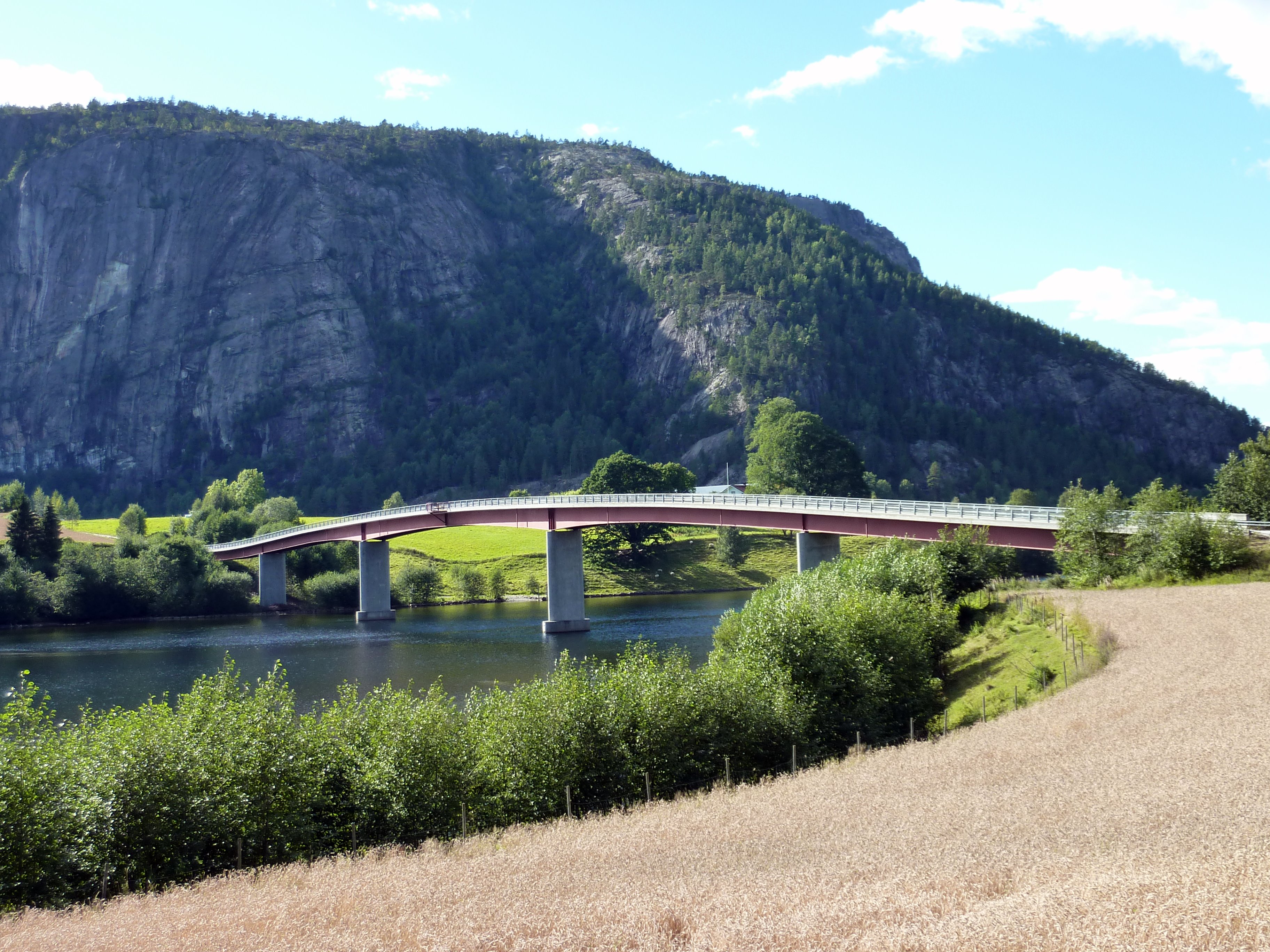
Telemark Canal
The steamship Victoria has been traveling the Telemark Canal since 1882. For more than 140 years, it has carried passengers through a waterway that threads together a chain of long, narrow lakes in southern Norway, climbing 72 meters in elevation across 105 kilometers through 18 lock chambers. When the canal's longer section opened in 1892, European observers called it the eighth wonder of the world, a piece of hyperbole rooted in genuine astonishment at the engineering required to lift boats over the mountain ridges between lakes. The canal connects two very different places: Skien, an industrial port town near the coast where Henrik Ibsen was born, and Dalen, a small village at the head of Lake Bandak, hemmed in by steep-sided valleys in the interior of Telemark county. Between them, the water route passes through some of the least populated and most heavily forested landscape in southern Norway.
Two Canals Joined Into One
The Telemark Canal was built in two stages. The shorter Norsjoe-Skien Canal came first, constructed between 1854 and 1861, connecting the port town of Skien with the inland Norsjoe lake through locks at Skien and Loveid. The longer and more ambitious Bandak-Norsjoe Canal opened in 1892 under the direction of Minister of Labour Hans Hein Theodor Nysom. It extended the waterway from Norsjoe through the lakes Flavatn and Kviteseidvatn to Bandak Lake, a route that required blasting lock chambers through solid rock in some of the most rugged terrain in the region. Together, the two canals formed a continuous water highway from the coast to the mountains. The canal's primary purposes were practical: transporting goods and passengers, floating logs to the paper mills downstream, and controlling flooding in the lake chain. An eastern branch also connects Norsjoe lake to the town of Notodden via Lake Heddalsvatnet.
The Staircase at Vrangfoss
Of the canal's 18 lock chambers, the most dramatic is Vrangfoss, a staircase lock with five consecutive chambers that lifts boats 23 meters, the height of a seven-story building. Staircase locks stack chambers end to end, so that the upper gate of one chamber is the lower gate of the next, and a boat rises through them in steps, each chamber filling from the one above. At Vrangfoss, the entire process plays out against a backdrop of forest and rock, the water churning white as it pours between chambers. The lock system is still manually operated, and watching a vessel ascend or descend the full staircase remains one of the canal's signature experiences. The eight lock stations are distributed across the canal's length, each one built where the terrain demanded that water levels change.
From Timber Rafts to Tourist Boats
For most of the 20th century, the Telemark Canal served the timber industry. Log floating, the practice of sending felled trees downstream on the current to mills and ports, was the canal's economic backbone. Rafts of logs filled the locks alongside passenger boats and cargo barges. That era ended when the Union paper factory near Skien closed, removing the primary destination for floating timber. The canal's second life is in tourism. The Victoria and the more modern Henrik Ibsen now carry passengers on scheduled runs from Skien to Dalen via Kviteseid, the full journey taking roughly 10 hours. The trip passes through quiet lakes, forested hills, and villages that seem to have changed little in a century. In 2012, the canal was the subject of a Norwegian slow-television broadcast, Telemarkskanalen minutt for minutt, part of the national broadcaster NRK's series of unhurried, real-time documentaries that became an unexpected cultural phenomenon.
Heritage on the Water
The Bandak-Norsjoe Canal was designated a National Cultural Heritage site in June 2017, and the entire canal was chosen as the millennium site for Telemark county, recognizing its significance to the region's identity. The designation reflects not just the engineering but the social history embedded in the waterway: the canal connected isolated farming communities to the coast, brought goods and news inland, and created a transportation spine that shaped settlement patterns in the Telemark interior for generations. Today, the lock chambers and their mechanisms are maintained as working heritage, the stone walls and iron fittings preserved in operational condition. The Victoria, built in 1882, may be the most tangible link to the canal's original era, a vessel that has navigated the same locks, through the same lakes, past the same forested ridgelines, for longer than most buildings in the region have stood.
From the Air
Located at 59.28N, 9.27E in Telemark county, southern Norway. The canal follows a roughly north-south chain of lakes connecting Skien on the coast to Dalen inland. From the air, look for the elongated lakes Norsjoe, Flavatn, Kviteseidvatn, and Bandak, connected by short stretches of canal with visible lock chambers. The Vrangfoss staircase lock is particularly identifiable from above. Nearest airports: Skien/Geiteryggen (ENSN) approximately 10 km southeast of Skien, Notodden/Tuven (ENNO) approximately 25 km northeast. Best viewed at 3,000-6,000 feet AGL to follow the lake chain and lock stations.