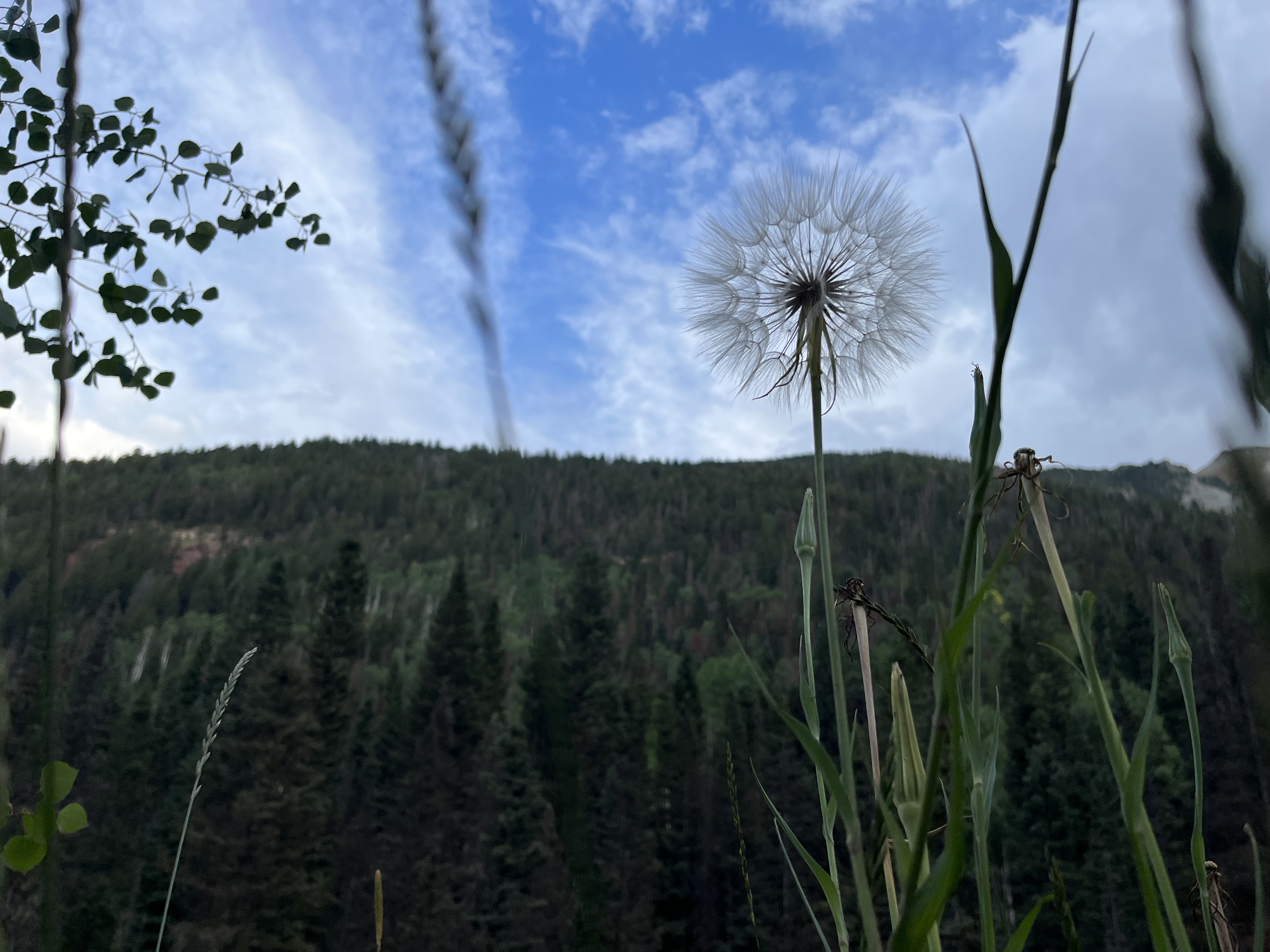
Telluride, Colorado
In June 1889, a young man named Robert LeRoy Parker walked into the San Miguel Valley Bank in Telluride and walked out with $24,580 -- the equivalent of hundreds of thousands of dollars today. It was the first major recorded crime of the outlaw who would become famous as Butch Cassidy. The bank robbery set the tone for a town that has spent more than a century reinventing itself while never quite shaking its wild streak. Telluride sits at the dead end of a box canyon in the western San Juan Mountains, walled in by steep forested cliffs with Bridal Veil Falls cascading at the canyon's head. Weathered ruins of old mining operations still dot the hillsides above town, silent witnesses to the industry that built this place.
Columbia Becomes Telluride
Gold was first discovered in the mountains above Telluride in 1875, when John Fallon staked the first claim in Marshal Basin. The town that grew around the mines was founded in 1878 as Columbia, but the United States Post Office refused to approve the name -- too many Columbias already existed. The post office opened as Telluride on July 26, 1880, and the town officially changed its name in 1887. The name comes from tellurium, a metalloid element that forms natural telluride ores of gold and silver. Ironically, gold telluride minerals were never actually found in these mountains. The area's mines were rich in zinc, lead, copper, silver, and ores containing gold in other forms. Telluride began slowly due to its isolation until Otto Mears opened a toll road in 1881, allowing wagons to reach a place previously accessible only by pack mule.
The War Between Miners and Owners
The arrival of the Rio Grande Southern Railroad in 1891 brought an unprecedented boom, but it also concentrated wealth in ways that bred conflict. Miners worked ten- to twelve-hour shifts in mines above the treeline, in bitter cold, with minimal safety measures. Boarding houses perched precariously on mountainsides. When miners joined the Western Federation of Miners in 1896, tensions erupted. A strike in 1899 won miners $3 a day for eight hours of work plus a dollar for boarding. But the Colorado National Guard was called out, deaths occurred on both sides, and the disappearance of mine guard William J. Barney -- declared a murder by mine operator Bulkeley Wells -- drew national attention. The resulting cycle of accusations, gunplay, and forced expulsions became part of what historians call the Colorado Labor Wars.
Where Alternating Current Proved Itself
In 1891, the same year the railroad arrived, Telluride entrepreneur L. L. Nunn partnered with George Westinghouse to build the Ames Hydroelectric Generating Plant near town. The plant transmitted industrial-grade alternating current power to the Gold King Mine -- the first successful demonstration of long-distance AC power transmission. It used two Westinghouse alternators, one as a generator producing 3,000 volts of single-phase AC and the other as a motor. This achievement predated the famous Westinghouse plant at Niagara Falls by four years. A second hydroelectric plant, built in 1895 at Bridal Veil Falls to power the Smuggler-Union Mine, still stands on the eastern edge of town. Telluride's contribution to electrical engineering is one of the most overlooked stories in American industrial history.
From Ore Carts to Ski Lifts
Mining was Telluride's sole industry until 1972, when Joseph T. Zoline installed the town's first ski lift. The Pandora hard-rock mine kept operating until 1978, and the transition was jarring. Mining families left for places like Moab, Utah, where uranium offered continued employment. They were replaced by what locals called hippies -- young people drawn to hang gliding, kayaking, and a casual mountain lifestyle. At one point, a serious proposal sought to ban cars and replace them with horse-drawn carts. But the music and film festivals that launched in the 1970s exposed hundreds of thousands to the valley's grandeur for the first time. By the 1980s, Telluride had earned a reputation as Colorado's best-kept secret, which paradoxically made it famous. Celebrities like Tom Cruise, Oprah Winfrey, and Oliver Stone arrived, and by the mid-1990s, Telluride had established itself as a premier resort town.
The Free Gondola and the Box Canyon
Today Telluride is connected to its companion community of Mountain Village by a free gondola -- the only one of its kind in North America. The 13-minute ride reaches the San Sophia station at an elevation that puts riders among the peaks. The town's bus system is called the Galloping Goose, a nod to the quirky railcars that once ran on the Rio Grande Southern. Telluride Regional Airport, once the highest elevation commercial airport in the United States, is considered one of the most challenging in the country due to rugged terrain, high elevation, and volatile weather. Most travelers fly into Montrose instead. The Telluride Historic District, encompassing much of the town, is one of Colorado's 20 National Historic Landmarks. A population of 2,607 lives among these layers of history in a canyon that still feels, as it always has, like the end of the road.
From the Air
Telluride sits at approximately 37.94N, 107.82W in a box canyon at roughly 8,750 feet elevation. The town is visible as a compact grid at the end of a narrow valley, with Bridal Veil Falls at the canyon's head to the east and Ingram Falls visible from above. Telluride Regional Airport (KTEX) sits on the mesa above town -- one of the most challenging airports in the US due to high elevation, short runway, and surrounding terrain. Montrose Regional Airport (KMTJ) is the primary commercial airport, approximately 65 miles north by road. The free gondola connecting Telluride to Mountain Village is visible as a cable line ascending the south ridge. Colorado Route 145 approaches from the west; Imogene Pass and Black Bear Pass provide rugged overland access.