Temperance Wick
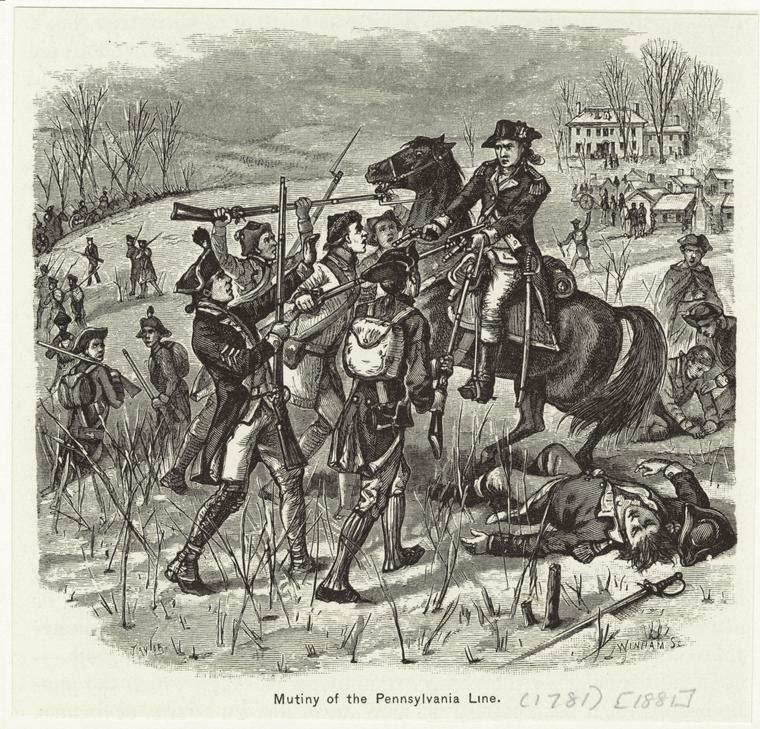
The soldiers wanted her horse. Three mutineers from the Pennsylvania Line, desperate and angry after months without pay in the worst winter of the Revolutionary War, blocked the road and grabbed the bridle. Temperance Wick, 22 years old and riding home alone through the frozen New Jersey countryside, pretended to comply. When the man holding the bridle released it to help her dismount, she whipped the horse and galloped for home. What she did next has become one of the most enduring -- and most debated -- legends of the American Revolution.
The Daughter of Jockey Hollow
Temperance Wick was born on October 30, 1758, the youngest of Henry Wick's five children. Her father was the wealthiest landowner in that part of Morris County, commanding 1,400 acres of timber and farmland that would become the Continental Army's winter encampment. The Wick family was among the oldest English families in America, descended from the Pilgrim Father John Wick. But by the winter of 1779-1780, when more than 10,000 soldiers camped on the family estate, Tempe and her brother Henry Jr. were the only children still living at home with their aging parents. Her father commanded the Morris County Cavalry, responsible for protecting the New Jersey government. The war was not an abstraction for the Wicks. It was camped in their fields.
The Hard Winter's Toll
General Arthur St. Clair and his staff quartered in the Wick House while soldiers built over a thousand huts across Jockey Hollow. The troops were poorly clothed and underfed. Many walked barefoot through snow. An estimated 100 soldiers died in the brigade hospital that winter and were buried in the field north of the house. The demands of feeding and supplying 10,000 men fell heavily on the surrounding farms, and the relationship between the army and its reluctant hosts grew increasingly strained. On December 21, 1780, Henry Wick died, leaving Tempe to care for her sick mother Mary and her mentally ill brother Henry. She was suddenly the head of a household surrounded by a starving, mutinous army.
A Horse in the Bedroom
When her mother's condition worsened, Tempe saddled her horse and rode to the home of Doctor William Leddell, about a mile away. The doctor was out. On the ride home, the three mutineers confronted her. After her escape, Tempe feared the soldiers would follow her to the farm and take the horse by force. According to the most famous version of the story, she led the horse through the front door of the Wick House and into a guest bedroom. She closed the shutters and placed a feather bed beneath the animal's hooves to muffle the sound. The soldiers arrived, searched the outbuildings, the barn, and the surrounding woods, and left empty-handed. Tempe supposedly kept the horse hidden in the bedroom until New Year's Day, when the mutineers marched south toward Princeton. Visitors to the Wick House are still shown the bedroom where the horse was allegedly concealed, and some claim a faint hoofprint can be seen in the floor.
Legend, History, and the Space Between
Scholars have long questioned the specifics. Hiding a horse in a colonial bedroom for days -- feeding it, keeping it quiet, managing its waste -- strains plausibility. Frank R. Stockton, the 19th-century American storyteller, wrote a version that most historians agree embellished freely. Ann Rinaldi's historical fiction novel A Ride Into Morning and Patricia Lee Gauch's children's book This Time, Tempe Wick? have kept the legend alive for younger generations. What is not disputed is that Tempe and her parents appear frequently in surviving documents from the period -- letters, journals, and receipts that place the Wick family firmly at the center of the Jockey Hollow encampment. Whether the horse episode happened exactly as told, the circumstances were real: a young woman alone in a farmhouse occupied by generals, surrounded by a desperate army, managing crisis with whatever resources she had.
After the War
Tempe's mother Mary died on July 7, 1787, and Tempe inherited Jockey Hollow. At the relatively late age of 30, she married Dr. William Tuttle, and together they had five children. She lived until April 26, 1822. The Wick House still stands as part of Morristown National Historical Park, one of the few Revolutionary War structures in New Jersey that survived intact into the modern era. The road that passes through the historic district bears her name: Tempe Wick Road. Whether she was a folk heroine or simply a resourceful woman coping with an impossible situation, the story endures because it captures something true about the Revolution itself -- that the war was not only fought by soldiers in the field, but by the families who lived in the middle of it.
From the Air
Located at 40.761N, 74.543W at Jockey Hollow, within Morristown National Historical Park, Morris County, NJ. The Wick House is visible as a colonial-era structure amid parkland. Best viewed at 2,000-4,000 ft AGL. Nearest airports: Morristown Municipal (KMMU) about 5 nm northeast, Somerset Airport (SMQ) about 10 nm south.