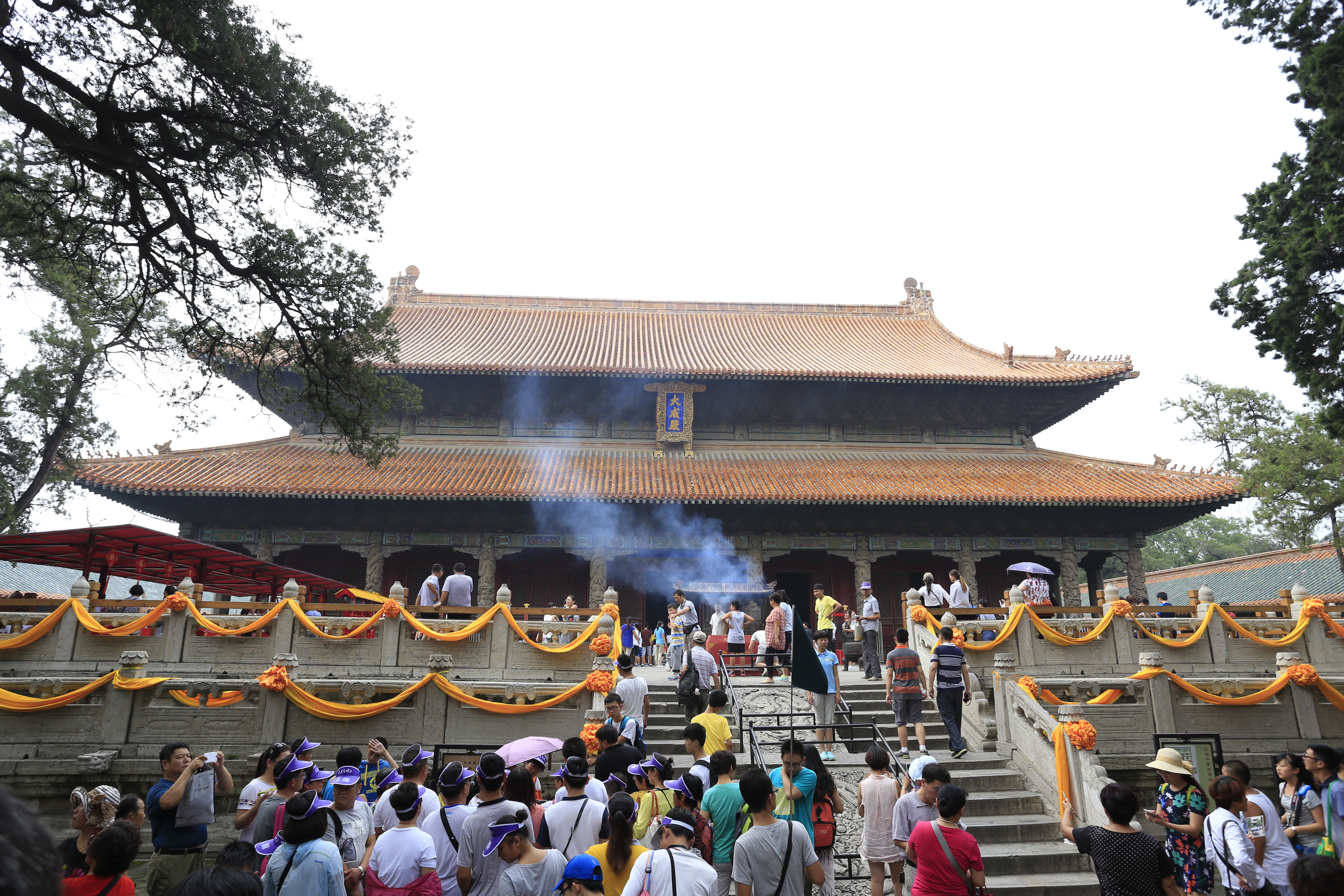
Temple and Cemetery of Confucius and the Kong Family Mansion in Qufu
San Kong. Three characters that encapsulate 2,500 years. In Qufu, the small city in Shandong Province where Confucius was born, lived, taught, and died, everything circles back to three sites: the Temple of Confucius, the Cemetery of Confucius, and the Kong Family Mansion. Together they form a UNESCO World Heritage Site inscribed in 1994 -- but the designation merely formalized what the Chinese had recognized for over two millennia. This is the spiritual and physical center of Confucianism, the most influential philosophical tradition in East Asian history.
The Temple: Where a House Became a Shrine
Within two years of Confucius's death around 479 BC, his former house in Qufu was consecrated as a temple by the Duke of Lu. That original three-room house was eventually removed during a rebuilding in 611 AD, but the temple grew around its memory. By the Song dynasty it had expanded into a design with three sections and four courtyards containing over 400 rooms. Today, the Temple of Confucius is the largest of its kind in East Asia, covering 16,000 square meters with 460 rooms. Its architecture echoes the Forbidden City in Beijing -- yellow roof-tiles reserved for the emperor, red-painted walls, pine trees planted for color contrast. Twelve emperors made 20 personal visits to worship here; about 100 others sent deputies for 196 official visits.
The Mansion: A Family as an Institution
Next door to the temple, the Kong Family Mansion housed the direct descendants of Confucius for centuries. The family held the hereditary title of Duke Yansheng, and their administrative apparatus mirrored the imperial government itself -- departments of rites, seals, music, letters, archives, and revenue collection. The mansion was both a private residence and a center of governance. Its inner gate carried a warning against greed in the form of a painted mythical beast, and trespassing past that gate was punishable by death. The last descendant to live here, Kong Decheng of the 77th generation, left for Taiwan in 1949. Traditional hanfu robes given by Ming emperors to the Dukes Yansheng are still preserved inside, more than five centuries after they were bestowed.
The Cemetery: Where the Line Continues
A 1,266-meter avenue lined with cypresses and pines leads north from Qufu's city wall to the Cemetery of Confucius, where the philosopher himself is buried along with more than 100,000 descendants spanning 76 generations. The cemetery covers 183 hectares -- larger than many city parks -- and more than 10,000 mature trees give it the character of an ancient forest. Spirit ways flanked by stone animals and guardian figures mark the graves of the Dukes Yansheng. The cemetery endured even the Cultural Revolution, when Red Guards desecrated the grave of the 76th-generation duke. Today it stands as the oldest and largest family cemetery in continuous use anywhere in the world.
Three Sites, One Legacy
What makes San Kong extraordinary is not any single monument but the continuity the three sites represent together. The temple preserves the memory of a man who lived 2,500 years ago. The mansion preserves the institutional framework his descendants built to honor and extend his teachings. The cemetery preserves the physical remains of a family line that has survived every upheaval Chinese history could produce -- dynastic wars, Mongol invasions, the Cultural Revolution. Confucius taught that civilization depends on ritual, filial devotion, and the careful transmission of knowledge across generations. San Kong is, in the most literal sense, the proof of that philosophy in practice.
From the Air
Located at 35.60N, 116.98E in Qufu, Shandong Province. The three sites cluster within the historic walled city and its northern approaches, all within 2 km of each other. The temple and mansion are in the city center; the cemetery is a large, densely forested area to the north. Nearest airport is Jining Qufu Airport (ZLJN). From cruising altitude, the cemetery's tree canopy contrasts distinctly with surrounding farmland.