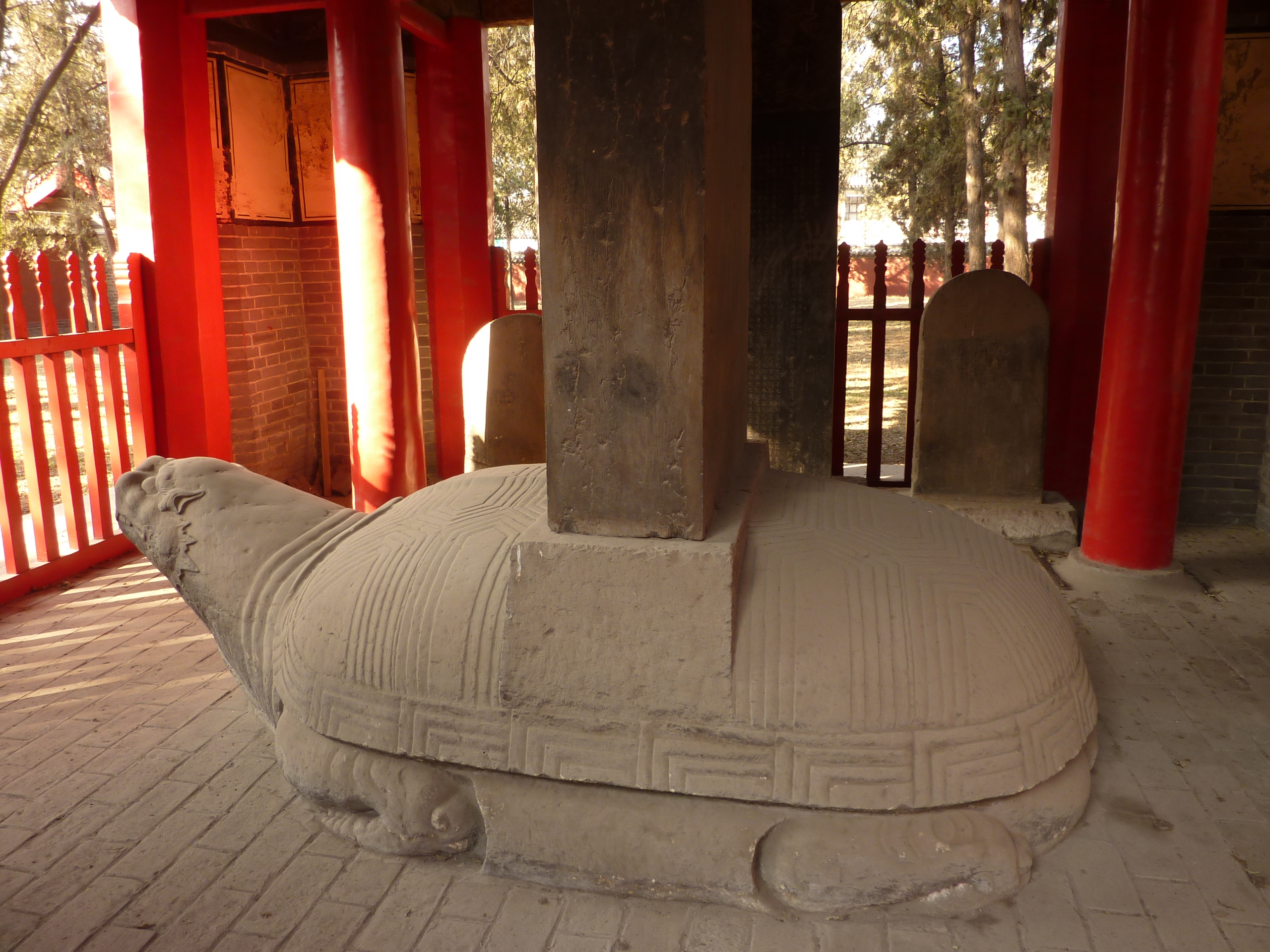
Temple of Yan Hui
Yan Hui died at 31, so poor that his father could not afford a proper burial. Confucius wept openly, reportedly saying he had mourned Yan Hui more than he had mourned his own son. Of all his students, Confucius considered Yan Hui the one who most fully embodied his teachings -- a man who lived in a cramped alley, ate from a single bamboo bowl, drank from a gourd dipper, and found joy in it. Two and a half millennia later, that impoverished student has a temple complex covering more than 27,000 square meters in the heart of Qufu.
The Favorite Disciple
Yan Hui lived from 521 to 490 BC in the state of Lu, the same small kingdom in what is now Shandong Province where Confucius himself was born and taught. He was Confucius's most beloved student, the one the master praised above all others for his virtue, humility, and love of learning. Unlike many of Confucius's more politically ambitious disciples, Yan Hui seems to have been drawn to philosophy for its own sake. His early death was one of the great losses of Confucius's life. The Analects records multiple expressions of the master's grief, extraordinary in a text otherwise known for its emotional restraint. Yan Hui's poverty in life makes the grandeur of his posthumous temple all the more striking.
Within the Old City Walls
The Temple of Yan Hui sits within the historic walled city of Qufu, just south of the northern gates and a few blocks north of the much larger Temple of Confucius near the southern gates. The temple premises form a rectangle of 254.5 meters by 109.8 meters. Local historians count 148 architectural and sculptural objects on the grounds -- halls, pavilions, gates, and stelae -- along with 369 old trees of significant value. The main sanctuary is the Hall of Fusheng, the Hall of the Continuator of the Sage, a title that captures how later generations understood Yan Hui's role: not merely a student, but the figure who most faithfully carried forward the master's vision.
Stones in Two Scripts
The temple's stelae tell a story of cross-cultural reverence that spans centuries and empires. A stele from the Dading era (1184) during the Jurchen Jin dynasty marks one of the earliest surviving inscriptions on the site. A 1307 stele records an edict from Mongol emperor Temur Khan granting the temple imperial protection, inscribed in both Chinese and Mongolian using the Phags-pa script. In 1331, another bilingual stele commemorates the conferral on Yan Hui of the title Fusheng -- Continuator of the Sage -- and Duke of Yanguo. Later stelae from the Ming dynasty's Zhengtong era (1441) and Zhengde era (1509) record temple rebuildings. Each inscription is a record of political power acknowledging philosophical authority, one dynasty after another choosing to honor the memory of a man who owned almost nothing.
The Paradox of Poverty and Honor
There is something deliberately instructive in the contrast between Yan Hui's life and his temple. Confucius praised Yan Hui precisely because he found contentment in poverty and never sought wealth or status. Yet the monument built in his honor is a substantial architectural complex maintained by imperial decree across dynasties. The paradox is central to Confucian culture: true virtue deserves recognition, even -- especially -- when the virtuous person would not have sought it. Walking through the temple's courtyards, past stelae erected by Mongol khans and Ming emperors, one encounters a quiet argument that poverty of means and richness of character are not the same thing, and that the latter deserves the more lasting memorial.
From the Air
Located at 35.60N, 116.99E within the walled city of Qufu, Shandong Province. The temple is positioned between the northern city gates and the larger Temple of Confucius to the south. Nearest airport is Jining Qufu Airport (ZLJN). The site is part of the cluster of Confucian heritage buildings identifiable from above 3,000 feet within the rectangular outlines of Qufu's historic walls.