Tepe Sialk
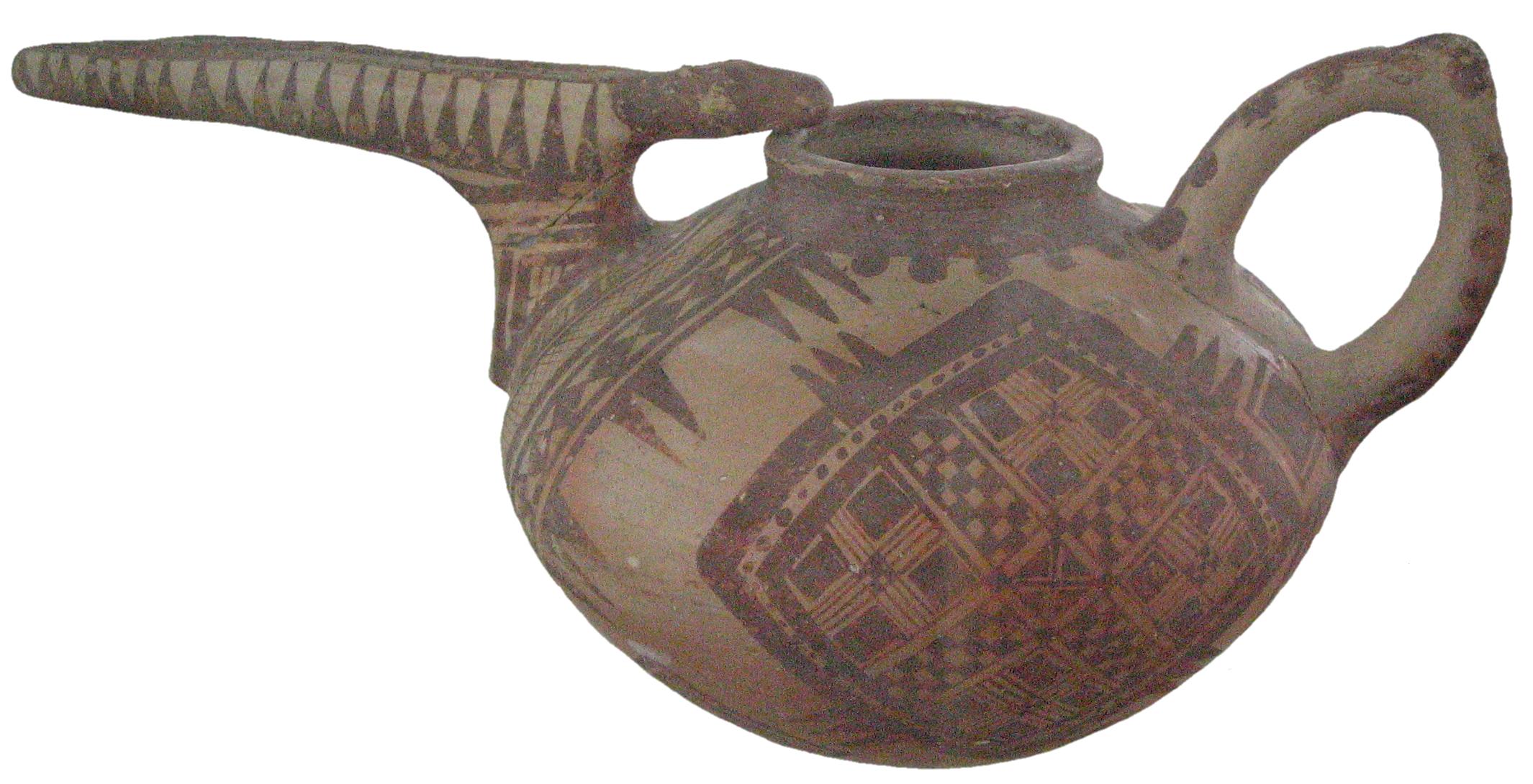
Eight thousand years of human civilization lie stacked in two dirt mounds on the outskirts of Kashan. Tepe Sialk -- the name simply means "Sialk hill" -- does not look like much from the surface. But the archaeological layers compressed within these twin mounds span from the late seventh millennium BC to the second millennium BC, encompassing the invention of metallurgy, the development of writing, and the construction of what may be the oldest ziggurat on Earth. The painted pottery pulled from these layers now sits in the Louvre, the British Museum, and the Metropolitan Museum of Art.
Solomon's Spring
Settlement at Sialk began because of water. The Cheshmeh-ye Soleiman -- Solomon's Spring -- has fed the area from nearby mountains for thousands of years, creating an oasis on the central Iranian plateau. A joint study by Iran's Cultural Heritage Organization, the Louvre, and the Institut Francais de Recherche en Iran dates the oldest settlements to around 6000-5500 BC. People came for the water, stayed for the fertile soil, and over millennia built a civilization complex enough to produce written tablets. The same water source later attracted Safavid shahs, who built the Fin Garden in its present form in the 16th century as a royal retreat. The assassin Abu Lu'lu'a, who killed the second caliph Umar, is popularly believed to be buried nearby. Sacred history and secular power have been layered onto this landscape as thickly as the archaeological strata below.
The Oldest Furnaces
The northern mound is the oldest, with occupation dating to the end of the seventh millennium BC. Its two levels -- Sialk I and Sialk II -- chart humanity's progression from rough pottery and stone tools to something revolutionary. Sialk II preserves the first appearance of metallurgy at the site, marking the moment when people here began smelting metal rather than simply shaping stone. On the southern mound, radiocarbon-dated charcoal from an ancient furnace containing litharge fragments yielded a date of 3660-3520 BC -- introducing what researchers describe as the oldest known evidence of silver production in the ancient world. Five Proto-Elamite tablets recovered from the same mound place Sialk within a network of early literate societies stretching across western Iran and into Mesopotamia.
The Ghirshmans' Discovery
Tepe Sialk entered modern archaeology through the work of Roman Ghirshman and his wife Tania Ghirshman, who excavated the site across three seasons in 1933, 1934, and 1937. Their finds -- exquisitely painted pottery, Proto-Elamite tablets, evidence of long-distance trade -- established Sialk as one of the key sites for understanding the prehistoric Iranian plateau. Artifacts from the original dig were distributed across continents: the Louvre received the largest share, with pieces also going to the British Museum, the Metropolitan Museum of Art, and the National Museum of Iran. Excavation resumed between 1999 and 2004 under the Sialk Reconsideration Project, a collaboration between the University of Pennsylvania and Iran's Cultural Heritage Organization led by Sadegh Malek Shahmirzadi.
Abandonment and Return
Sialk's story is not one of continuous occupation. The southern mound's upper levels -- Sialk III and IV -- show connections to the Mesopotamian civilizations of Uruk and Jemdet Nasr, and contain the ruins of what may be the world's oldest ziggurat, built around 3000 BC. Then, at the beginning of the third millennium BC, the site was abandoned. For more than a thousand years, silence. When people returned in the second half of the second millennium BC, the culture had changed. The final phases -- Sialk V and VI -- produced bronze weapons, iron items, jewelry, and gray-black or red ceramics decorated with geometric patterns. Two necropolises from this period reveal a people connected to sites in the Gorgan valley far to the north. Then Sialk was abandoned a final time, leaving its treasures to the dirt and the millennia.
From the Air
Tepe Sialk is located at 33.97°N, 51.40°E on the outskirts of Kashan in Isfahan Province, central Iran. The twin archaeological mounds are visible from low altitude as raised earthen features near the modern city. The nearby Fin Garden provides a green visual landmark. Nearest airport is Isfahan International Airport (OIFM), approximately 180 km south, or Kashan's smaller airfield. Best viewed at 3,000-6,000 ft altitude. The surrounding terrain is arid plateau.