Tepe Yahya
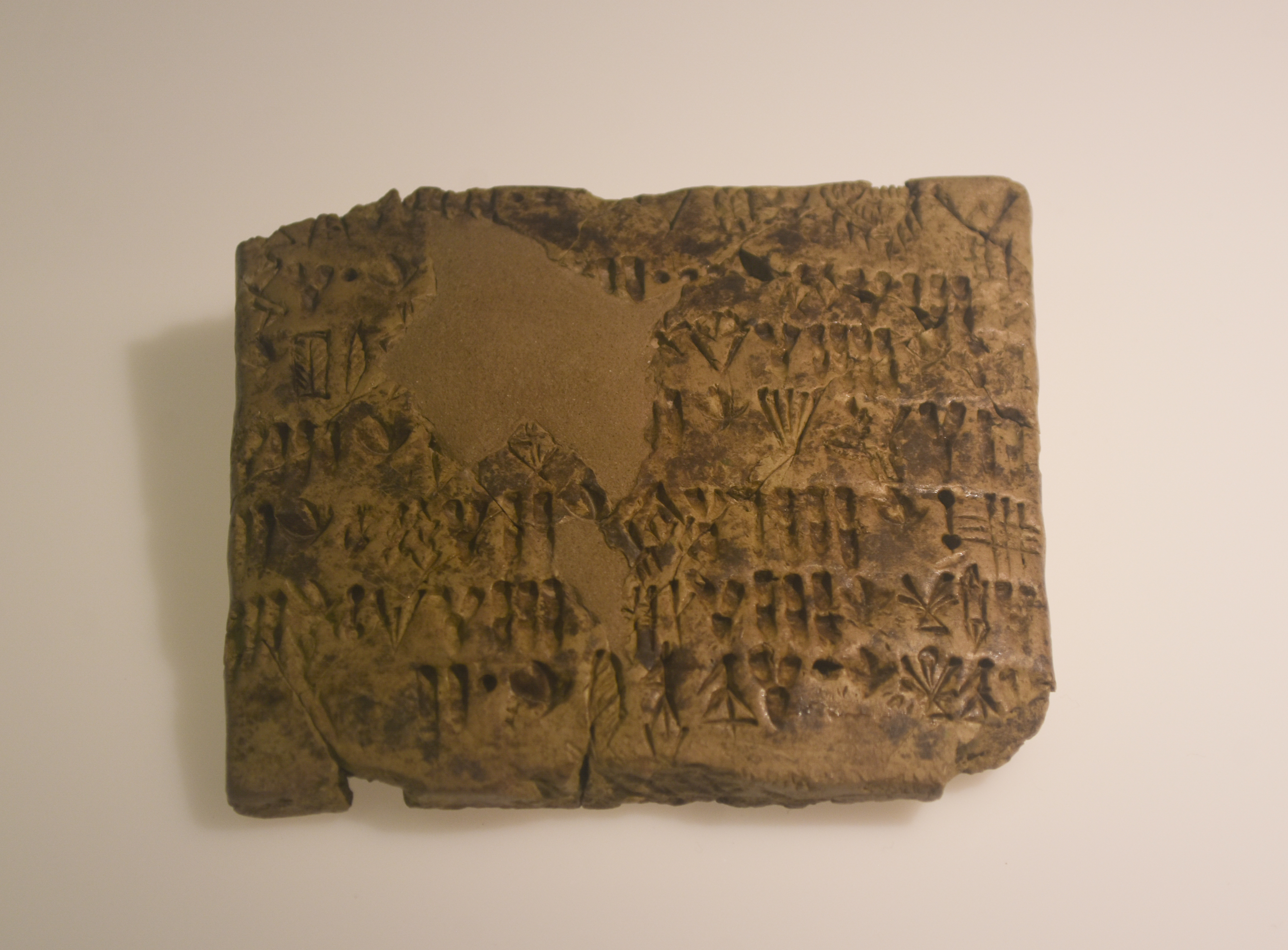
Twenty-seven clay tablets, pressed with symbols that no one alive can read, lay buried beneath a circular mound in the desert of Kerman Province. When C. C. Lamberg-Karlovsky of Harvard University first broke ground here in 1968, he expected to find traces of ancient trade routes crossing southeastern Iran. What he found instead was a site occupied, abandoned, and reoccupied across seven and a half millennia -- a place where Neolithic farmers, Proto-Elamite administrators, and Sasanian-era settlers all chose to build, one civilization stacking its foundations atop another's ruins.
The Mound That Held Millennia
Tepe Yahya rises 20 meters above the surrounding plain, a circular mound roughly 187 meters across, located about 220 kilometers south of Kerman city and 90 kilometers southwest of Jiroft. Its seven occupation periods span from roughly 5500 BC to 225 AD. The deepest layer, Period VII, belongs to the Neolithic -- an era when the inhabitants were already carving detailed soapstone figurines. One green soapstone female figure, recovered from this stratum, featured eight individually drilled orifices and a level of craftsmanship that startled the excavators. Between the earliest settlement and the latest, there are long silences: entire centuries when nobody lived here at all, followed by waves of return that suggest the location held some enduring strategic or spiritual significance.
Soapstone and Far-Flung Trade
A steatite mine discovered nearby helps explain why people kept coming back. Over a thousand carved steatite pieces from Period IVB alone point to large-scale local manufacturing during the second half of the third millennium BC. These were not just local goods. Bowls carved at Tepe Yahya with distinctive motifs have turned up on Tarut Island in the Persian Gulf, at Umm al-Nar near modern Abu Dhabi, and in the lower levels of Mohenjo-daro in the Indus Valley, more than 1,500 kilometers to the east. The site sat at a crossroads of Bronze Age exchange networks that linked Mesopotamia, the Gulf, and South Asia -- a junction where soft stone became a kind of currency of craft and prestige.
Where Writing Found Its Eastern Edge
In the late fourth millennium BC, something unprecedented happened at the top of the mound. A monumental Proto-Elamite building rose over the site, covering most of its summit, constructed with standardized bricks measuring 48 by 24 by 8 centimeters. The builders used a base measure of 72 centimeters -- close to the 'large cubit' standard found across the ancient Near East -- and designed the complex from the outside in. On the floors of four rooms within this complex, excavators recovered 27 Proto-Elamite tablets. Twenty-one record grain quantities, mostly rations. Eighty-four blank tablet forms indicate that scribes were actively practicing their craft here. These tablets represent the easternmost known outpost of Proto-Elamite literacy, making Tepe Yahya the frontier of one of humanity's earliest experiments in written administration.
Copper, Lead, and the Forge
Writing was not the only technology reaching Tepe Yahya through long-distance networks. Four metal artifacts recovered from the site trace the evolution of early metallurgy in southeastern Iran. A copper spearhead from layer IVC2 was found alongside a metal vessel containing jarosite, biconical heulandite beads, and an alabaster container -- an assemblage suggesting ritual or high-status use. A copper shaft-hole axe came from layer IVB5, and a small theriomorphic figurine cast in copper with 10.6 percent lead content turned out to date from the Late Uruk period, placing it among the older metalwork at the site. Nearby Tal-i-Iblis, another site with early metallurgical evidence, points to a regional tradition of copper working that predates even the Proto-Elamite arrival.
Six Seasons, One Story
Harvard's Peabody Museum, working jointly with Shiraz University, excavated Tepe Yahya over six seasons between 1968 and 1975. Among the team members in that first season was Jane Britton, a young graduate student whose subsequent murder in Cambridge in 1969 would become one of the most haunting cold cases in American archaeology. The dig itself revealed a place where civilizations arrived, flourished, and departed in cycles -- Neolithic communities giving way to the Yahya Culture around 3800 BC, then Proto-Elamite scribes around 3000 BC, then the Halil Rud civilization in the second half of the third millennium, and eventually Achaemenid, Hellenistic, Parthian, and Sasanian occupants. Each layer compressed the one below it, and today that compression is the story: 7,500 years pressed into 20 meters of earth, waiting for someone to read the tablets all over again.
From the Air
Located at 28.33N, 56.87E in the arid terrain of Kerman Province, southeastern Iran. The mound is visible as a circular rise on the desert plain. Nearest significant airport is Kerman (OIKK), approximately 220 km to the north. Bam Airport (OIKM) is closer at roughly 130 km east. Best viewed at 3,000-5,000 feet AGL for mound definition. The surrounding landscape is dry steppe with scattered villages.