Teppe Hasanlu
Two skeletons lie together on the floor of a burned building, their arms wrapped around each other. They have been in this position for nearly three thousand years. Known as the Hasanlu Lovers, they are among the most haunting artifacts ever recovered from the ancient Near East -- not because of their age or their gold, but because of what they suggest about the final hours of a city that died in fire. Around 800 BC, an army -- probably Urartian -- sacked and burned Teppe Hasanlu, a fortified city south of Lake Urmia in what is now northwestern Iran. The destruction was so complete, and so sudden, that it preserved the city in a state archaeologists have compared to Pompeii.
The Citadel on the Plain
Hasanlu Tepe dominates the Solduz plain in the Gadar River valley of West Azerbaijan Province. The site consists of a central citadel mound rising 25 meters above the surrounding terrain, ringed by massive fortifications and paved streets, with a lower outer town standing 8 meters above the plain. The entire site measures about 600 meters across, with the citadel alone spanning 200 meters in diameter. Human occupation stretches back to the Neolithic period -- the earliest level, Level X -- and continued with only brief interruptions through the Bronze Age, Iron Age, and into the medieval period. The name comes from the nearby village of Hasanlu. 'Tepe' is the Persian word for a settlement mound, borrowed from Old Turkic. Since 2018, Iran's Cultural Heritage Organization has pushed for the site to receive UNESCO World Heritage status.
The Golden Bowl and What It Revealed
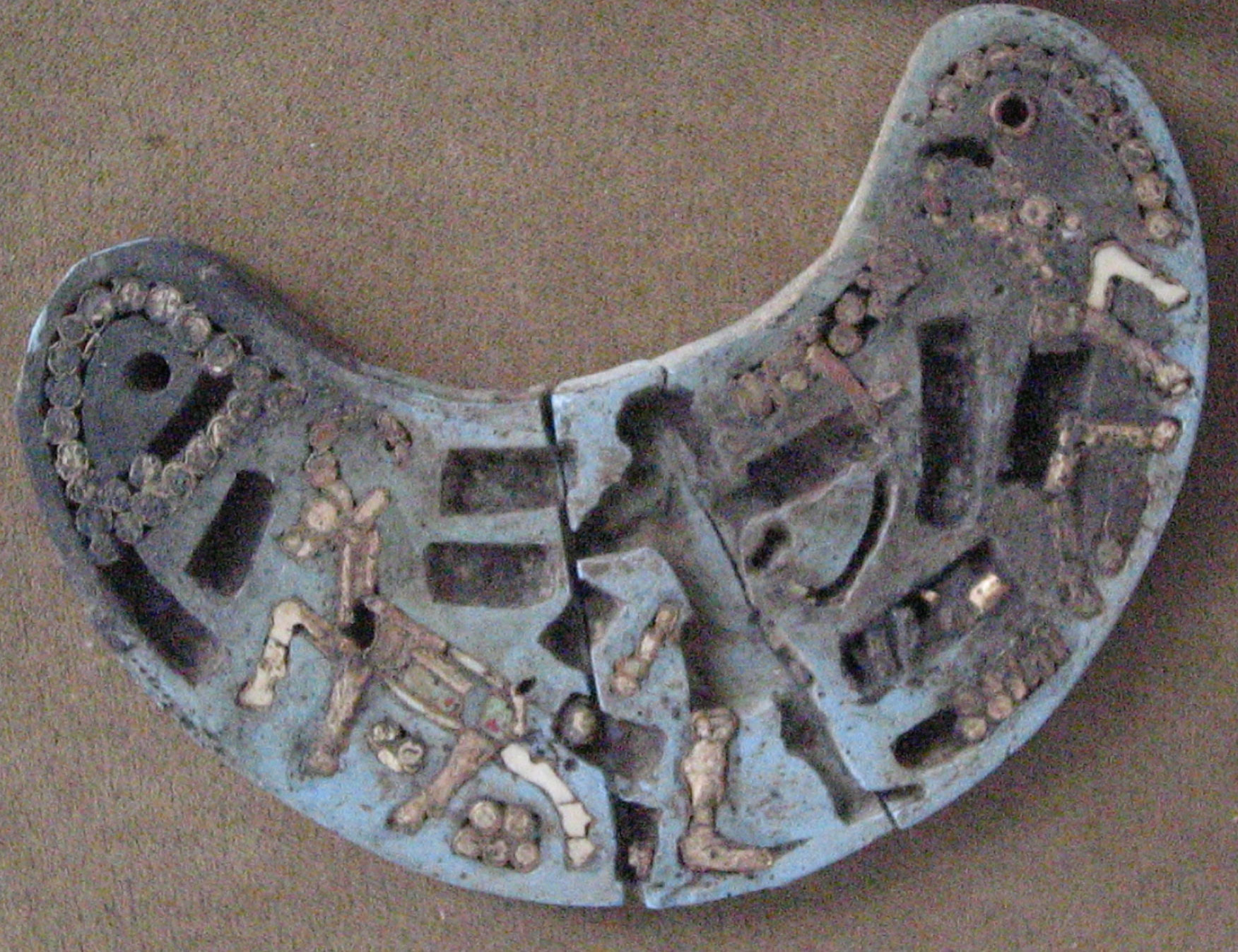
Sir Aurel Stein first excavated Hasanlu in 1936, but systematic work began in 1956 under Robert H. Dyson Jr. of the University of Pennsylvania Museum, in partnership with the Metropolitan Museum. The project was intended to reconstruct regional cultural history from Neolithic times through Alexander the Great's conquest of Persia in 334 BC. Then, in 1958, excavators found the Golden Bowl of Hasanlu -- an intricately decorated vessel that shifted the entire focus of the project to the Iron Age levels. A silver cup was discovered at the same time. The find was so significant that the broader excavation program, which had also investigated nearby sites including Hajji Firuz Tepe and Dalma Tepe, was redirected. Ten excavation seasons between 1956 and 1974 followed, making Hasanlu one of the most thoroughly studied ancient sites in the region and an important training ground for a generation of Near Eastern archaeologists.
The Day the City Burned
The catastrophe came at the end of the Iron II period, around 800 BC. Excavators found over 285 human victims where they had been slain. Some had been mutilated. The distribution of bodies and wounds suggests mass executions. Amid the charred remains of buildings, thousands of objects lay exactly where they had fallen -- pots on shelves, weapons in hands, jewelry on bodies. The destruction is attributed most likely to the kingdom of Urartu, centered around Lake Van to the northwest, which was expanding aggressively during the 9th century BC. The Neo-Assyrian Empire was also asserting power in the region, and Hasanlu sat in the contested zone between these rival civilizations. Assyrian trade goods and copies found at the site attest to long cultural contact. Iron first appeared in bulk at Hasanlu around the same time Assyria seized control of the metal trade in Asia Minor. Whether Hasanlu was an independent city, a Mannaean stronghold, or something else entirely remains debated.
Ancestors Without a Name
Who lived at Hasanlu? The question has occupied scholars for decades. No written records have been found at the site. Archaeological evidence has linked it variously to Hurrian, Urartian, and Median cultural spheres. A 2022 genetic study by Iosif Lazaridis and colleagues added a new dimension: DNA from Iron Age individuals at Hasanlu showed Y-chromosome haplogroups linking them to the Yamnaya steppe populations of the Bronze Age, but specifically the R1b lineage rather than the R1a associated with Indo-Iranian speakers. Combined with patrilineal connections to ancient Armenian populations, the findings suggest the inhabitants may have spoken a language related to Armenian -- or possibly a non-Indo-European language entirely lost to history. The Mannaeans, who inhabited the Lake Urmia region during the early first millennium BC, appear in Assyrian records and even in the Hebrew Bible, where Jeremiah 51:27 mentions 'Minni' alongside Ararat. The people of Hasanlu left no texts, but they left their bones, their pottery, their golden bowl, and two lovers embracing in the ruins.
From the Air
Teppe Hasanlu is located at approximately 37.00N, 45.46E in the Gadar River valley, West Azerbaijan Province, northwestern Iran, south of Lake Urmia. The site appears as a prominent mound rising 25 meters above the Solduz plain. Lake Urmia, one of the largest salt lakes in the world, is visible to the north. Nearest major airport is Urmia (OITR). The Zagros Mountains rise to the west and south. Multiple archaeological mounds are visible in the valley, including nearby Hajji Firuz Tepe and Dalma Tepe.