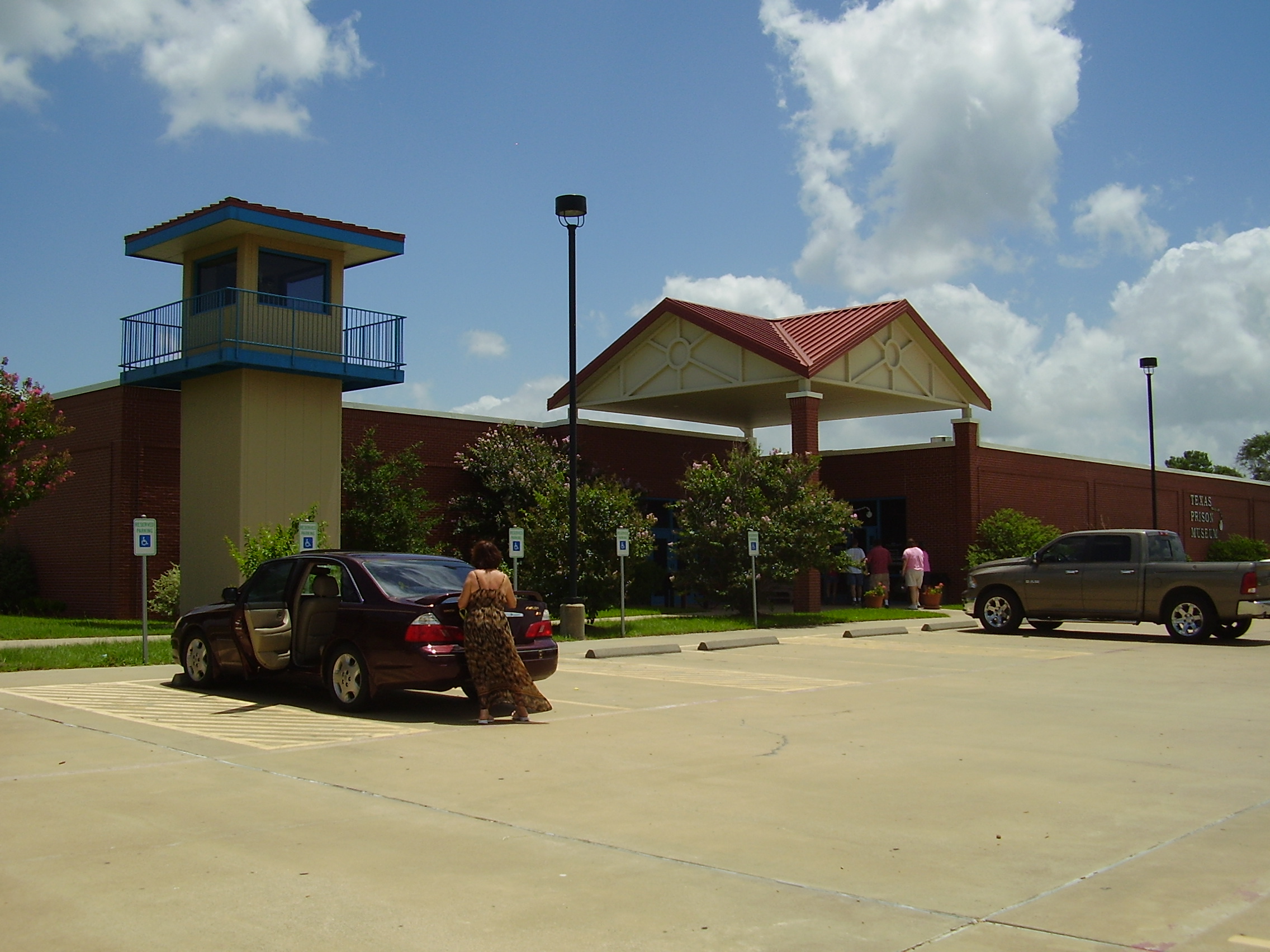
Texas Prison Museum
The electric chair sits behind glass, its oak armrests worn smooth by the grip of 361 condemned men. Inmates built it themselves. They nicknamed it "Old Sparky" nearly a century ago, and that name stuck through four decades of executions, from 1924 to 1964, inside the Huntsville Unit known simply as "The Walls." The chair was eventually retired, replaced by lethal injection, then rescued from a prison dump and placed in the Texas Prison Museum in Huntsville, the small East Texas city that has served as the administrative heart of the state's penal system since 1849. This is not a museum that softens its subject. It puts you inside a cell, hands you the facts, and lets the weight of the place settle in.
The Town Behind the Walls
Huntsville has been synonymous with incarceration since the first three inmates arrived at the partially completed state penitentiary on October 2, 1849: a cattle thief, a murderer, and a horse thief. The Huntsville Unit, known as "The Walls" for its distinctive red-brick perimeter, became the administrative headquarters of the entire Texas prison system. The superintendent's office, all departmental records, and the central bureaucracy of corrections operated from within the prison itself. Today, the Texas Department of Criminal Justice still calls Huntsville home, and the city hosts multiple prison units, including the Huntsville Unit, which contains the state's active execution chamber. Since 1982, when Texas adopted lethal injection, the chamber has carried out more executions than any other facility in the United States. The museum sits just northwest of town, off Interstate 45 at Exit 118, offering visitors a chance to reckon with the machinery of punishment that has defined this city for nearly two centuries.
Forty Years in the Chair
Old Sparky dominates the museum's central exhibit. The electric chair was constructed by prison inmates and first used on February 8, 1924, when five men were executed in a single session. Over the next four decades, 361 men sat in its oak frame, a number that made Texas one of the most prolific users of electrocution in the country. The chair was decommissioned in 1964, replaced by lethal injection in 1982 after the Supreme Court's reinstatement of the death penalty. Old Sparky was discarded on a prison junk pile before being recovered and restored for the museum. It now sits in a replica of the death chamber, a stark room that leaves visitors face to face with the physical instrument of state-sanctioned execution. No velvet ropes or dramatic lighting soften the encounter. The chair is simply there, a piece of furniture that carried a terrible purpose.
The Wildest Show in Texas
For fifty-five years, the most popular sporting event in Texas was not football but the Texas Prison Rodeo. Started in 1931 by prison system general manager Marshall Lee Simmons, the rodeo began on a vacant field behind The Walls and within two years drew crowds of nearly 15,000, forcing officials to build wooden stands and charge admission. By its peak, the annual October event packed more than 75,000 spectators a day into a purpose-built stadium. Events included bareback bronco riding, bull riding, calf roping, and the crowd favorite: the Hard Money event. Forty inmates in red shirts were turned loose in an arena with an enraged bull that had a tobacco sack stuffed with cash tied between its horns. The first prisoner to grab it and reach a judge kept the money, sometimes as much as $1,500. The rodeo attracted celebrities like Johnny Cash, Willie Nelson, and Dolly Parton. It ended in 1986 when structural problems closed the stadium, but the museum preserves its programs, photographs, and legacy.
What the Inmates Made
Beyond the headline exhibits, the museum holds a large collection of prisoner-created art, woodwork, and crafts that reveal another dimension of life behind bars. Intricate carved pieces, paintings, and leatherwork speak to the creativity that persists even in confinement. Then there is the contraband exhibit, which tells the other side of that ingenuity. Improvised knives fashioned from cafeteria utensils, pry bars shaped from bed frames, and guns assembled from smuggled parts display what the museum calls "the craftiness and creativeness of inmates" directed toward survival and escape. A life-size replica of a prison cell lets visitors stand inside the dimensions that define a prisoner's daily existence. Founded in 1989 and originally housed in downtown Huntsville, the museum moved to its current location in 2002, expanding its capacity to chronicle a penal system that has been shaping and confining lives in Texas for nearly 180 years.
From the Air
Located at 30.736N, 95.584W in Huntsville, Texas, just northwest of town at the intersection of Texas State Highway 75 and Interstate 45. The Huntsville Unit ('The Walls') and the 67-foot Sam Houston statue nearby are strong visual references. Nearby airports: KUTS (Huntsville Municipal), KCXO (Conroe-North Houston Regional), KIAG (David Wayne Hooks Memorial). Best viewed at 2,000-3,000 feet AGL.