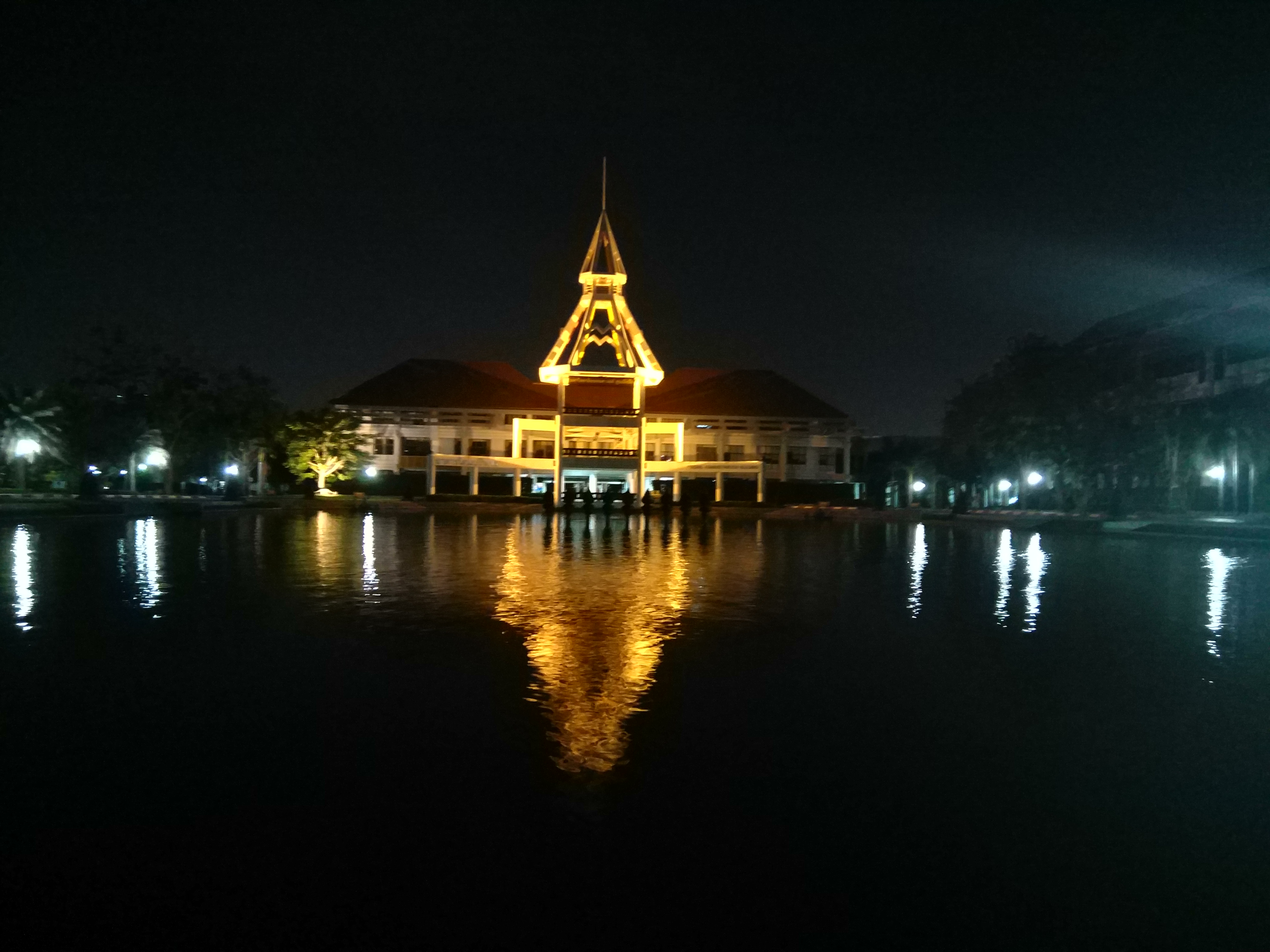
Thammasat University
The name comes from the Pali word Dhammasattha -- the study of law. In 1934, two years after the revolution that ended absolute monarchy in Siam, Pridi Banomyong opened a university with that name and a radical premise: education, which had been reserved for royalty, should be available to anyone who wanted it. On its first day, 7,094 people applied for admission. At the time, Chulalongkorn University was graduating 68 students a year. Thammasat University was not just a school. It was an argument about who deserved to learn.
The Revolutionary's University
Pridi Banomyong was a senior statesman, former regent, and the intellectual architect of Thailand's transition from absolute monarchy to constitutional government. He founded Thammasat as the University of Law and Political Sciences, anchoring it to the sixth principle of the People's Party: that the government must provide full education to all citizens. The university absorbed the existing law school of Prince Raphi Phatthanasak, which dated to 1907, and moved to the Tha Phra Chan campus in 1935 -- a site purchased from the military with public donations on land that had once been part of the Front Palace of the deputy king. In its early years, the university refused government funding, instead supporting itself through tuition and interest from the Bank of Asia for Industry and Commerce, in which it held an 80 percent stake. Independence from the state was not an accident. It was the point.
Weapons in the Attic
During the Second World War, Pridi turned Thammasat into the clandestine headquarters of the Free Thai Movement, the underground resistance against the Japanese occupation. The Dome -- the campus's signature building, constructed from four former military structures -- housed Pridi's office on its lower floors while weapons were concealed in the attic above. In one of the war's stranger ironies, the campus simultaneously served as an internment camp for Allied civilians, with Thai guards quietly protecting the prisoners from Japanese abuses. The Multipurpose Building now stands where the camp once was. After the war, a coup d'etat on 8 November 1947 forced Pridi into exile. The original Thammasat degree was broken into specialized departments, the university was compelled to sell its bank shares, and the words 'and Political Sciences' were stripped from its name. The institution that had been built to resist state control was brought under it.
Bloody October, Twice
On 14 October 1973, a crowd led by university students assembled at Thammasat to protest the arrest of thirteen pro-democracy activists. The protest swelled over several days before a bloody confrontation erupted at the Democracy Monument. Thailand's military leaders fled into exile, and Sanya Dharmasakti, the Thammasat rector, was appointed Prime Minister. Three years later, on 6 October 1976, the violence came to the campus itself. Students had staged a play on Thammasat grounds dramatizing the lynching of two labor activists in Nakhon Pathom. Newspapers published photographs of the mock hanging, one retouched to resemble Crown Prince Vajiralongkorn. Police and right-wing paramilitary groups surrounded the university at dawn and attacked. The assault lasted hours. Official reports counted between 43 and 46 dead, though the actual number may have exceeded one hundred. Students fleeing by jumping into the Chao Phraya River were shot at by the Royal Thai Navy.
Two Campuses, Two Centuries
Today Thammasat operates across four campuses. The original Tha Phra Chan site sits in Bangkok's Phra Nakhon district, surrounded by Sanam Luang, the Grand Palace, the Temple of the Emerald Buddha, and the Chao Phraya River. Graduate programs and international courses remain here, in buildings that still carry the weight of 1973 and 1976. The Rangsit campus, 42 kilometers north in Pathum Thani Province, opened in the 1980s for science and engineering faculties and now hosts nearly all undergraduate instruction. Its sport complex served as a venue for the 1998 Asian Games. In December 2019, the Rangsit campus opened Asia's largest urban rooftop garden -- 7,000 square meters designed by landscape architect Kotchakorn Voraakhom to help offset flooding and climate change. The university that began as a law school now enrolls over 39,000 students across 33 faculties, colleges, and institutes.
A Legacy Measured in Dissent
Thammasat's alumni list reads like a registry of Thai political life: prime ministers Tanin Kraivixien, Chuan Leekpai, Samak Sundaravej, and Somchai Wongsawat; multiple governors of the Bank of Thailand; the Future Forward Party leader Thanathorn Juangroongruangkit. Nuon Chea, the Khmer Rouge's chief ideologue, studied here under the name Long Boonrod. The university's seal depicts the centerpiece of the Democracy Monument superimposed on a Dhammacakka, the Buddhist wheel of law. The symbolism is not subtle: this is an institution that defined itself through its relationship to constitutional government. Seksan Prasertkul, one of the student leaders from 1976, wrote a protest song called Su mai toi that was adopted by anti-government demonstrators in 2013. He now lectures at Thammasat. The university that twice became a battleground remains the place where Thai democracy argues with itself.
From the Air
Located at 13.758N, 100.490E on the east bank of the Chao Phraya River in Bangkok's Phra Nakhon district. The Tha Phra Chan campus is adjacent to the Grand Palace and Sanam Luang, visible as a cluster of institutional buildings along the river. The Rangsit campus is at 14.072N, 100.612E, 42 km north of Bangkok in Pathum Thani. Best viewed at 2,000-4,000 feet. Nearest airports: Don Mueang (VTBD) approximately 13 nm north, Suvarnabhumi (VTBS) approximately 18 nm east-southeast.