Thanh Hóa Bridge
Seventy-nine aircraft, more than three hundred bombs, and a bridge that would not fall. On April 3, 1965, the largest strike package of the Vietnam War thundered toward a grey steel span over the Song Ma River, three miles northeast of Thanh Hoa. When the smoke cleared and the reconnaissance photos came back, the bridge was scarred, charred, pockmarked -- and still standing. The Vietnamese called it Hàm Rồng, the Dragon's Jaw, and for seven years it would swallow American ordnance the way its namesake might swallow fire: without flinching.
A Dragon Built Twice
The French built the original bridge during their colonial administration of Vietnam, and the Viet Minh sabotaged it in 1945. When the Vietnamese rebuilt it starting in 1957, they created something sturdier: a 540-foot steel and concrete structure, 56 feet wide, carrying both road and rail traffic on a central concrete pier flanked by concrete abutments at each end. Ho Chi Minh himself inaugurated the completed bridge in 1964. It connected North Vietnam's heartland to its southern supply routes, making it indispensable to the war effort. When Operation Rolling Thunder began in March 1965, American planners knew they had to sever that link. The Vietnamese knew it too, and stationed five air defense regiments around the bridge before the first bomb ever fell.
The Day the MiGs Came Down
The strike package codenamed 9-Alpha was meant to be overwhelming. Lieutenant Colonel Robinson Risner, a Korean War ace, led 46 F-105 Thunderchiefs loaded with Bullpup missiles and 750-pound bombs, escorted by F-100 Super Sabres and reconnaissance Voodoos. But the Bullpup's 250-pound warheads merely charred the massive structure, and a southwest wind scattered the conventional bombs. After 32 missiles and 1,200 bombs, traffic stopped for a few hours. That was all.
Then came a shock no one had planned for. North Vietnam's tiny air force -- just 36 jets -- scrambled MiG-17s, subsonic fighters already twelve years old, against America's most advanced strike aircraft. Flight leader Tran Hanh dove from the clouds onto the bomb-laden Thunderchiefs and shot down Major Frank Bennett's F-105, which fell burning into the Gulf of Tonkin. A second Thunderchief followed. Captain Donald Kilgus, flying an F-100, chased one MiG into a screaming dive toward the sea, firing his 20mm cannons at 7,100 feet before pulling up barely above the waves. His probable kill became the first credited American aerial victory of the war.
Lessons Written in Wreckage
U.S. Air Force Chief of Staff General John P. McConnell was, by one account, "hopping mad" that obsolescent MiGs had downed two of America's frontline fighters. The F-105 could reach Mach 2 in clean configuration, but loaded with bombs under its small wings it was subsonic and unmaneuverable -- easy prey for a lighter adversary with cannons at close range. The engagement exposed a dangerous assumption in American doctrine: that missiles had made dogfighting obsolete. In reality, the era's air-to-air missiles were unreliable, while the MiG-17's three 23mm cannons were devastatingly effective at short range.
Navy pilots who flew against the Dragon's Jaw developed a grim joke: the Earth, they said, consisted of two hemispheres held together opposite a hinge by the Thanh Hoa Bridge. When it was finally destroyed, the halves would spring apart, flinging humanity into space. Tom Wolfe recorded the joke in his 1976 essay collection, a testament to how deeply the bridge had lodged in the American military psyche. The shock of 1965 eventually drove a fundamental rethinking of fighter design, away from pure missile-carrying interceptors and back toward agile aircraft built for close combat.
Seven Years to Fall
Raid after raid followed through the late 1960s -- hundreds of sorties, thousands of tons of ordnance -- and the bridge endured them all. Temporary repairs kept traffic moving. Anti-aircraft fire and MiG interceptions continued to exact a toll on American pilots, several of whom became prisoners of war. Captain Carlyle "Smitty" Harris, shot down in one of the early raids, spent eight years in captivity in Hanoi before his release in 1973.
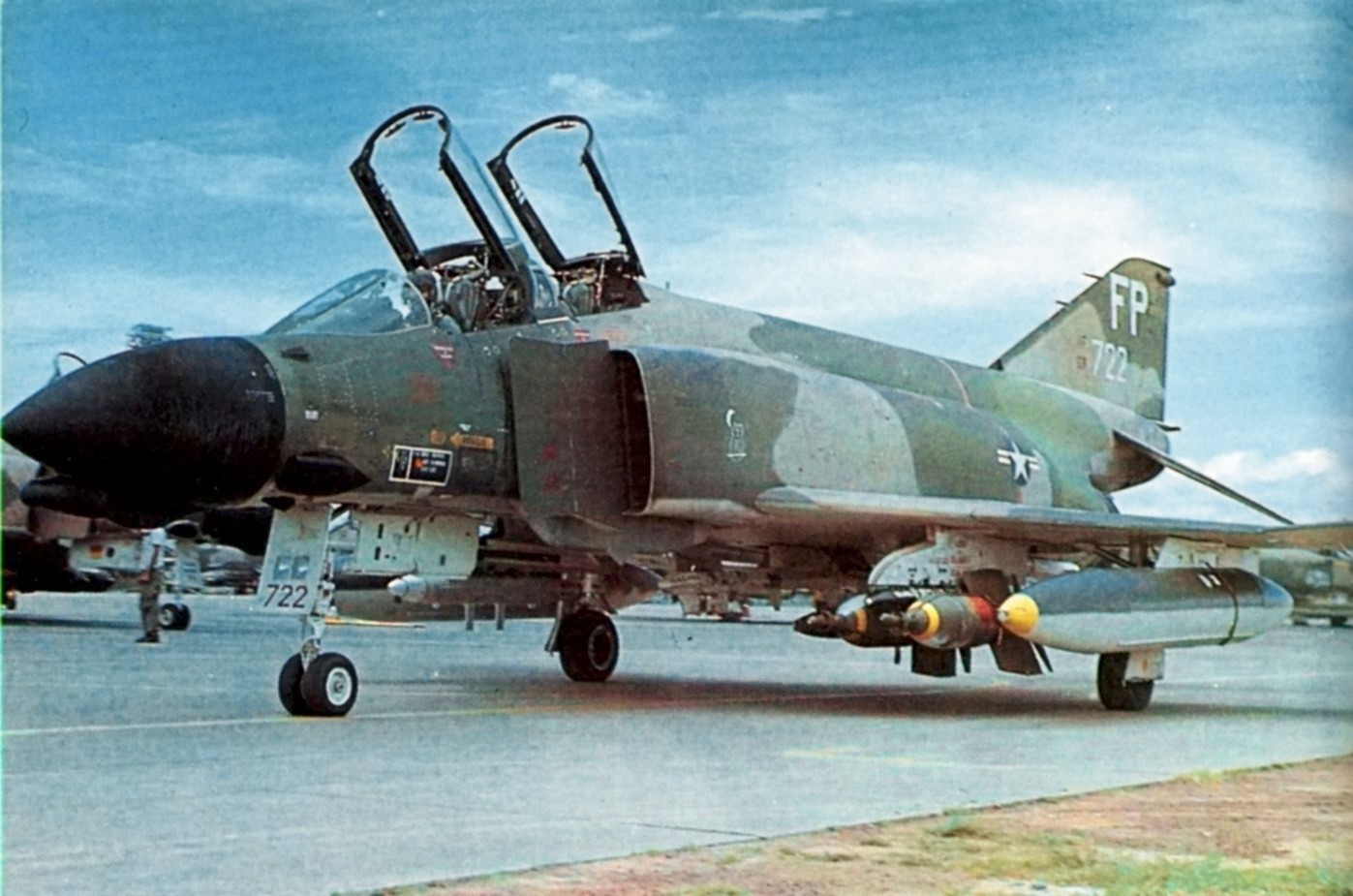
The bridge finally met its match on May 13, 1972, when F-4 Phantoms armed with laser-guided bombs struck with a precision no earlier raid had achieved. Navy A-7 Corsairs joined the attack with a combination of advanced and conventional munitions. The Dragon's Jaw broke at last. What hundreds of unguided bombs could not accomplish, a handful of guided ones did in minutes. The destruction validated a new era of precision aerial warfare whose principles would prove decisive in Operation Desert Storm nearly two decades later. The bridge was rebuilt in 1973 and still stands today -- no longer a target, but a monument to the cost of the war it survived for so long.
From the Air
Located at 19.84°N, 105.79°E over the Song Ma River, 3 miles northeast of Thanh Hoa city. The bridge is a recognizable visual landmark from the air, especially at lower altitudes. Nearest airports include Tho Xuan Airport (VVTX), approximately 25 nautical miles to the west. Best viewed at 2,000-5,000 feet in clear conditions. The river valley running east to the Gulf of Tonkin provides good visual reference for approach.