The Alamo
On the morning of March 6, 1836, after a thirteen-day siege, approximately 1,800 Mexican soldiers under President-General Antonio López de Santa Anna overwhelmed the Alamo mission near San Antonio de Béxar. Nearly all of the roughly 200 Texian and Tejano defenders were killed, including Jim Bowie, William Barret Travis, and David Crockett. The battle became the defining moment of the Texas Revolution - a bloody sacrifice that rallied previously ambivalent colonists and gave Sam Houston time to organize the army that would defeat Santa Anna at San Jacinto six weeks later. 'Remember the Alamo!' became the battle cry that ended Mexican control of Texas. The mission itself, originally built as a Spanish religious outpost in the 18th century, became the 'Shrine of Texas Liberty' - the most visited site in the state and perhaps the most mythologized battle in American history.
The Siege Begins
By February 1836, tensions between American colonists in Mexican Texas and the centralist government had erupted into open rebellion. Jim Bowie arrived at the Alamo with orders from Sam Houston to destroy the fortifications, but instead convinced the small garrison that the position was strategically vital. William Barret Travis arrived with reinforcements, and the two men shared command of approximately 100 soldiers. On February 23, Santa Anna's vanguard appeared outside San Antonio with approximately 1,500 troops. Travis sent urgent appeals for reinforcements: 'I shall never surrender or retreat... Victory or Death.' His letters were reprinted across Texas and the United States, but help came slowly. Only thirty-two volunteers from Gonzales managed to slip through Mexican lines on March 1, bringing the garrison to perhaps 200 men.
The Final Assault
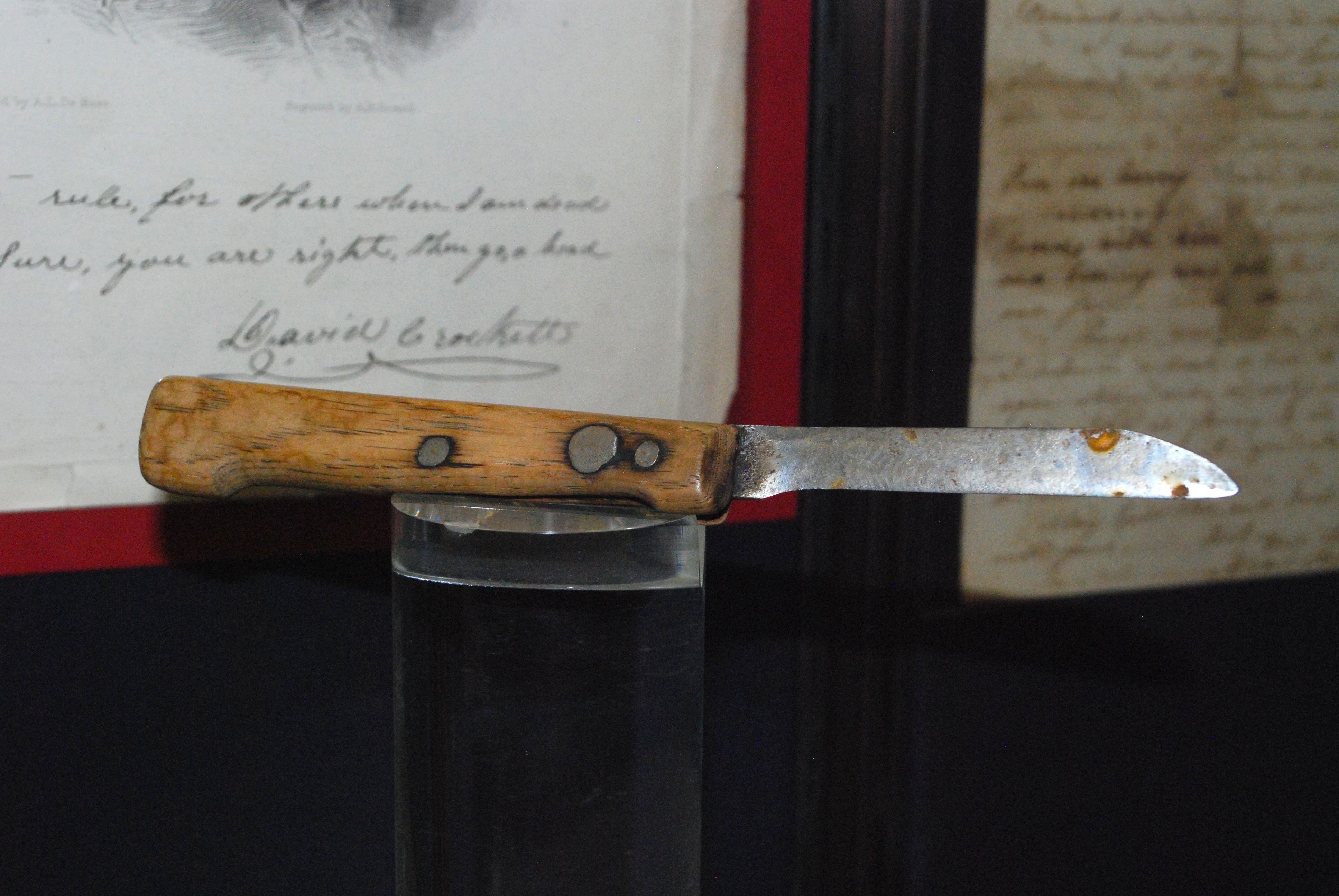
Santa Anna ordered the final assault for the predawn hours of March 6. Approximately 1,800 soldiers advanced in four columns against the mission's walls. Three Texian sentries stationed outside were killed in their sleep. The first two attacks were repulsed with heavy Mexican casualties, but the third breach succeeded. General Juan Amador led soldiers over the north wall, and within minutes the compound was overrun. Bowie, too ill to rise from his cot, was killed in his room - possibly fighting from his bed with his famous knife. Travis died on the north wall. Crockett's death is disputed; some accounts claim he was captured and executed, others that he fell fighting. The battle lasted less than ninety minutes. All male defenders were killed; women, children, and Travis's slave Joe were released to spread word of the defeat.
Controversy and Context
Modern historians have complicated the traditional narrative. The Texas Revolution was partly driven by colonists' desire to preserve slavery, which Mexico had abolished. Many defenders had arrived recently from the United States, some specifically to fight. The Mexican Army was not simply a tyrannical force but was enforcing national sovereignty over territory being illegally colonized. Santa Anna's no-quarter order, while brutal, followed standard practice for dealing with what Mexico considered foreign-backed insurrection. These complexities have made the Alamo a contested symbol - for some a shrine to liberty, for others a monument to Anglo expansion and the preservation of slavery. The site itself has been subject to long-running disputes between the state, the Daughters of the Republic of Texas, and indigenous groups who note the mission's troubling history with the Coahuiltecan peoples.
Legacy and Myth
The Alamo's influence on American popular culture is immense. Within weeks of the battle, plays were being staged in the United States. The 1950s Disney television series 'Davy Crockett' made the coonskin cap a national phenomenon. John Wayne's 1960 film 'The Alamo' defined the popular image for generations. These portrayals emphasized heroic sacrifice while minimizing historical complexity. The phrase 'Remember the Alamo!' entered the American lexicon as shorthand for righteous resistance against overwhelming odds. The mission itself became Texas's most visited site, drawing over 2.5 million visitors annually. Yet the Alamo's meaning continues to evolve as historians recover the stories of Tejano defenders like Juan Seguín and examine how mythmaking served political purposes in the century and a half after the battle.
Visiting the Alamo
The Alamo sits in downtown San Antonio, surrounded by modern buildings that obscure its original context as a frontier mission. Only the chapel and part of the Long Barracks remain from 1836; the famous curved parapet was added later. The Daughters of the Republic of Texas managed the site for over a century before the Texas General Land Office took control in 2015. A major renovation and expansion project is currently underway. Admission to the chapel is free; the site operates as a working memorial rather than a traditional museum. The nearby San Antonio Missions National Historical Park preserves four other Spanish missions that provide context for the Alamo's religious origins. Expect crowds, especially during March around the battle anniversary. The nearby Riverwalk and downtown San Antonio offer dining and accommodations. San Antonio International Airport is 8 miles north.
From the Air
Located at 29.43°N, 98.49°W in downtown San Antonio, Texas. The Alamo chapel is visible from low altitude as a distinctive stone structure surrounded by the modern city center. The San Antonio River and Riverwalk wind through the downtown area. San Antonio International Airport (SAT) is 8 miles north. The other Spanish missions are visible strung along the river to the south.