The Biltmore Los Angeles
In May 1927, a group of prominent figures in the motion picture industry gathered for a luncheon in the Crystal Ballroom of the Los Angeles Biltmore. Among them was MGM art director Cedric Gibbons. According to the story told for the better part of a century since, Gibbons reached for a Biltmore linen napkin and sketched, on the spot, the design for a statuette that would become the most recognized award in entertainment. Whether the napkin sketch actually happened exactly that way, the Academy of Motion Picture Arts and Sciences was indeed founded at that luncheon, and the Oscar was indeed partly his design. The Biltmore was where Hollywood decided to honor itself.
The Largest Hotel West of Chicago
The Los Angeles Biltmore opened on October 1, 1923, and immediately claimed the title of the largest hotel in the United States west of Chicago — a boast that Los Angeles institutions made frequently in those years, as the city defined itself against the established east. Built with 1,500 guestrooms and 70,000 square feet of meeting and banquet space, the hotel occupied half a city block opposite Pershing Square in downtown Los Angeles.
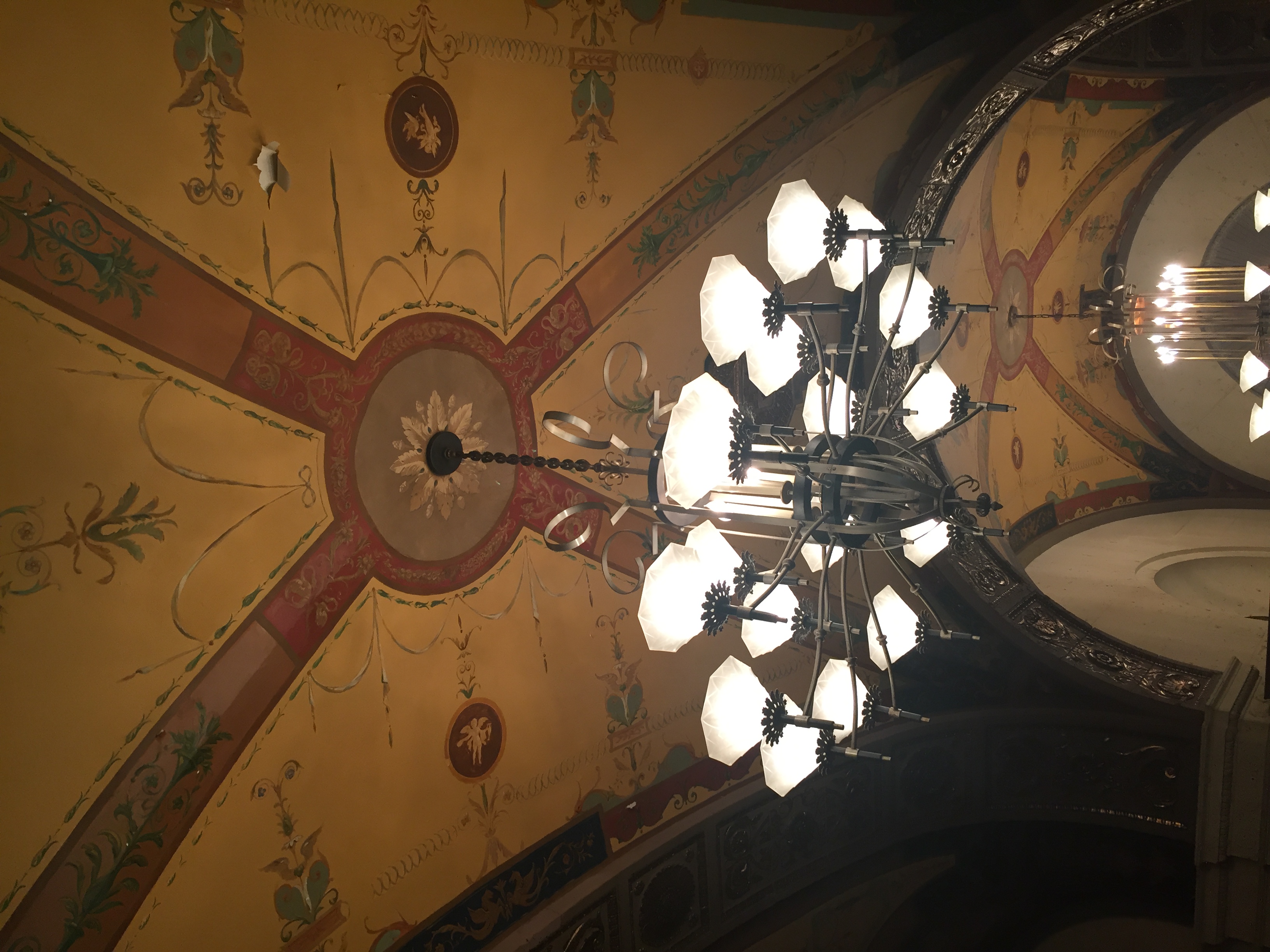
Architects Schultze and Weaver designed the exterior in a synthesis of Spanish-Italian Renaissance Revival, Mediterranean, and Beaux Arts styles, described as an homage to the Castilian heritage of Los Angeles. The interior was another matter entirely: frescos and murals, carved marble fountains, massive wood-beamed ceilings, silver-leafed plasterwork. The Biltmore was meant to overwhelm, to announce that Los Angeles was not a provincial outpost but a city capable of producing grandeur.
The Oscars' First Home
Eight Academy Awards ceremonies were held in the Biltmore Bowl — the hotel's grand ballroom — between 1931 and 1942. The earliest Oscars were modest affairs compared to what they would become: the first ceremony in 1929 lasted about fifteen minutes and was attended by 270 people. The Biltmore ceremonies fell in the years when the industry was establishing its own mythology, when the award was becoming the thing it is now rather than a new professional association's annual dinner.
The hotel's connection to Hollywood ran deeper than the awards. Studios used its suites for meetings. Stars stayed there. The Biltmore's proximity to the original studio district, before the industry migrated toward Burbank and Century City, made it a natural extension of the film world's social geography. The Crystal Ballroom, the Gallery Bar, the ornate Rendezvous Court — these were spaces where deals were made and careers were altered in the casual way that proximity always enables.
A Hotel That Absorbed History
The Biltmore's century of operation gave it the kind of accumulated history that resists summary. It was sold to nightclub owner Baron Long during the Great Depression in 1933, when the hotel was struggling and the city was contracting. It was designated a Los Angeles Historic-Cultural Monument in 1969. It was later designated a member of Historic Hotels of America.
The list of films shot in its halls — Chinatown, Ghostbusters, Independence Day, Oppenheimer, Beverly Hills Cop, among dozens of others — reflects the building's visual authority. The combination of scale, period detail, and genuine age produces something that set designers cannot easily replicate. When a film needs a location that communicates institutional power or old Los Angeles wealth, the Biltmore's marble lobbies and barrel-vaulted corridors are one of the first calls made.
Reduced and Restored
The hotel that opened with 1,500 guestrooms now operates with 683. The reduction reflects not demolition but conversion: spaces that were once guestrooms have been reconfigured for modern hospitality standards, which require larger rooms, more bathroom space, and amenities that 1923 construction could not originally accommodate. The exterior remains largely as built. The public spaces retain their original grandeur, carefully restored through renovations that have tried to preserve the character of Schultze and Weaver's work while meeting contemporary operating requirements.
The Biltmore occupies its corner of Pershing Square a hundred years after it opened, in a downtown Los Angeles that looks fundamentally different from the city it was built to anchor. The towers of the financial district rise to the north and west. The Plaza of Mexico just to the south reflects the demographic transformation of the surrounding neighborhood. The hotel itself remains, improbably, what it always was: a monument to a particular vision of what Los Angeles could be, built when the city still needed to prove it.
From the Air
The Biltmore Los Angeles sits at 34.049757 N, 118.254042 W, at the corner of South Grand Avenue and West 5th Street in downtown Los Angeles, opposite Pershing Square. The building's large footprint is visible from the air as part of the dense downtown core. Los Angeles International Airport (KLAX) lies approximately 13 miles to the southwest. The hotel is within walking distance of the US Bank Tower and the Broad museum.