The Breakers
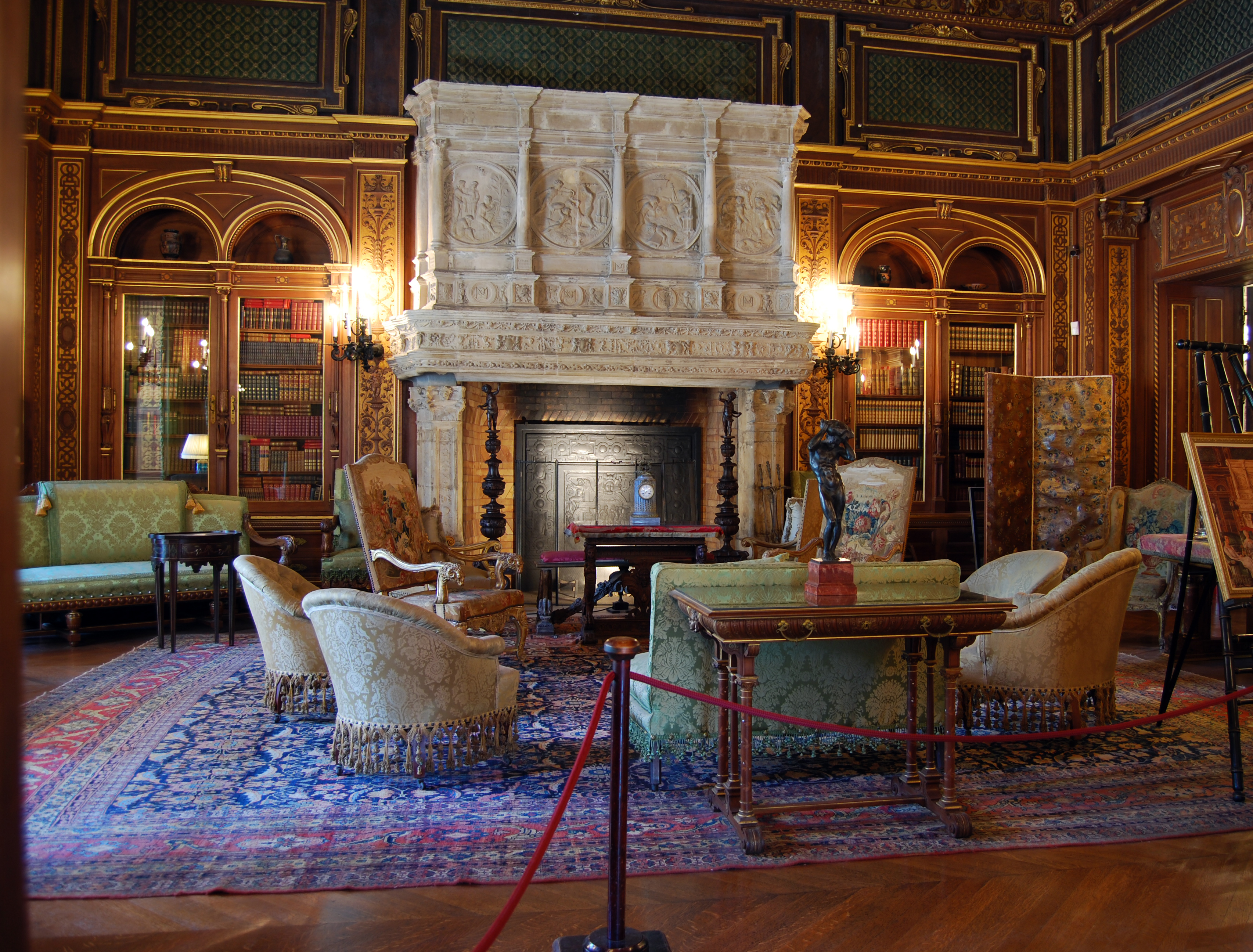
The fireplace inscription reads: "I laugh at great wealth, and never miss it; nothing but wisdom matters in the end." It is carved into stone taken from a 16th-century French chateau and installed in the library of the most extravagant private residence in America. The irony was apparently lost on Cornelius Vanderbilt II when he commissioned this 70-room Italian Renaissance palazzo on the cliffs of Newport, Rhode Island, in 1893. Built in just two years at a cost that would stagger even modern billionaires, The Breakers was designed not merely as a summer cottage but as a declaration -- that the Vanderbilt fortune, drawn from railroads and commerce, had purchased a place among the aristocracy of the world.
Fireproof Dreams
Cornelius Vanderbilt II purchased the oceanfront property in 1885 for $450,000. When the existing mansion burned on November 25, 1892, he commissioned architect Richard Morris Hunt -- already the dean of American architecture -- to rebuild with one obsessive requirement: make it fireproof. The result is a structure of masonry and steel trusses with no wooden structural parts. Even the boiler was banished underground, buried beneath the front lawn in a separate space connected by tunnel. Hunt drew inspiration from the palazzi of Genoa and Turin, creating a five-floor estate whose 43,000-square-foot footprint sits on cliffs overlooking Easton Bay and the Atlantic Ocean. Marble arrived from Italy and Africa. Rare woods and mosaics came from around the world. Architectural elements were purchased from chateaux in France, then reassembled on American shores.
Rooms That Rival Palaces
The Great Hall announces the building's ambitions with limestone figure groups above six doors celebrating humanity's progress: Galileo for science, Dante for literature, Apollo for the arts, Mercury for commerce. The dining room -- the grandest space in the house -- features twelve freestanding rose alabaster Corinthian columns, a ceiling depicting the goddess Aurora on a four-horse chariot, and two Baccarat crystal chandeliers that could burn either gas or electricity. Gold gilt in 18 to 24 carat weight adheres to the walls with rabbit-skin glue. The billiard room channels ancient Rome with great slabs of Cippolino marble and mosaics of acorns, the Vanderbilt family emblem signifying strength and longevity. The morning room was designed and built entirely in France, then shipped across the Atlantic for assembly, its platinum-leafed panels illustrated with eight of the nine muses.
The Weight of Inheritance
Cornelius Vanderbilt II enjoyed his masterpiece for barely a year in good health before suffering a stroke. He died in 1899 at age 55, leaving his widow Alice with a life interest in the property. For 35 years, Alice maintained The Breakers -- at staggering cost. Property taxes climbed to $83,000 annually by the mid-1920s. The house required 33 indoor servants and 25 outdoor staff, while its boilers consumed over 150 tonnes of coal each year. When Alice died in 1934 at 89, she bequeathed the estate to her youngest daughter, Countess Gladys Szechenyi, largely because Gladys lacked American property. The gift was more burden than blessing. The Washington Herald reported that Gladys considered the bequest a liability, and rumors swirled of offers from syndicates wanting to convert the mansion into a hotel.
From Air Raid Shelter to Museum
During World War II, Gladys offered The Breakers to the Civilian Defense Council. For a time, the most opulent private home in Newport bore the designation "Newport No. 1 air raid shelter." In January 1943, over 500 air-raid wardens and volunteers conducted a major drill in its basements, with Countess Szechenyi herself present as a Red Cross volunteer. After Gladys died in 1965, her heirs had one year to decide the property's fate. In December 1972, the Preservation Society of Newport purchased The Breakers for $365,000 -- less than Cornelius had paid for the bare land 87 years earlier. One remarkable detail: the Vanderbilt family negotiated the right to continue living on the third floor, in rooms originally designed for the sons of Cornelius II. That private apartment, with its eight bedrooms and ocean-view living room, remains occupied by descendants to this day.
Newport's Crown Jewel
Today, The Breakers draws approximately 450,000 visitors annually, making it the most-visited attraction in Rhode Island. The baroque wrought-iron gates open onto a pea-gravel drive lined with pin oaks and red maples, while Blue Atlas Cedars imported from North Africa shade the grounds alongside copper beeches and weeping beeches. The south parterre garden, restored from historic photographs, blooms in pink and white alyssum and blue ageratum. Beyond the grounds, the mansion has found a second life on screen: its Music Room appeared in HBO's The Gilded Age series, and the exterior stood in for the von Bulow mansion in the 1990 film Reversal of Fortune. Hunt's final masterpiece endures as both architectural achievement and cautionary tale -- a place where 24-carat gold and rabbit-skin glue meet a fireplace inscription about the worthlessness of wealth.
From the Air
Located at 41.47N, 71.30W on Ochre Point in Newport, Rhode Island, directly on the Atlantic coastline. The mansion's massive footprint and manicured grounds are visible from low altitude along the Newport Cliff Walk shoreline. Nearest airport is Newport State Airport (KUUU), approximately 3 nm northwest. T.F. Green International (KPVD) in Providence is about 25 nm north. Best viewed at 1,500-2,500 feet AGL approaching from the ocean side, where the full facade and cliff setting are dramatic. Narragansett Bay provides excellent visual navigation reference.