The Factory: Andy Warhol's Silver-Covered Laboratory of Fame
John Cale, the Welsh musician who co-founded the Velvet Underground, explained it simply: "It wasn't called the Factory for nothing. It was where the assembly line for the silkscreens happened. While one person was making a silkscreen, somebody else would be filming a screen test. Every day something new." The name was literal before it was legendary. Andy Warhol wanted to make art the way corporations made consumer goods -- fast, repetitive, and in bulk. What he got, across four Manhattan locations over twenty-three years, was something stranger: a place where the boundary between artist and audience, between work and spectacle, dissolved entirely.
The Silver Factory
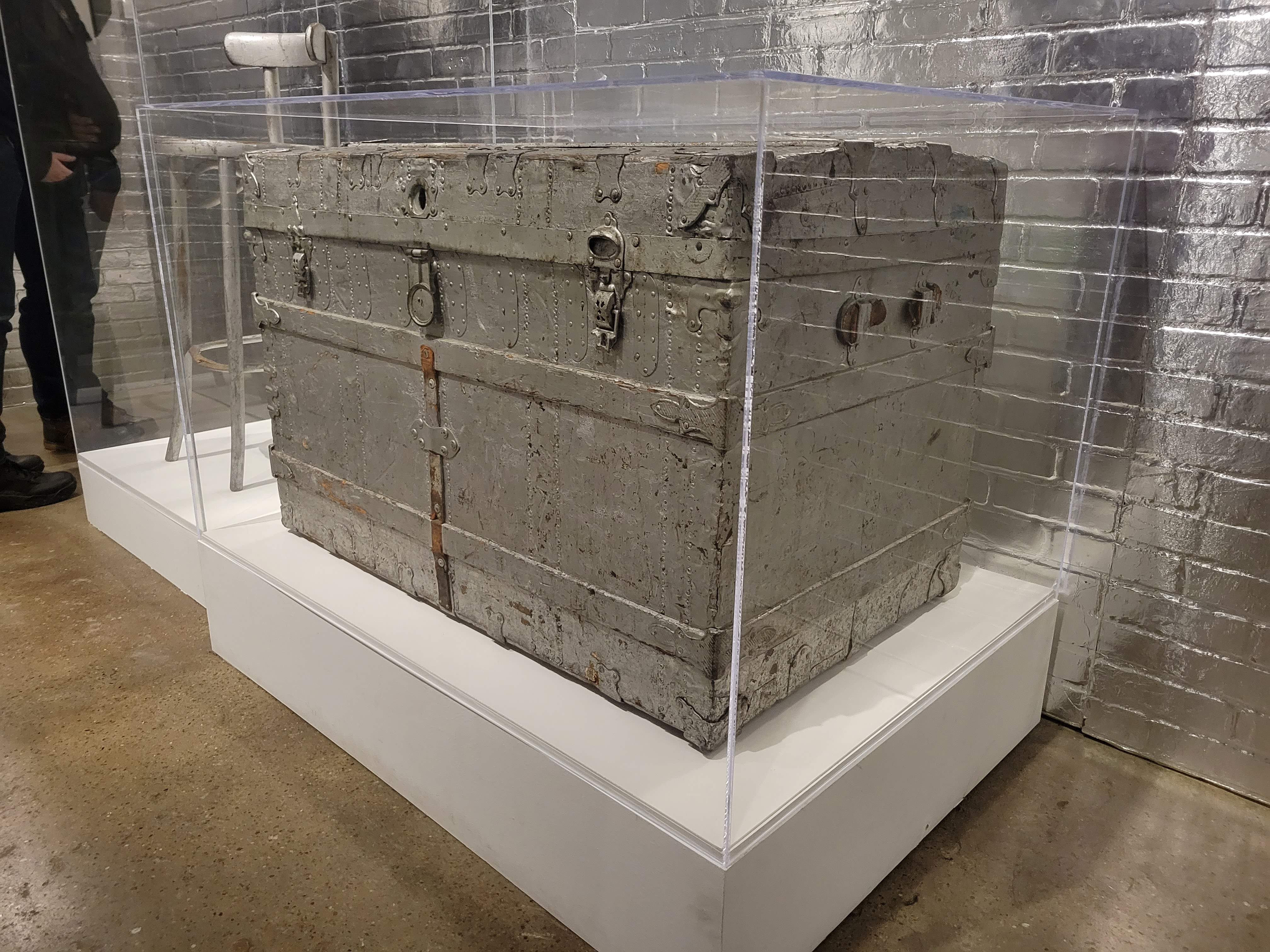
The first Factory opened in January 1964 on the fifth floor of 231 East 47th Street in Midtown Manhattan. Warhol had been working in an old firehouse on East 87th Street, but the building was being vacated. Artist Ray Johnson took Warhol to a "haircutting party" at Billy Name's apartment, which Name had covered floor to ceiling in tin foil and silver paint. Warhol asked Name to do the same to his new loft. Name obliged -- walls, ceiling, pipes, even the elevator. He also dragged in a red couch from the sidewalk during one of his "midnight outings," and it became the studio's most famous piece of furniture, featured in films like Blow Job and Couch, and serving as a crash pad for visitors coming down from amphetamines. The Silver Factory attracted poets, drag queens, socialites, musicians, and hustlers who became known as the Warhol Superstars. Edie Sedgwick, Baby Jane Holzer, Candy Darling, Holly Woodlawn, Jackie Curtis -- they starred in Warhol's films and, in doing so, became the raw material for his central artistic argument: that fame itself was a medium.
The Shooting and the Dutch Door
In February 1968, Warhol moved the Factory to the Decker Building at 33 Union Square West. The biggest fights at the new space, Warhol later wrote, were always about decorating. Business manager Fred Hughes nicknamed himself "Frederick of Union Square" for all the interior design work he did. Warhol retreated to a small, narrow office on the side where he could "clutter up and not get in anybody's way." The Factory had an open-door policy -- anyone could walk in. On June 3, 1968, Valerie Solanas did. She shot Warhol in the chest, and he barely survived. After the shooting, Warhol's partner Jed Johnson built a wall around the elevator and installed a Dutch door so visitors had to be buzzed in. The open-door era was over. In 1969, Warhol co-founded Interview magazine, and the Factory transformed, as one observer put it, "from an all-night party to an all-day office, from hell-on-earth to down-to-earth."
Walk on the Wild Side
The Factory's influence on music was as significant as its impact on visual art. Lou Reed, Bob Dylan, and Mick Jagger passed through. Truman Capote came by. Salvador Dali and Allen Ginsberg made occasional appearances. Warhol managed the Velvet Underground and incorporated them into the Exploding Plastic Inevitable -- a multimedia spectacle that combined art, film projections, rock music, and live performances of every conceivable kind. He designed the album cover for the Rolling Stones' Sticky Fingers. In 1972, Reed released "Walk on the Wild Side," his most famous solo song, which catalogued the Factory's inhabitants by name: Holly Woodlawn, Candy Darling, Joe Dallesandro, Jackie Curtis, and Joe Campbell, whom the song called Sugar Plum Fairy. The song turned the Factory's cast of outcasts into folklore, their real lives compressed into a four-minute radio hit that most listeners never fully decoded.
The Beautiful Shell
The final Factory occupied 22 East 33rd Street, a former Con Edison substation that Warhol purchased in November 1981 for $1.5 million. He had toured the building in August and was taken with its T-shaped main room. "It's a beautiful building," he wrote in his diary, "but buying it would be like buying a beautiful piece of art, this beautiful space." The building offered approximately 40,000 square feet across three connected sections. From 1985 to 1987, it housed the production of Andy Warhol's Fifteen Minutes for MTV. Warhol died in February 1987, and the property became the headquarters of the Andy Warhol Foundation for the Visual Arts until 1994. None of the four Factory locations survive in their original form. The 47th Street building was demolished. The Decker Building still stands but houses other tenants. The 33rd Street substation is gone. What remains is the idea -- that a studio could be a social experiment, that art could be manufactured and manufacturing could be art, that fifteen minutes of fame was both a joke and a prophecy.
From the Air
The original Factory was at 231 East 47th Street in Midtown Manhattan (demolished; now a parking garage entrance for One Dag Hammarskjold Plaza). The second Factory was at 33 Union Square West (the Decker Building, still standing at 40.7368N, 73.9903W), identifiable from altitude by its position on the west side of Union Square Park. The final Factory was at 22 East 33rd Street (demolished). Nearby airports: KJFK (John F. Kennedy, 25km SE), KLGA (LaGuardia, 14km NE), KEWR (Newark Liberty, 15km W). Best viewed at 2,000-4,000 feet AGL approaching from the East River, using Union Square Park as a landmark.