The Henry Ford: Where Edison's Last Breath Shares a Room with Rosa Parks' Bus
Thomas Edison's last breath is preserved in a sealed test tube inside a museum in Dearborn, Michigan. Henry Ford, Edison's close friend, asked Edison's son Charles to hold a tube near his father's lips as the inventor died in 1931. The tube sits today in a glass case at The Henry Ford, surrounded by artifacts so improbable they strain belief: the rocking chair Abraham Lincoln sat in at Ford's Theatre the night he was shot, the bus where Rosa Parks refused to give up her seat in Montgomery, Buckminster Fuller's prototype Dymaxion house, Igor Sikorsky's first helicopter, and the presidential limousine that carried John F. Kennedy. This is not a museum in the conventional sense. It is one man's obsessive attempt to preserve the physical evidence of American ingenuity, spread across 12 indoor acres and 240 outdoor acres in the shadow of the very factories where Ford himself changed the world.
A Dedication Broadcast by Radio
President Herbert Hoover dedicated the Edison Institute on October 21, 1929, the 50th anniversary of Edison's first successful incandescent light bulb. The guest list read like a who's who of early 20th-century achievement: Marie Curie, George Eastman, John D. Rockefeller, Will Rogers, Orville Wright, and about 250 others gathered in Dearborn. The ceremony was broadcast on radio, and listeners across the country were asked to turn off their electric lights until the switch was flipped at the museum, a national tribute to the man who had made electric light practical. The institute was originally private, intended for educational purposes only, but so many people wanted to see it that Ford opened the doors to the general public on June 22, 1933. The facade of the museum building itself is a replica of three structures from Philadelphia's Independence National Historical Park: Old City Hall, Independence Hall, and Congress Hall.
Artifacts That Changed History
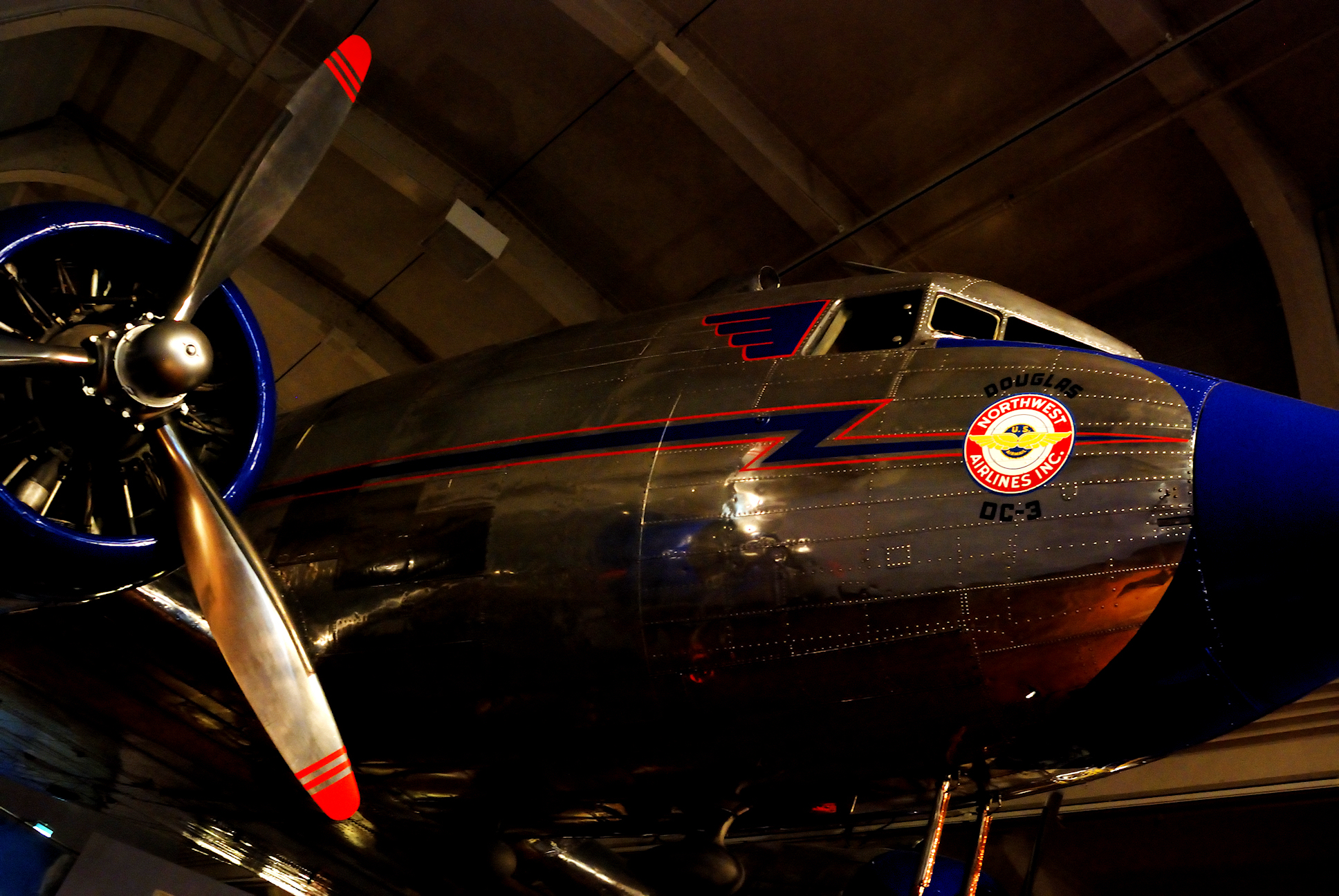
The Henry Ford Museum of American Innovation began as Ford's personal collection, which he started assembling as early as 1906. Today the 12-acre exhibition hall is a staggering catalog of American firsts and turning points. The Rosa Parks bus, a 1948 General Motors model, sat in a field in Alabama for years before the museum acquired and restored it. The Lincoln chair still bears the stain where the president's blood seeped into the upholstery. A Chesapeake & Ohio Railway Allegheny-class steam locomotive, the third most powerful ever built, fills an entire gallery. The Fokker Trimotor that carried Richard Byrd on the first flight over the North Pole hangs overhead. A 1952 Oscar Mayer Wienermobile and the first production Ford Mustang share floor space. The collection is deliberately eclectic, mixing high achievement with popular culture, industrial machinery with presidential limousines, because Ford believed American innovation happened at every level of society.
A Village Reassembled
Greenfield Village, the outdoor portion of the complex, was the first open-air museum of its kind in America. Nearly one hundred historic buildings were physically relocated from their original sites and arranged in a village setting across 90 usable acres. The Wright brothers' bicycle shop and home were moved from Dayton, Ohio, in 1937. A full-scale replica of Edison's Menlo Park laboratory was reconstructed starting in 1928, laid out according to exact foundation measurements from the New Jersey original and furnished with authentic or faithfully duplicated equipment. Noah Webster's Connecticut home arrived after serving as a Yale dormitory. A 75-foot covered bridge built in 1832 in southwestern Pennsylvania was transplanted in 1937. The Cape Cod Windmill, originally built in 1633, is considered one of the oldest in America. Ford even moved his own birthplace to the village in 1944, furnishing it exactly as it had been during his mother's time. Costumed interpreters staff the buildings, demonstrating period farming, sewing, cooking, pottery, and glass-blowing.
Steam Whistles on the Weiser Railroad
A working heritage railroad loops the perimeter of Greenfield Village, pulled by steam locomotives on a line that has existed since the village's 1929 dedication. The Weiser Railroad expanded into a full loop between 1971 and 1972 and now includes four stations. One station incorporates the relocated Smiths Creek Depot, originally built for the Grand Trunk Railway in 1858. A replica of a Detroit, Toledo & Milwaukee Railroad roundhouse serves as the engine facility. Remarkably, the Weiser Railroad connects directly to the national rail network via a section of the Michigan Line used by Amtrak's Wolverine service between Chicago and Pontiac. The adjacent John D. Dingell Transit Center, opened in December 2014, provides a gate allowing Amtrak passengers a short walk into the museum complex.
The Forgery and the Factory
The museum's collection is not without its misadventures. In 1970, curators purchased what they believed was a 17th-century Brewster Chair, crafted for a Pilgrim settler in Plymouth Colony, for $9,000. Seven years later, the chair was exposed as a modern forgery created in 1969 by Rhode Island sculptor Armand LaMontagne. Rather than hide the embarrassment, the museum kept the fake on display as an educational tool about the art of forgery. This honesty extends to the Ford Rouge Factory Tour, which takes visitors by bus from the museum to the massive River Rouge industrial complex where Ford has built vehicles since the Model A era. The factory once employed 100,000 people. Today, renovated as a Gold LEED building with the world's largest green roof, it produces Ford F-Series trucks and stands as proof that American manufacturing still operates in the place where it was born.
From the Air
Located at 42.304°N, 83.234°W in Dearborn, Michigan, roughly 10 miles west of downtown Detroit. The museum complex covers over 250 acres and is visible from altitude as a large institutional campus surrounded by Ford engineering facilities. Nearest airports: Detroit Metropolitan Wayne County Airport (KDTW, 8 miles south), Detroit City Airport/Coleman A. Young International (KDET, 14 miles east). The adjacent River Rouge Plant complex is a prominent industrial landmark visible along the Rouge River. Best viewed at 3,000-5,000 feet AGL. Look for the Greenfield Village grounds as a patchwork of historic buildings, green spaces, and the loop of the Weiser Railroad track.