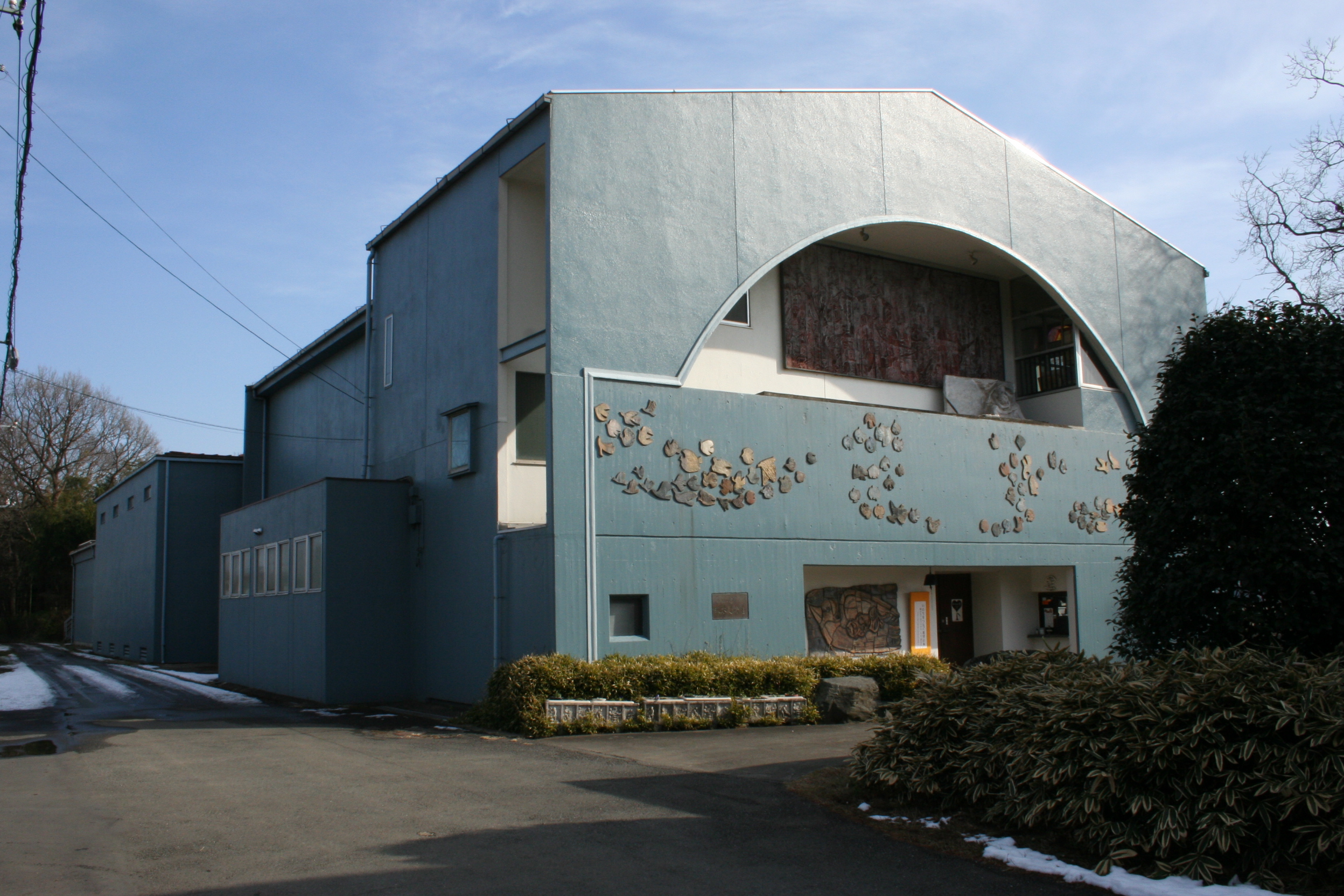
The Hiroshima Panels
The first panel is called Ghosts. Figures stumble across the surface in traditional Japanese ink wash, their bodies dissolving into smoke and shadow, arms outstretched, mouths open in silent screams. Then comes the red -- not the red of paint on a page, but the red of a city burning from the inside out, atomic fire rendered in pigment against the austere black and white of sumi-e. Iri and Toshi Maruki began painting in 1950, five years after the bombs fell. They did not stop for thirty-two years. By 1982, the husband and wife had completed fifteen panels, each standing 1.8 meters tall and stretching 7.2 meters wide, depicting the consequences of nuclear war with an unflinching intimacy that no photograph could match.
Witnesses Who Picked Up Brushes
Iri Maruki was born in Hiroshima Prefecture. When the atomic bomb destroyed the city on August 6, 1945, he and Toshi entered the ruins to search for his family. What they saw there -- the charred bodies, the walking wounded with skin hanging from their arms, the mothers clutching dead infants -- became the raw material for decades of artistic collaboration. The Marukis chose to work in sumi-e, the centuries-old Japanese tradition of black ink painting, but they broke its conventions deliberately. Where sumi-e typically evokes natural beauty through restrained brushwork, the Marukis used it to depict bodies wrenched apart by violence, lovers dying in each other's arms, children consumed by fire. The contrast between the elegance of the medium and the horror of the subject creates an effect that is both distinctly Japanese and devastatingly universal. Each panel is accompanied by short prose poems written by the artists, adding their own voices to the visual testimony.
Fifteen Panels, Thirty-Two Years
The sequence begins with Ghosts, Fire, and Water -- the first three panels completed in 1950, depicting the immediate aftermath of the bombing. Rainbow followed in 1951, then Boys and Girls, then Atomic Desert in 1952. The pace was deliberate. Bamboo Thicket and Rescue came in 1954, the same year the Japanese fishing vessel Daigo Fukuryu Maru was contaminated by nuclear fallout from American hydrogen bomb tests at Bikini Atoll. The Marukis responded directly: Panel IX, Yaizu, and Panel X, Petition, completed in 1955, addressed this peacetime nuclear disaster. Mother and Child arrived in 1959, Floating Lanterns in 1969. Panel XIII, completed in 1971, broke new ground by depicting the Death of American Prisoners of War who also perished in the Hiroshima bombing -- a subject that was taboo on both sides of the Pacific. Crows followed in 1972. The final panel, Nagasaki, was completed in 1982, bringing the project to its close after more than three decades of sustained artistic witness.
A Gallery in the Countryside
In 1967, the Maruki Gallery for the Hiroshima Panels was established in Higashi-Matsuyama, Saitama Prefecture, about 60 kilometers northwest of Tokyo. This small museum in the countryside became the permanent home for the panels, an intentional choice that placed them outside the noise and distraction of the capital. The fifteenth panel, Nagasaki, is displayed separately at the Nagasaki International Cultural Hall. The gallery also houses the Marukis' later collaborative works addressing other 20th-century atrocities: paintings depicting Auschwitz, the Nanking Massacre, the Battle of Okinawa, and the mercury poisoning disaster at Minamata. Their summary work, simply titled Hell, draws these threads together. The cumulative effect of standing before these panels is not just an encounter with history but with the full weight of what human beings are capable of doing to one another.
A Legacy That Traveled the World
The Hiroshima Panels were never confined to their gallery. They toured internationally, exhibited at the Stedelijk Museum in Amsterdam in 1957 and shown across Europe, Asia, and the Americas. In 1987, the documentary Hellfire: A Journey from Hiroshima, which followed the Marukis and their work, received an Academy Award nomination. Japanese composer Masao Ohki translated the first six panels into the six movements of his Fifth Symphony in 1953. British poet James Kirkup wrote Ghosts, Fire, Water based on the first three panels. In 1995, the Marukis received a nomination for the Nobel Peace Prize in recognition of both their artistic achievement and their lifelong dedication to peace education. Even after their deaths -- Iri in 1995, Toshi in 2000 -- the panels continued to inspire. From 2012 to 2019, American-born artist Arthur Binard created a Japanese kamishibai, a traditional paper theater story called Small Voices, retelling the panels' narrative from the perspective of a cat. The work of two witnesses who picked up brushes instead of megaphones continues to speak.
From the Air
The Maruki Gallery is located at 36.33N, 139.35E in Higashi-Matsuyama, Saitama Prefecture, in the rural lowlands northwest of Tokyo. The area is flat agricultural land along the Tsuki River. The gallery itself is a small museum not individually distinguishable from altitude. Nearest major airports: Tokyo Narita International (RJAA) approximately 60nm east, Haneda (RJTT) approximately 40nm south. The Kanto plain stretches in all directions, with the mountains of Chichibu visible to the west. Note: the coordinates in the raw article place this in Gunma Prefecture, near the gallery's general region in the northern Kanto area.