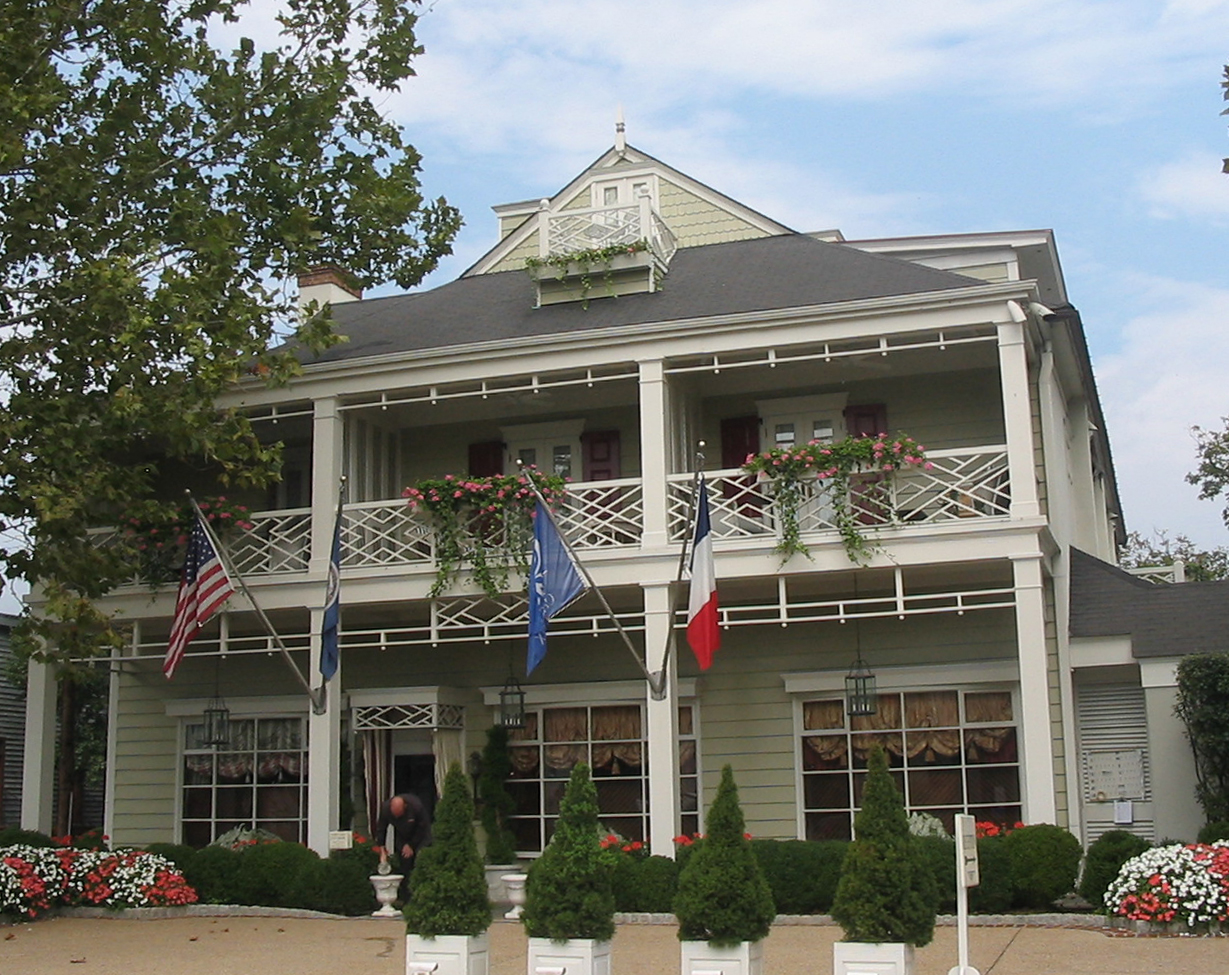
The Inn at Little Washington
The staff at The Inn at Little Washington have a quiet practice. When you sit down to dinner, they discreetly assess your emotional state on a scale of 1 to 10. Their goal, before you finish the long drive home through the dark Virginia countryside, is to get you to at least a 9. It is a small, strange, deeply human ambition for a restaurant -- and it captures everything about this place. Founded in 1978 by chef Patrick O'Connell and his partner Reinhardt Lynch in a converted garage in Washington, Virginia, a village of fewer than 200 people, The Inn has since accumulated more awards than many chefs earn in a lifetime. It holds the distinction of being the first establishment in America to receive five stars from the Mobil Travel Guide for both its food and its accommodations -- and the first to receive five diamonds from AAA for both, a feat it maintained for 27 years.
A Garage in the Foothills
Washington, Virginia, claims a distinction of its own: it is traditionally said to be the first of more than two dozen American communities named for George Washington, with local lore holding that he surveyed the land in 1749 when he was just seventeen, though historians have found no documentary proof of this specific survey. The village sits in Rappahannock County at the foot of the Blue Ridge, an hour and a half west of the nation's capital. There is no traffic light. When O'Connell and Lynch arrived in the late 1970s, they set up shop in a former garage with no formal culinary training between them. O'Connell taught himself to cook, and what emerged from that garage kitchen was so accomplished that The New York Times and The Washington Post took notice within a few years. By 1987, the Relais & Chateaux hotel group had accepted The Inn as a member. It remains the only restaurant in the Michelin Guide for Washington, D.C. that is not actually located within the city limits -- a seventy-mile detour into the countryside that diners have been making for nearly five decades.
Collecting Stars and Diamonds
The awards accumulated relentlessly. Five James Beard Foundation prizes -- Best Service, Best Wine List, Restaurant of the Year, Best Chef in the Mid-Atlantic, and Chef of the Year. The Zagat Survey rated it number one in all categories for Washington, D.C. for fourteen consecutive years. The International Herald Tribune placed it among the top ten restaurants in the world. Travel & Leisure Magazine ranked it the number one hotel in the world for food. Wine Spectator awarded its Grand Award for twelve straight years. In 2018, the Michelin Guide bestowed three stars -- the first and, for a time, only three-star rating in the Washington, D.C. guide. Andrew Lloyd Webber once said of The Inn: "For my money this little hotel provides the best overall dining experience I can remember in a long while, perhaps my best ever." The 2025 Michelin guide adjusted the rating to two stars, but the decades of accumulated distinction speak for themselves.
The Partnership and the Split
Behind the kitchen doors, the story was more complicated. O'Connell and Lynch were not just business partners -- they were romantic partners, and their personal relationship shaped every aspect of The Inn's identity. For nearly three decades, the arrangement held. But in 2006, the relationship deteriorated, and the business split followed. The Washington Post reported that O'Connell took out a $17.5 million loan in January 2007 to buy out Lynch and become sole owner. The amount Lynch received was never disclosed. The rupture was quiet by design -- this was, after all, a place built on the art of making guests feel that nothing was wrong. O'Connell continued at the helm, and The Inn carried on without missing a beat, its staff still watching, still calibrating, still working the room toward a 9.
The Drive Worth Making
The Inn sits in a landscape that rewards the journey as much as the destination. The drive from Washington, D.C. passes through the horse country of Fauquier and Rappahannock Counties, climbing gently into the foothills where the Blue Ridge rises to the west. In autumn, the hardwood forests blaze with color. In winter, the valley is quiet and cold, smoke curling from farmhouse chimneys. The village itself is tiny -- a general store, a few houses, the kind of place where a world-class restaurant seems almost impossible. And yet that improbability is part of the charm. For nearly fifty years, people have made the drive, navigated the country roads, and arrived at a converted garage where someone is already watching the door, ready to begin the gentle, deliberate work of making the evening unforgettable.
From the Air
The Inn at Little Washington is located at approximately 38.71°N, 78.16°W in the village of Washington, Virginia, nestled in the foothills of the Blue Ridge Mountains in Rappahannock County. From the air, the tiny village is visible as a small cluster of buildings amid rolling farmland and forested hills. The Blue Ridge rises prominently to the west. Nearby airports include Culpeper Regional Airport (KCJR) about 20 miles to the east and Front Royal-Warren County Airport (KFRR) about 25 miles to the north. Best viewed at 2,000-3,000 feet AGL to appreciate the village's setting in the Piedmont-to-mountain transition.