The KEE to Bala
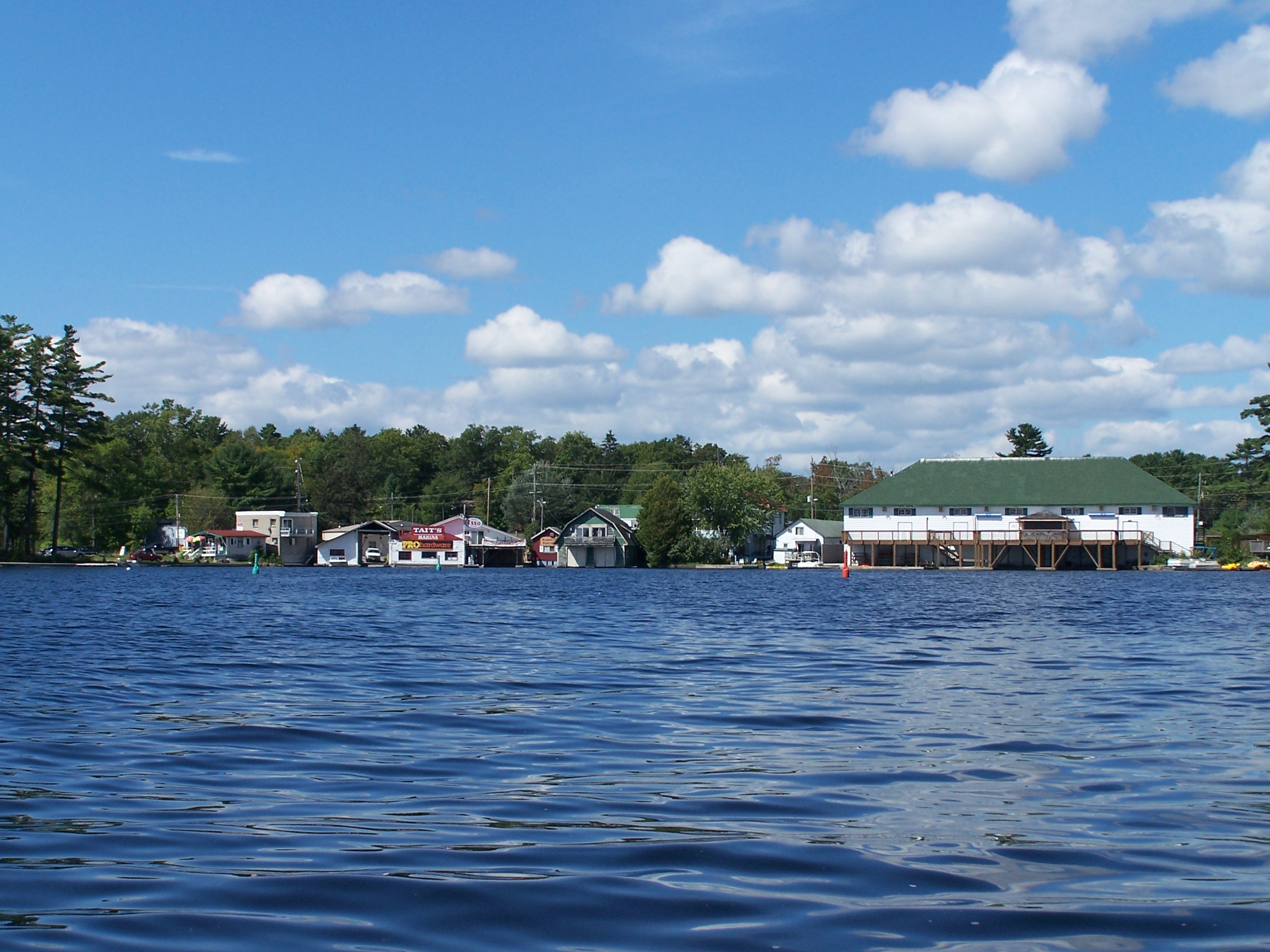
Gerry Dunn designed the building himself. No architect, no blueprints -- just a dance hall proprietor who knew exactly how a bandstand should face the crowd and how a wooden floor should give under dancing feet. At 97 years old, back at his Bala summer home in 1998, Dunn could still describe every beam he had hammered into place six decades earlier. The pavilion he built on the shore of Lake Muskoka in 1942 has outlasted every trend in popular music, every shift in nightlife culture, and six changes of ownership. It started as Dunn's Pavilion, became The KEE to Bala in the late 1960s, and in 2023 was acquired by Live Nation. Through it all, the building has remained what Dunn intended: a place where people come to hear music on the water.
Where All of Muskoka Dances
In 1929, Gerry Patrick Dunn bought a modest lakefront lot in Bala that held nothing more than a small ice cream parlour and a drugstore. By 1930, he had transformed it into a concert hall capable of hosting orchestras. The first bands to play were Jerry Richardson and the Varsity Collegians and Carl Mueller's Varsity Entertainers -- names that evoke an era when university dance bands were the height of popular entertainment. The slogan Dunn chose for his venue was direct and accurate: 'Where All of Muskoka Dances.' By the end of the 1930s, the crowds had outgrown the building. Dunn tore it down and started over, doing much of the construction himself with a crew of 14 workers. Neighbors grew accustomed to the sight of him perched on the roof, anchoring supports. On big band nights, he drew audiences not just from the surrounding cottage country but from Toronto, two hours south, marketing weekend getaways built around the music.
Sunday Hymns, Saturday Swing
The dance hall served double duty in those early years. Saturday nights belonged to the big bands -- the brass sections filling the hall, the wooden floor flexing under hundreds of dancing couples, the lake air drifting through the open walls. Sunday mornings, the same space hosted church services. It was a common arrangement in small Ontario resort towns, where building space was scarce and no one saw a contradiction between the sacred and the secular sharing a dance floor. The pavilion Dunn completed in 1942 became the permanent home of this dual life, sturdy enough to survive the war years and the decades of hard use that followed.
Rock, Roll, and Rename
Gerry Dunn sold his pavilion in 1963, at age 62, to Russell Hore. The venue eventually passed to Ray Cockburn, who had run a similar hall called The Pavalon in Orillia. Cockburn understood that the big band era was over and rock and roll was king. He renamed the venue The KEE to Bala -- a punning nod to its role as the key attraction in the Muskoka region, with the deliberate misspelling ensuring the name stuck in memory. Cockburn's masterstroke was logistical: he promised touring bands they could play Orillia one night and Bala the next, making the northward detour worthwhile. Bands that would never have driven two hours from Toronto for a single gig happily added a second night in cottage country. The KEE thrived through the 1960s and 1970s on this arrangement, becoming a regular stop for acts that craved a smaller, more relaxed crowd after the intensity of city shows.
Sinking, Rising, Sinking Again
The Parry family bought The KEE from Cockburn in the 1970s and modernized it -- liquor license, new stage, proper bars to replace the old bring-your-own-bottle arrangement. Joe Kondyjowski took over in the 1980s and poured his profits back into the aging wooden structure: a new roof, a new deck, cement cribs to stop the building from literally sinking into the lakeshore, and a kitchen that let The KEE serve food for the first time. He gave the interior a Cape Cod color scheme, a touch of seaside polish on a freshwater lake. Sanober Patel bought it in 1990 and added comedy nights and big band revival events, trying to draw a wider audience. In 1995, Stephen Wylie and his partners took over and reversed course, restoring the original colors and bringing back big band dances on the original stage. Each owner reshaped The KEE to match the moment, but the bones of Dunn's 1942 building endured beneath every renovation.
The Concert Giant Arrives
In 2023, Live Nation announced its purchase of The KEE to Bala, making the lakeside pavilion part of the world's largest live entertainment company. The prior owners stayed on as venue operators, preserving continuity with the building's past. The dress code that once demanded formal attire now welcomes casual clothing. The music ranges from rock to hip-hop to electronic -- Sean Paul played to a sold-out crowd in 2024. But the essential formula has not changed since 1930: a stage, a dance floor, and the lake. Gerry Dunn's building, designed without an architect, has now outlived every trend it was never designed for.
From the Air
Located at 45.01N, 79.61W on the shore of Lake Muskoka in the town of Bala, Ontario. The venue sits on Bala Bay, visible as a distinctive building on the waterfront. Lake Muskoka itself is a large, irregularly shaped lake easily identifiable from altitude. Bala is at the northern outlet of the lake where the Moon River begins. Nearest airports: Muskoka Airport (CYQA) approximately 20 km south; Parry Sound Area Municipal Airport (CNK4) approximately 50 km northwest. Best viewed at 2,000-4,000 feet -- the venue is on the south side of Bala Bay. The town of Bala sits at a narrows between Lake Muskoka and the waterway leading to Bala Lake, making it easy to identify from the air.