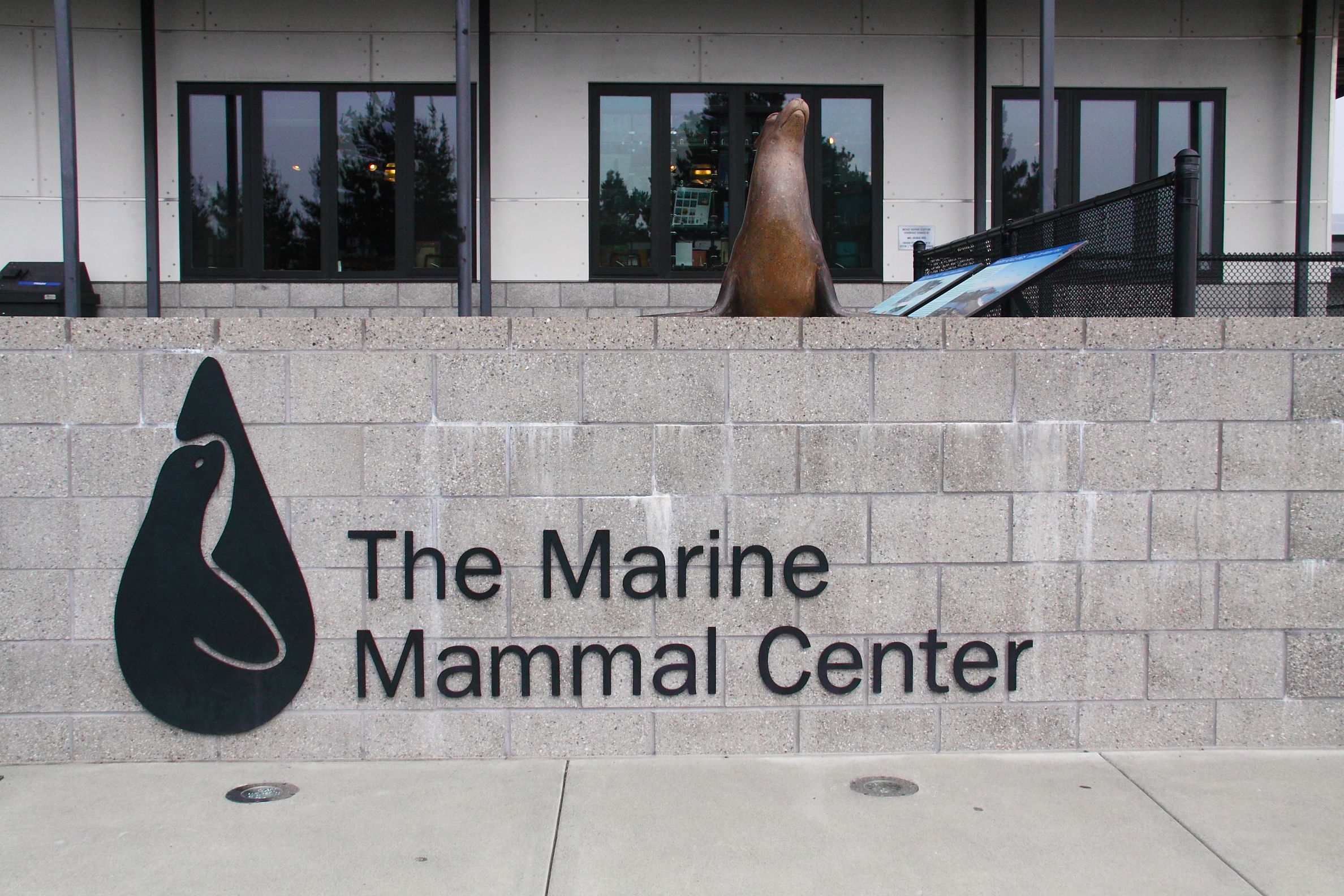
The Marine Mammal Center
The underground silos that once held Nike Hercules missiles aimed at Soviet bombers now house a water filtration system. The guard house where sentries watched for nuclear attack is a harbor seal hospital and surgical suite. In the Marin Headlands, overlooking the Pacific Ocean, a Cold War military installation has been transformed into the largest marine mammal hospital in the world. Since 1975, The Marine Mammal Center has rescued over 28,000 animals from 600 miles of California coastline -- and inadvertently provided Hollywood with the voice of evil.
From Bathtubs to Operating Rooms
The Marine Mammal Center began in 1975 with bathtubs and small pools surrounded by a fence, founded by Lloyd Smalley, Pat Arrigoni, and Paul Maxwell in Sausalito. It opened one year after the Nike missile site was decommissioned, claiming the abandoned military infrastructure for an entirely different kind of defense. In June 2009, a new multi-facility complex replaced the improvised beginnings. Built with recycled materials and sound boards made of seaweed, the facility gets roughly 20 percent of its energy from donated solar panels and recovers 80 percent of its water through an advanced sand bed and ozone filtration system. The hospital includes operating rooms, treatment areas, and the capacity to house up to 275 animals simultaneously.
The Domoic Acid Discovery
TMMC's researchers have made discoveries that reach far beyond animal rescue. They identified domoic acid as the causative agent behind mass illness in California sea lions -- a naturally occurring toxin produced by diatoms that accumulates in fish and causes seizures and permanent brain damage in marine mammals when they feed close to shore. The center also discovered, in collaboration with the University of Florida, that seal pox is distinct from all other known pox viruses. Their advances in marine mammal anesthesia -- complicated by the fact that pinnipeds are voluntary breathers who can suppress their respiratory rate -- have changed veterinary practice worldwide. Every animal that dies in treatment undergoes a necropsy, viewable by the public, turning even death into a research opportunity.
Humphrey, Sgt. Nevis, and the Orcs
Some of the center's cases have become famous. Humphrey the Whale, arguably the most publicized humpback whale in history, errantly entered San Francisco Bay twice -- in 1985 and 1990 -- and required dramatic estuarine rescues involving the Coast Guard and hundreds of volunteers. Sgt. Nevis, a 650-pound California sea lion rescued from Yolo County in 2009 with a shotgun wound to his sinuses, became a cause celebre; imaging revealed he had been shot multiple times before. The fisherman responsible was convicted and sentenced to 30 days in jail plus $51,081 in restitution. And in a coincidence of timing, sound designer David Farmer visited the center during elephant seal pupping season and was so impressed by the vocalizations that he recorded them for Peter Jackson's Lord of the Rings trilogy -- elephant seals became the Orcs, California sea lions the Uruks.
From the Air
Located at 37.835N, 122.532W in the Marin Headlands, northwest of the Golden Gate Bridge. The facility is visible from the air along the coastal road. Nearest airports: KSFO (15nm south), KOAK (14nm east). Best viewed at 1,500-3,000 ft AGL.